
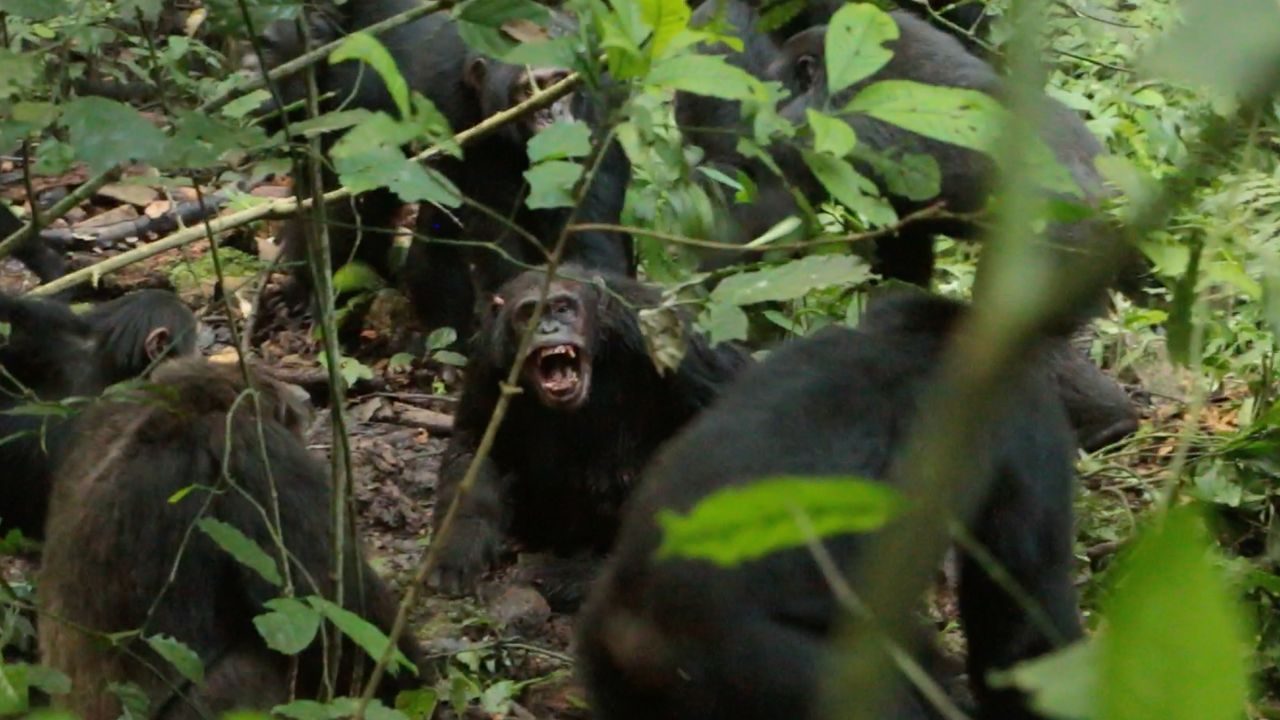
Something extraordinarily rare is unfolding in the forests of Uganda — and it looks disturbingly familiar. A community of wild chimpanzees has fractured from within, and the two resulting factions are now engaged in what scientists are describing as a deadly “civil war.” Former allies, animals that once groomed each other, shared food, and traveled together, are now attacking one another with lethal intent.
Conflicts between chimpanzee groups are nothing new. These primates are well-documented competitors, fighting over fruit trees, water sources, and nesting sites. But violence within a previously unified community — sustained, organized, and deadly — is something researchers rarely witness. The fact that it is happening now, and that scientists still cannot fully explain why the group split in the first place, makes this one of the most compelling primate behavior stories in years.
For anyone who studies animal behavior, or simply wonders how much our closest relatives reflect our own tendencies toward conflict, this story is hard to look away from.
What Is Actually Happening in Uganda’s Forests
The chimpanzees in question belong to the species Pan troglodytes — the common chimpanzee — living in Uganda. According to researchers tracking this population, a large, previously cohesive community split apart at some point, dividing animals that had shared social bonds for years. Once that split occurred, the two factions did not simply go their separate ways. Instead, they turned on each other.
The conflict is being characterized as a “civil war” because of a key distinction: these are not strangers fighting over territory. These are individuals with shared history — males who once patrolled boundaries together, now attacking former companions. A photograph taken in 2019 by researcher Aaron Sandel captured chimpanzee males attacking one of their own, offering a visceral glimpse into just how brutal these encounters can become.
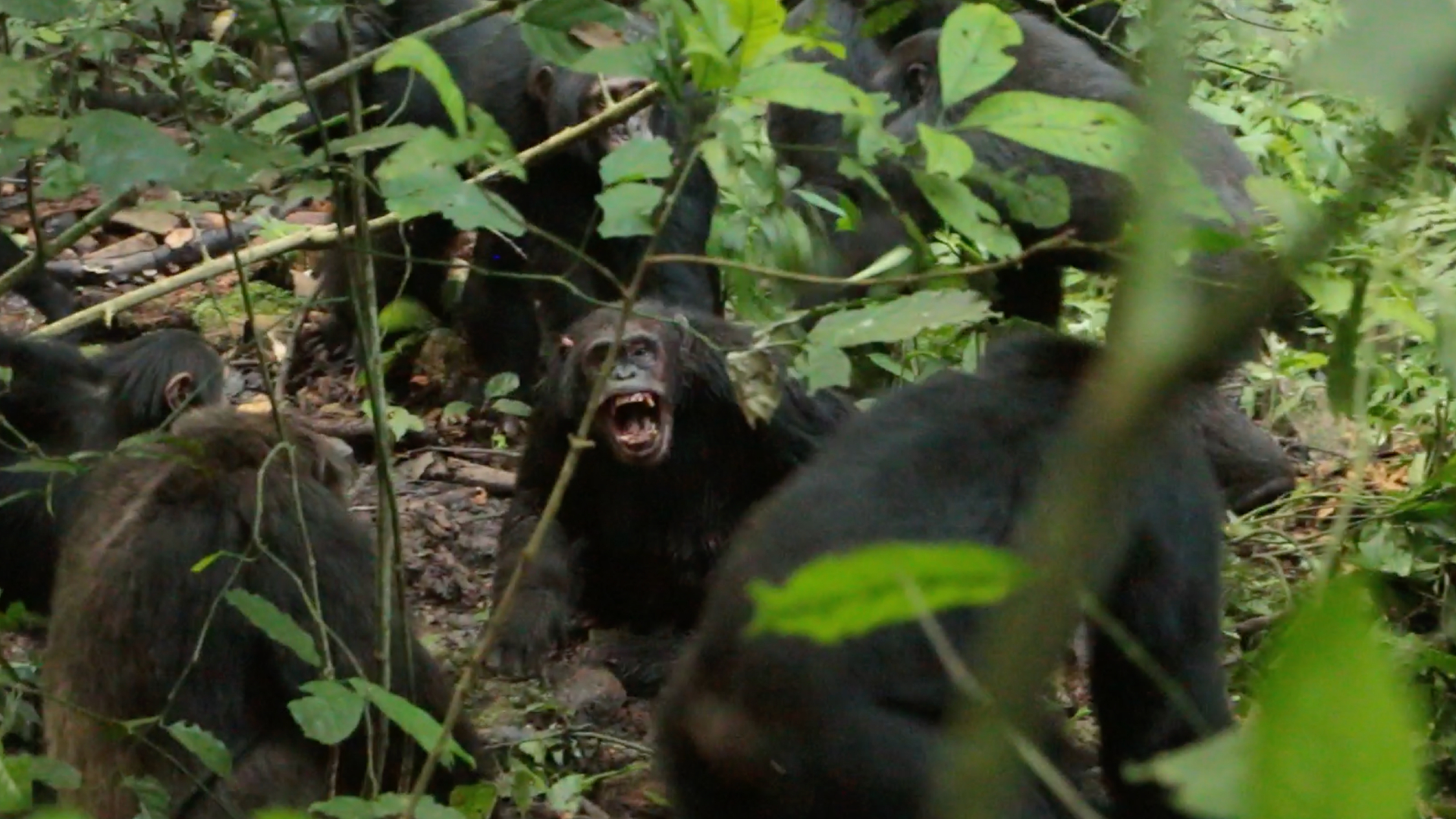
What makes this particularly puzzling to scientists is that they do not yet fully understand what caused the community to fracture in the first place. The split itself — the social rupture that set all of this in motion — remains an open question.
Why Chimpanzee Civil Wars Are So Rare
To understand why this situation is so unusual, it helps to understand how chimpanzee societies normally work. These animals live in communities that are often large and complex, with clear social hierarchies, alliances, and long-term relationships. Competition between different communities is relatively routine — they are territorial animals, and clashes over resources like fruit trees, water supplies, and suitable nesting trees are part of life.
But intra-community violence of this sustained, organized nature is a different matter entirely. When a group splits and former members begin targeting each other with coordinated aggression, it represents a breakdown of the social fabric that normally holds these communities together. Researchers consider it rare precisely because chimpanzee social bonds — especially among males — are usually strong enough to suppress this kind of internal conflict.
The closest historical parallel researchers often reference is the Gombe Chimpanzee War, observed by Jane Goodall in Tanzania during the 1970s, when a community split led to years of violent conflict. The Uganda situation appears to echo that landmark case in troubling ways.
Key Facts About the Conflict
| Detail | What Is Known |
|---|---|
| Location | Uganda |
| Species involved | Common chimpanzee (Pan troglodytes) |
| Type of conflict | Intra-community “civil war” following a group split |
| Nature of violence | Sustained and deadly attacks between former community members |
| Documented imagery | Males attacking one of their own, photographed in 2019 by Aaron Sandel |
| Cause of the split | Not yet fully understood by researchers |
| Typical inter-group conflict triggers | Competition over fruit trees, water supplies, nesting material |
- Chimpanzee inter-group conflict is considered relatively common due to resource competition.
- Intra-community conflict of this nature and duration is far less frequently observed.
- The animals involved were previously allies — individuals with established social bonds.
- Scientists are actively studying the situation but have not yet determined the root cause of the community split.
What This Tells Us About Chimpanzee — and Human — Nature
There is a reason this story resonates beyond the world of primatology. Chimpanzees are among our closest living relatives, sharing roughly 98.7% of our DNA. When researchers observe them engaging in coordinated, sustained violence against former allies, it raises uncomfortable questions about the evolutionary roots of conflict in our own species.
The fact that the violence appears to have been triggered by a social rupture — a community fracturing along internal lines — rather than simple competition with outsiders makes it especially thought-provoking. It suggests that the conditions for organized violence among chimpanzees may be social and political, not just resource-driven.
Researchers note that understanding why communities split, and what determines whether that split leads to peaceful separation or sustained warfare, could have significant implications for how we understand primate social evolution — including our own.
What Scientists Are Trying to Figure Out Next
The central unanswered question right now is what caused the community to divide in the first place. Without understanding the trigger for the split, it is difficult for researchers to predict how the conflict will evolve, how long it will last, or what the eventual outcome might be for both factions.
Scientists studying the Uganda population are continuing to monitor the situation. The hope is that long-term observation will reveal patterns — in the social dynamics that preceded the split, in how the violence is being organized and sustained, and in how or whether the conflict eventually resolves.
Whether one faction eventually dominates, the groups find a way to stabilize their separation, or the violence continues to escalate remains to be seen. What is clear is that this community of chimpanzees is living through something deeply unusual — and that researchers are watching closely, trying to understand what it means.
Frequently Asked Questions
Where is the chimpanzee civil war taking place?
The conflict is occurring in Uganda, where a previously unified community of wild chimpanzees has split into two factions now engaged in sustained, deadly conflict.
Why are the chimpanzees fighting each other?
The violence appears to have followed a split within a large chimpanzee community, turning former allies against one another. However, scientists have not yet determined what caused the community to fracture in the first place.
Is this kind of conflict common among chimpanzees?
Conflict between different chimpanzee groups is relatively common, driven by competition over resources like food and water. But sustained, deadly violence within a previously unified community is considered rare.
What resources do chimpanzee groups typically fight over?
According to researchers, common triggers for inter-group conflict include competition over fruit trees, water supplies, and trees that provide suitable nesting material.
Who documented the violence photographically?
Researcher Aaron Sandel photographed chimpanzee males attacking one of their own in 2019, providing a documented visual record of the aggression within this community.
Will scientists be able to stop the conflict?
This has not been confirmed. Researchers appear to be observing and studying the situation rather than intervening, with the goal of understanding the social dynamics driving the conflict.


Leave a Reply