
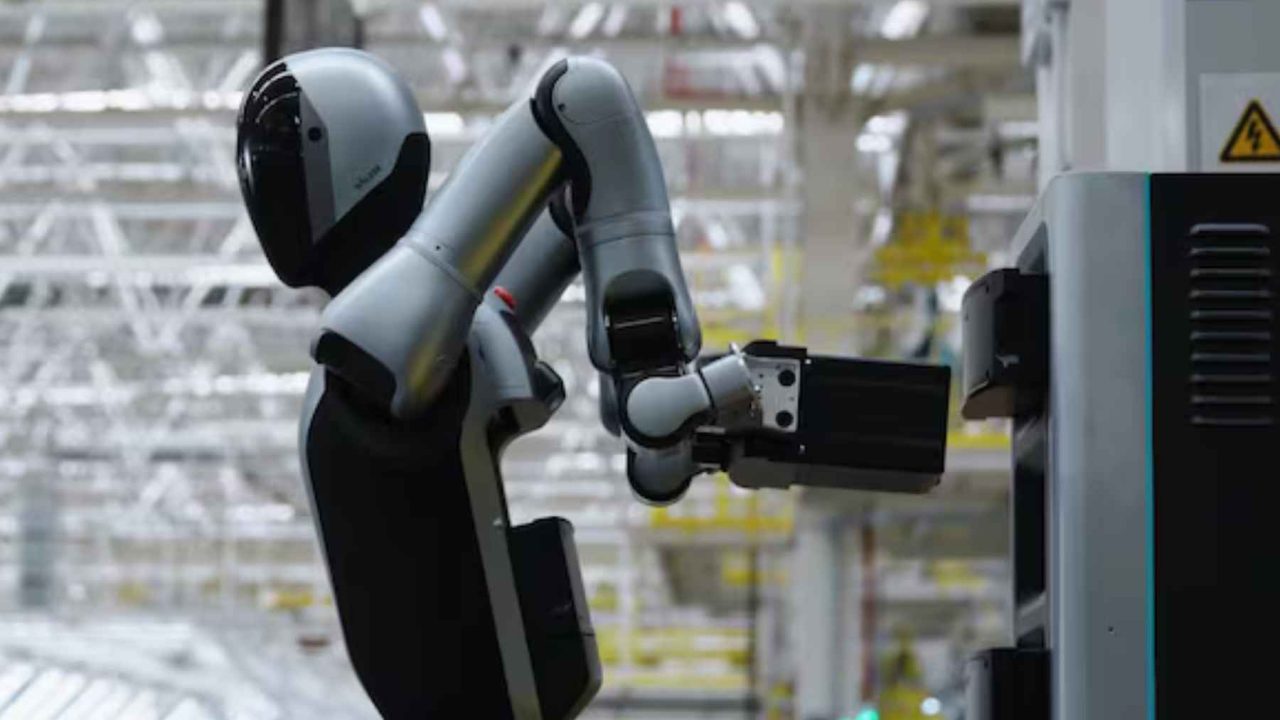
A Chinese robotics company just raised nearly $394 million USD in a single share placement — and the timing couldn’t be more telling. Reports of humanoid robots being tested at China’s border crossings with Vietnam have landed at almost exactly the same moment, raising a question that investors and observers are clearly asking: is this the moment robotics moves from factory floors to frontline public service?
UBTECH Robotics, one of China’s most prominent humanoid robot developers, completed the Hong Kong share placement in December 2025. The company brought in approximately HK$3.06 billion in net proceeds. That’s a serious sum for any company, let alone one operating in a sector where real-world deployments are still relatively rare.
The border contract reported by the South China Morning Post adds a layer of significance to the fundraising story. If humanoid robots are genuinely being deployed at active border crossings to assist with guidance, inspections, and logistics, that represents a meaningful shift in how governments are thinking about automation — and how much money may be flowing toward it.
What UBTECH Is Actually Building Toward
UBTECH Robotics has been working on humanoid robot technology for years, but commercial deployment at scale has remained an elusive target across the entire industry. Most humanoid robots have been confined to controlled demonstrations, research environments, or limited pilot programs.
The reported contract for China-Vietnam border crossings would mark a different kind of milestone. Border operations involve real unpredictability — crowds, language barriers, shifting logistics demands, and security requirements. Deploying humanoid robots in that environment, even in a support role, suggests a level of operational confidence that goes beyond the showroom floor.
The company has been explicit that the new capital from the share placement is intended to support expansion in a fast-moving robotics market where scale matters. That phrasing is deliberate. Scale is exactly what separates companies that demonstrate interesting technology from companies that actually change how industries work.
The Numbers Behind the Share Placement
The placement closed on December 2, 2025, after UBTECH sold shares to at least six investors. No single investor acquired a large enough stake to become a major shareholder, which keeps the ownership structure relatively distributed.
| Detail | Figure |
|---|---|
| Shares sold | 31,468,000 new H shares |
| Price per share | HK$98.80 |
| Net proceeds (HKD) | HK$3.06 billion |
| Net proceeds (USD equivalent) | Approximately $389–$394 million |
| Placement closed | December 2, 2025 |
| Minimum number of investors | At least six |
Three financial firms arranged the deal: Guotai Junan Securities (Hong Kong) Limited, CLSA Limited, and TradeGo Markets Limited, acting as placing agents. The shares were issued under a general mandate within the limits set by Hong Kong’s Listing Rules, meaning the company did not need to call a separate shareholder vote to complete this round of fundraising.
That procedural detail matters more than it might seem. Being able to move quickly without convening a shareholder meeting gives management flexibility — and in a competitive technology sector, speed can determine who captures the best contracts first.
Why the Border Robot Story Changes the Conversation
There’s a reason the South China Morning Post’s report about humanoid robots at China-Vietnam border crossings generated attention well beyond the usual robotics audience. Border management is a government function, not a consumer product category. When governments start deploying humanoid robots in operational roles — even limited ones — it signals that the technology has crossed a threshold of institutional trust.
According to the reporting, the robots would assist with guidance, inspections, and logistics at the border crossings. These are tasks that currently require human staff, and doing them at scale across multiple crossing points is both labor-intensive and logistically complex.
The practical implications are significant. Guidance tasks involve directing travelers, answering questions, and managing flow — all things a well-designed humanoid robot could theoretically handle in a structured environment. Inspection and logistics support would demand more precision, but also offer clearer metrics for success or failure.
For investors evaluating UBTECH’s $394 million raise, the border deployment story provides something that financial filings rarely offer: a concrete picture of what the company’s technology might actually be used for.
What This Means for the Broader Robotics Race
China has been investing heavily in humanoid robotics as a strategic priority, and UBTECH is one of the companies most visibly operating in that space. A capital raise of this size, paired with a reported government-adjacent contract, suggests the sector is moving from speculative investment to operational deployment faster than many outside observers expected.
The competitive pressure is real. Other robotics companies globally are racing to demonstrate that their machines can function reliably outside of controlled settings. A contract tied to border operations — with all the complexity and public visibility that entails — would be a significant proof point if the deployment performs as intended.
Whether the border contract becomes a template for other government applications, or remains a one-off pilot, will likely depend on how the robots actually perform. That’s the part no prospectus can predict.
What Comes Next for UBTECH
With HK$3.06 billion now in hand, UBTECH has the resources to accelerate development, expand manufacturing capacity, and pursue additional contracts. The company has indicated the funds are directed toward competing in a fast-moving market where scale is the deciding factor.
The border deployment, if it proceeds as reported, will serve as a high-profile test of whether humanoid robots can handle the demands of real public-sector operations. Success there would strengthen the case for broader government and institutional adoption. Challenges or setbacks would inevitably fuel skepticism.
Either way, the combination of a major capital raise and a reported real-world government deployment puts UBTECH in a position that few robotics companies have reached. The next phase won’t be about raising money or generating headlines — it will be about whether the machines actually work when it counts.
Frequently Asked Questions
How much money did UBTECH Robotics raise in its share placement?
UBTECH raised approximately HK$3.06 billion in net proceeds, which converts to roughly $389–$394 million USD.
When did the share placement close?
The placement closed on December 2, 2025, after selling 31,468,000 new H shares at HK$98.80 each.
What are the humanoid robots at the China-Vietnam border supposed to do?
According to a South China Morning Post report cited in
Who arranged UBTECH’s share placement?
The deal was arranged by Guotai Junan Securities (Hong Kong) Limited, CLSA Limited, and TradeGo Markets Limited as placing agents.
Did any single investor take a controlling stake in UBTECH through this placement?
No. The shares were placed with at least six investors and none became a major shareholder as a result of this round.
Has the border robot contract been officially confirmed by UBTECH?




Leave a Reply