
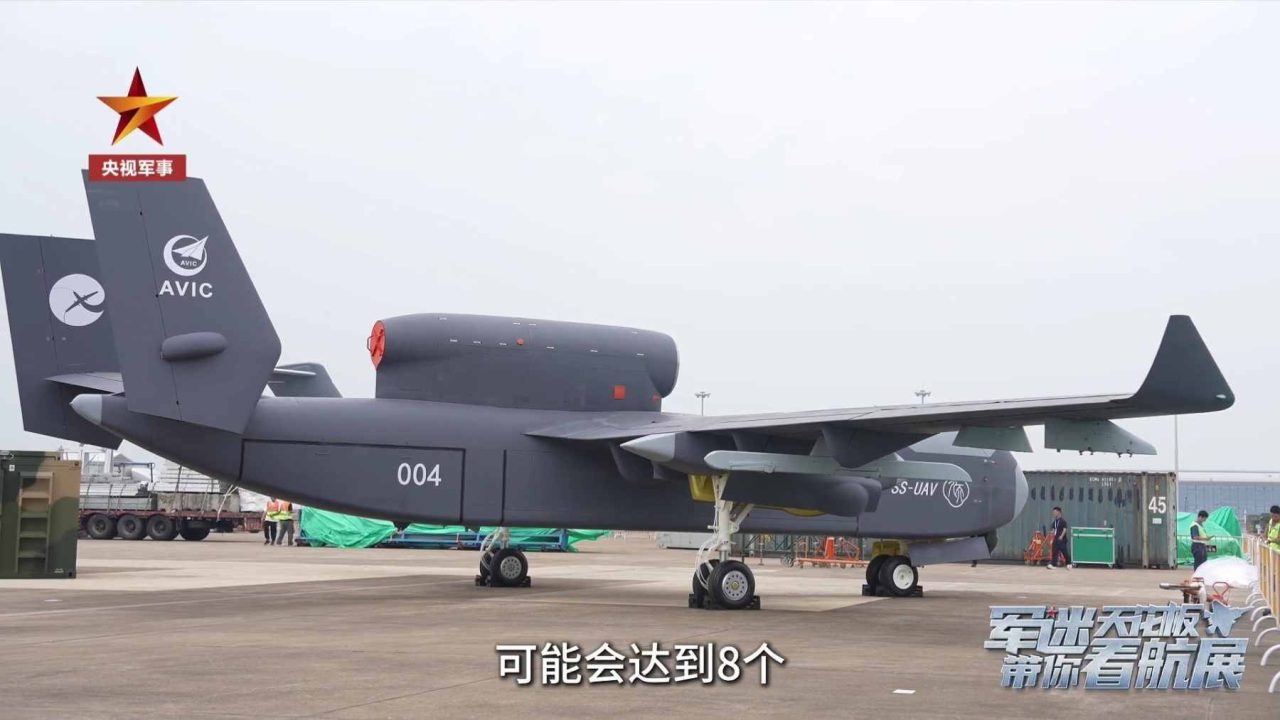
A drone the size of a regional aircraft, capable of carrying the same payload as a manned fighter jet, just completed its first flight in China — and it can deploy entire swarms of smaller drones while airborne.
China’s Jetank, also referred to in official Chinese reports as “Jiutian,” made its maiden flight in Shaanxi province, and the numbers behind it are genuinely striking. At 16.35 meters long with a 25-meter wingspan, a maximum takeoff weight of 16 metric tons, and a payload capacity of 6,000 kilograms — roughly 13,228 pounds — this is not a typical unmanned system. It belongs to a different category entirely.
What makes the Jetank particularly hard to categorize is that China has positioned it as both a humanitarian tool and a military platform at the same time. That dual identity is exactly what has the rest of the world paying close attention.
What the Jetank Actually Is — and What It’s Built to Do
By China’s own official description, the Jiutian platform was designed for a wide range of civilian applications. State-reported use cases include remote cargo delivery, emergency communications support, disaster relief operations, aerial surveying, and forest firefighting missions.
Those are genuinely useful capabilities. A drone with 12 hours of endurance, a 6-metric-ton payload, and a long ferry range could reach disaster zones that are inaccessible to ground vehicles and stay on station far longer than smaller unmanned systems. For a country the size of China — with vast interior regions, mountainous terrain, and a history of large-scale natural disasters — that kind of platform could have real humanitarian value.
But Chinese state media and CCTV have simultaneously highlighted the drone’s military applications, including a swarm-launching module that allows the Jetank to release multiple smaller drones while in flight. That capability is what separates this aircraft from other large cargo drones and places it firmly in the conversation about the future of aerial warfare.
The Jetank’s Key Specifications at a Glance
The raw technical figures are what give this aircraft its significance. Here is what has been officially confirmed:
| Specification | Confirmed Figure |
|---|---|
| Aircraft Length | 16.35 meters (approx. 53.6 feet) |
| Wingspan | 25 meters |
| Maximum Takeoff Weight | 16 metric tons |
| Payload Capacity | 6,000 kg (approx. 13,228 lbs) |
| Endurance | 12 hours |
| First Flight Location | Shaanxi, China |
| Also Known As | Jiutian |
The payload figure is the one that draws the most comparisons to manned military aircraft. A 6,000-kilogram weapons and systems load puts this drone in the same general class as several frontline fighter jets in terms of what it can carry — without requiring a pilot on board.
- Swarm-launching capability: The Jetank can deploy multiple smaller drones mid-flight, effectively turning one large platform into a mobile launch point for an entire aerial force.
- Civilian applications: Remote cargo delivery, disaster relief, emergency communications, forest firefighting, and aerial surveying are all listed as intended uses.
- Military applications: Highlighted by Chinese state media and CCTV alongside the civilian uses, with the swarm module being the most discussed feature.
- No pilot required: As an unmanned system, the Jetank removes the human cost and logistical burden of crewed missions in dangerous environments.
Why the Dual-Use Question Matters Beyond the Battlefield
The Jetank sits at an unusual intersection: it is simultaneously a potential environmental asset and a subject of serious security concern. That tension is worth sitting with for a moment.
On the environmental and humanitarian side, a drone with this kind of range, endurance, and payload could genuinely transform how countries respond to wildfires, floods, and remote emergencies. Reaching a forest fire in a mountainous region with 6 tons of fire-suppression material, without risking a crew, is a real capability that does not currently exist at this scale in most of the world.
At the same time, a platform that can launch swarms of smaller drones from altitude introduces a layer of complexity to modern conflict that defense analysts have been warning about for years. The ability to deploy coordinated drone swarms from a single mothership aircraft — one that is itself unmanned — represents a meaningful shift in how aerial operations could be conducted.
The fact that both descriptions come from the same Chinese state media coverage of the same aircraft is precisely what makes the Jetank so difficult to assess from the outside. Dual-use technology is not new, but rarely does a single platform combine disaster-relief credentials with swarm-warfare capability so explicitly.
What This Signals About the Direction of Unmanned Aviation
The Jiutian’s maiden flight in Shaanxi is a data point in a much larger trend. Large unmanned platforms capable of carrying significant payloads over long distances are becoming more feasible, more affordable, and more strategically relevant — for governments, militaries, and disaster-response agencies alike.
China’s decision to develop a platform that serves both roles at once reflects a broader philosophy in its aerospace development: build systems that justify themselves across multiple mission types, reducing the political and economic cost of military investment by bundling it with civilian utility.
Whether the Jetank ultimately becomes a fixture of humanitarian missions, a cornerstone of drone-warfare doctrine, or both simultaneously, its first flight marks the arrival of a new class of aircraft that the rest of the world will be tracking closely.
Frequently Asked Questions
What is the Jetank drone?
The Jetank, also known as Jiutian, is a large Chinese unmanned aerial vehicle that completed its maiden flight in Shaanxi, China. It is designed for both civilian and military applications.
How big is the Jetank?
The Jetank is 16.35 meters long with a 25-meter wingspan and a maximum takeoff weight of 16 metric tons.
What payload can the Jetank carry?
The drone has a confirmed payload capacity of 6,000 kilograms, or approximately 13,228 pounds — comparable to the payload of a manned fighter jet.
What is the swarm-launching capability?
Chinese state media and CCTV have highlighted a swarm-launching module on the Jetank that allows it to deploy multiple smaller drones while in flight, effectively acting as an airborne mothership.
What civilian uses has China described for the Jetank?
Official Chinese descriptions list remote cargo delivery, emergency communications, disaster relief, aerial surveying, and forest firefighting as intended civilian applications.
How long can the Jetank stay airborne?
The aircraft has a confirmed endurance of 12 hours, allowing for extended missions over large or remote areas. Its full ferry range was not confirmed in the available source material.



Leave a Reply