
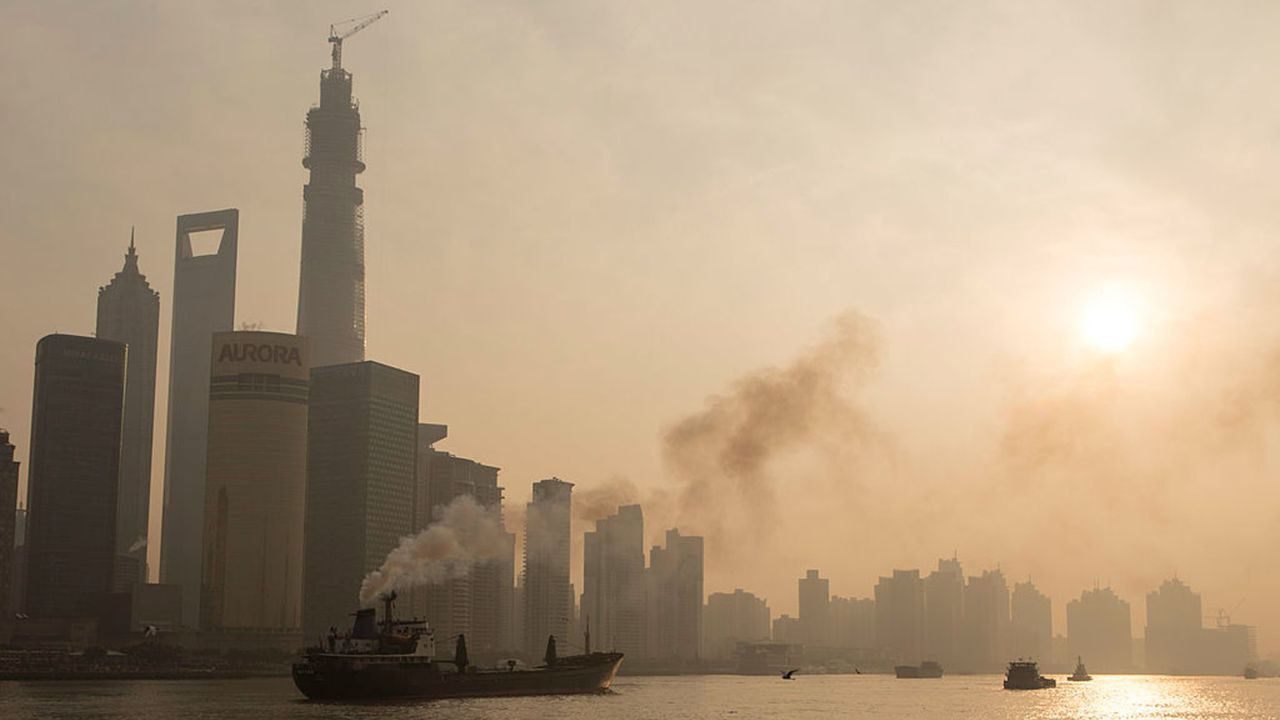
Cleaning up some of the world’s worst air pollution turned out to have a ripple effect nobody fully anticipated — all the way up in the Arctic. A new study has found that China’s major push to reduce airborne pollutants had a surprising consequence: it helped reduce certain storms over the Arctic Ocean and, with them, slowed some sea ice loss in the region.
But the story doesn’t end there. The same drop in aerosols that brought cleaner skies to Chinese cities may have simultaneously accelerated global warming. It’s a striking example of how interconnected the Earth’s systems really are — and how solving one environmental problem can quietly complicate another.
The findings come from new research highlighted by scientists studying the relationship between industrial aerosol emissions and large-scale climate patterns. The results are drawing attention from climate researchers around the world.
What China’s Air Pollution Cleanup Actually Did
For decades, China’s rapid industrial growth came with a heavy cost: some of the most severe air pollution on the planet. Smog blanketed major cities, and the health toll on ordinary people was enormous. Eventually, the Chinese government launched an aggressive campaign to cut emissions, and by most measures, it worked — air quality improved significantly.
What researchers didn’t fully expect was that this cleanup would send measurable effects thousands of miles away to the Arctic.
According to the new study, the reduction in aerosols — tiny particles suspended in the atmosphere from burning fossil fuels and other industrial activity — affected weather patterns in ways that reached the Arctic Ocean. Specifically, the research found that fewer aerosols meant diminished aerosol-fueled storms in the Arctic region, which in turn reduced the churning of sea ice that those storms typically cause.
Less storm activity, the research suggests, translated into less sea ice loss than would otherwise have occurred. That’s a counterintuitive finding in a region that has been losing ice at an alarming rate.
The Trade-Off That Makes This So Complicated
Here’s where the story gets harder to celebrate without reservation. Aerosols — for all the damage they do to human lungs — actually have a cooling effect on the atmosphere. They reflect sunlight and can influence cloud formation in ways that partially offset warming from greenhouse gases.
When China dramatically cut its aerosol emissions, it removed some of that atmospheric cooling effect. The result, experts say, may have contributed to accelerating global warming at a broader scale.
“The Chinese people suffered under bad air quality for decades,” said Bjørn Samset, a senior researcher at the CICERO Center for International Climate Research, as quoted in the original reporting.
Samset’s comment points to the deeply human dimension of this issue. The people who bore the health burden of that pollution had every right to cleaner air. Yet the atmospheric system doesn’t offer clean trade-offs. Reducing one type of harm can quietly amplify another — especially when the mechanisms play out across hemispheres.
Why the Arctic Keeps Showing Up in These Stories
The Arctic is warming roughly four times faster than the global average, making it one of the most sensitive indicators of climate change on Earth. Sea ice loss there doesn’t just matter for polar bears — it affects ocean circulation, weather patterns across the Northern Hemisphere, and sea level rise over the long term.
The fact that aerosol reductions from Chinese industry could register as a measurable effect on Arctic sea ice underscores just how tightly coupled the Earth’s climate systems are. A policy decision made in Beijing — even one aimed at improving public health — can show up in ice conditions above the Arctic Circle.
This kind of long-range atmospheric connection is sometimes called teleconnection, and it’s an active area of climate science. Researchers are increasingly focused on understanding how regional changes in emissions, land use, and temperature ripple outward into global patterns.
What the Research Tells Us — and What It Doesn’t
| Finding | Implication |
|---|---|
| China’s aerosol reduction diminished Arctic storms | Less storm-driven sea ice loss in the short term |
| Fewer aerosols reduce atmospheric cooling effect | May have contributed to accelerated global warming |
| Aerosols affect cloud formation and sunlight reflection | Industrial pollution had been partially masking warming |
| Arctic is highly sensitive to atmospheric changes | Regional emission decisions can have polar-scale effects |
What the current research confirms is a real and measurable link between China’s pollution cleanup and Arctic conditions. What it does not resolve is the broader policy question: how the world should weigh the undeniable public health benefits of cleaner air against the complex, sometimes contradictory effects on the global climate system.
That’s not a question science alone can answer. But science is making the trade-offs harder to ignore.
What This Means for How We Think About Pollution Policy
For policymakers and climate scientists alike, this research adds a layer of complexity to an already difficult conversation. Cutting air pollution is unambiguously good for human health. But if those same pollutants were partially — and inadvertently — acting as a brake on warming, then cleaning them up without simultaneously cutting greenhouse gas emissions leaves the planet more exposed.
- Aerosol reduction improves public health outcomes significantly
- But aerosols have been partially masking the true extent of greenhouse gas warming
- As countries clean up their air, the underlying warming signal may become more visible — and more intense
- Arctic sea ice, already under severe pressure, sits at the intersection of these competing forces
The takeaway isn’t that China was wrong to clean up its air — far from it. The takeaway is that greenhouse gas emissions need to come down just as urgently, because the cooling cover that pollution once provided is now being lifted.
Frequently Asked Questions
What did the new study find about China’s air pollution cleanup and the Arctic?
The study found that China’s significant reduction in aerosol emissions diminished certain storms in the Arctic region, which in turn reduced sea ice loss driven by those storms.
Who is Bjørn Samset and what did he say?
Bjørn Samset is a senior researcher at the CICERO Center for International Climate Research. He was quoted acknowledging that the Chinese people had suffered under poor air quality for decades.
How could reducing air pollution accelerate global warming?
Aerosols reflect sunlight and have a cooling effect on the atmosphere. When aerosol levels drop, that cooling effect is reduced, which experts say may contribute to faster warming overall.
Does this mean cleaning up air pollution is bad for the climate?
Not exactly — it means that aerosol reductions need to be paired with aggressive cuts in greenhouse gas emissions, since pollution had been inadvertently masking some of the warming effect.
Why does the Arctic matter so much in this research?
The Arctic is one of the fastest-warming regions on Earth and is highly sensitive to atmospheric changes, making it a key indicator of how regional emission decisions play out at a global scale.
Is this the final word on the connection between Chinese emissions and Arctic ice?
This research highlights a significant link, but the full picture of how regional aerosol changes affect global climate systems remains an active and evolving area of scientific study.




Leave a Reply