
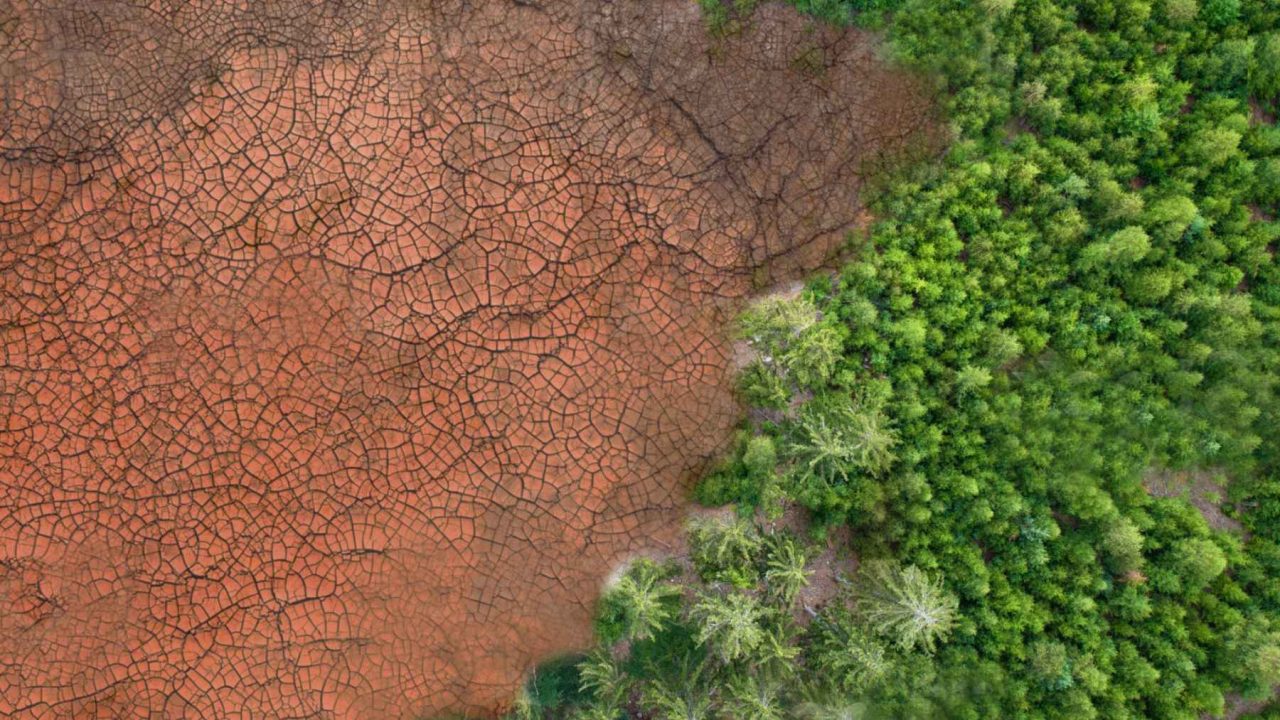
More than 66 billion trees planted. A green belt stretching 3,046 kilometers around one of the most forbidding landscapes on Earth. And now, a 2026 study confirming something that once seemed almost impossible: parts of China’s Taklamakan Desert fringe are pulling more carbon out of the atmosphere than they release, functioning as a measurable carbon sink.
That is a genuinely striking development for a place scientists once described as a “biological void.” But the success of China’s decades-long desert restoration effort is also generating an unexpected complication — one that researchers are only beginning to understand.
Here is what we know about the project, what the new science shows, and why the outcome matters far beyond China’s borders.
The Largest Desert Greening Project in Human History
The Taklamakan Desert is not a small patch of sand. It covers approximately 337,600 square kilometers — roughly 130,350 square miles — making it the largest desert in China and the second largest shifting sand desert in the world. For most of recorded history, it was defined by moving dunes, relentless dust storms, and an almost complete absence of vegetation.
China’s effort to push back against that reality began in 1978 with the launch of the Three-North Shelterbelt Program, sometimes called the “Great Green Wall.” The initiative was designed to slow desertification, protect farming communities, stabilize transport routes, and shield settlements from the desert’s encroaching edges.
The species chosen for the job were built for survival in extreme conditions: desert poplar, sacsaoul, and red willow — hardy plants capable of anchoring sand and tolerating the brutal heat and water scarcity of the region.
Then, in November 2024, Chinese authorities announced a milestone: the completion of a continuous 3,046-kilometer green belt encircling the entire Taklamakan. It is the kind of infrastructure achievement that is difficult to picture at human scale — a living barrier nearly 1,900 miles long, planted tree by tree over decades.
What the New Research Actually Found
The 2026 study adds a scientific dimension to what had previously been understood mainly as an engineering and conservation story. Using satellite data, researchers found that the restored fringe zones around the Taklamakan are now functioning as a net carbon sink — meaning the vegetation is absorbing more carbon dioxide than the ecosystem is releasing.
That is a meaningful shift. Deserts are not traditionally counted among the world’s carbon-storing landscapes. The finding suggests that large-scale dryland restoration, when sustained over decades, can alter the carbon dynamics of a region in measurable ways.
Officials have noted that the program’s goals were always focused on practical outcomes — protecting farmland, reducing dust, stabilizing communities — rather than carbon accounting. The carbon sink finding is, in that sense, an added benefit that was not the original target.
Key Facts About the Taklamakan Restoration Project
| Detail | Figure |
|---|---|
| Trees planted (total) | More than 66 billion |
| Green belt length | 3,046 kilometers (approx. 1,900 miles) |
| Green belt completion announced | November 2024 |
| Program launch year | 1978 |
| Desert area (Taklamakan) | ~337,600 sq km (130,350 sq miles) |
| Desert ranking | Largest in China; 2nd largest shifting desert globally |
| Key tree species used | Desert poplar, sacsaoul, red willow |
| Carbon finding published | 2026 study using satellite data |
- The Three-North Shelterbelt Program has been running for nearly five decades
- The green belt is designed to protect settlements, farmland, and transport infrastructure
- The Taklamakan was historically characterized by moving dunes and extreme aridity
- Restored fringe zones — not the desert core — are where the carbon sink effect has been detected
The Unexpected Problem Success Created
Here is where the story takes its twist. The very success of the greening project is now producing consequences that planners did not fully anticipate when the program began.
What is clear is that transforming the edges of one of the world’s driest deserts into a zone of sustained vegetation growth changes the local environment in ways that extend well beyond the original goals of dust suppression and land protection.
Researchers and officials are now working to understand those second-order effects. Whether they relate to water usage by the planted trees, changes in local wind and dust patterns, or ecological pressures on native desert species, the scale of the intervention means the ripple effects are real and worth monitoring carefully.
This is not an unusual outcome for megaprojects of this kind. Ambitious environmental interventions often produce results that surprise even their architects — sometimes positively, sometimes in ways that require adjustment. The Taklamakan project appears to be entering that more complex phase.
Why This Matters Beyond China
Desertification is not a problem unique to China. Across Central Asia, sub-Saharan Africa, and parts of South America, expanding deserts threaten agricultural land, water supplies, and the communities that depend on both. China’s experience — spanning nearly 50 years, involving billions of trees, and now producing measurable climate benefits — offers a data set that other countries and researchers will be studying closely.
The carbon sink finding is particularly relevant. As governments around the world search for scalable ways to remove carbon dioxide from the atmosphere, the Taklamakan results suggest that restoring degraded dryland ecosystems could play a larger role in climate strategy than previously assumed.
At the same time, the unexpected complications serve as a reminder that ecological systems are complex. Planting trees at scale is not a simple solution — it requires long-term management, monitoring, and a willingness to respond when outcomes diverge from projections.
What Researchers Are Watching Next
The 2026 study marks a new phase of attention on the Taklamakan project. With the green belt now physically complete, the scientific focus is shifting from construction to consequence — tracking how the restored zones evolve, how the carbon dynamics change over time, and what the unexpected complications mean in practice.
Satellite monitoring will continue to play a central role, given the sheer size of the area involved. Researchers will be watching whether the carbon sink effect expands, stabilizes, or shifts as the planted vegetation matures.
The Three-North Shelterbelt Program itself is ongoing. Completing the green belt around the Taklamakan is a milestone, not an endpoint — maintenance, adaptation, and continued planting in other areas remain part of the work ahead.
Frequently Asked Questions
How many trees has China planted as part of this desert project?
Chinese authorities have planted more than 66 billion trees as part of the effort to combat desertification around the Taklamakan Desert and broader dryland regions.
When was the green belt around the Taklamakan Desert completed?
Chinese authorities announced the completion of the 3,046-kilometer green belt surrounding the Taklamakan Desert in November 2024.
What is the Three-North Shelterbelt Program?
It is a large-scale tree-planting and land restoration program launched by China in 1978, designed to slow desertification and protect settlements, farmland, and transport routes in the country’s northern and western regions.
What did the 2026 study find about the Taklamakan Desert?
The study found that restored fringe zones around the Taklamakan are now functioning as a net carbon sink, meaning they absorb more carbon dioxide than they release — a significant finding for one of the world’s driest landscapes.
What is the unexpected problem the project created?
Which tree species were used in the Taklamakan green belt?
Planners selected hardy desert-adapted species including desert poplar, sacsaoul, and red willow, chosen for their ability to survive extreme heat and water scarcity.


Leave a Reply