
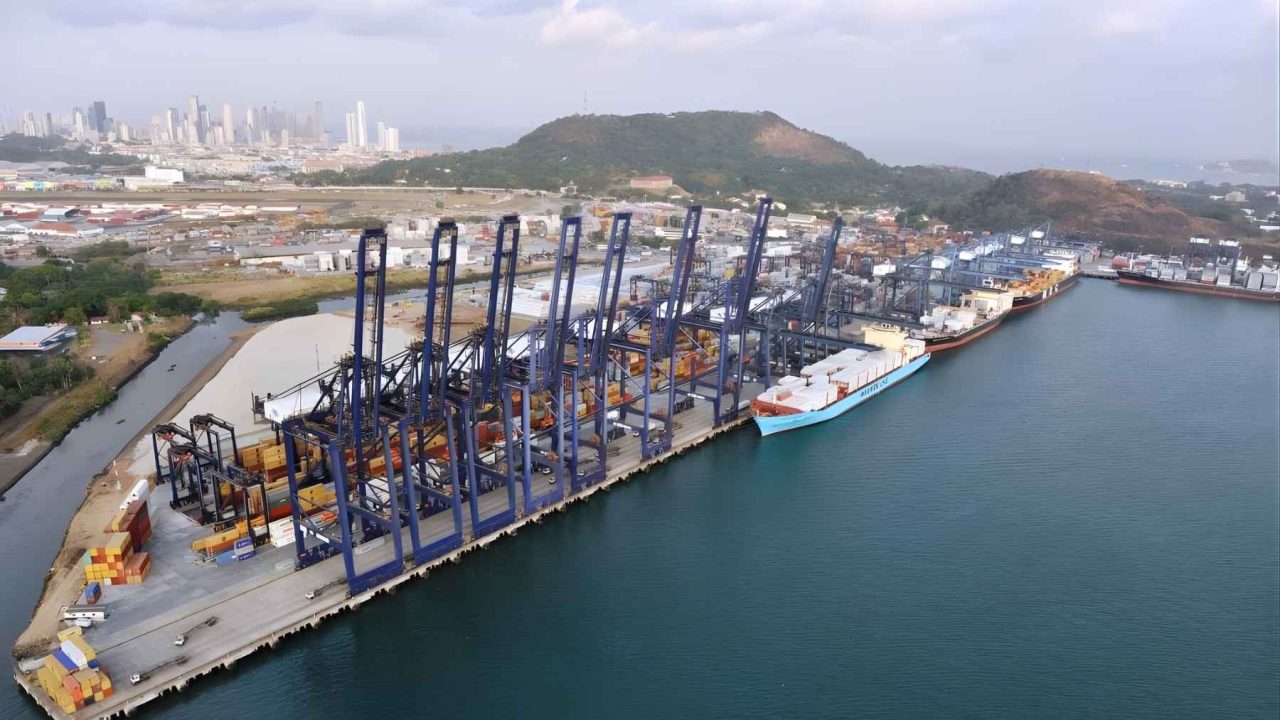
About 5 percent of all global maritime trade passes through the Panama Canal every single day. Now, a court ruling that stripped a major operator of its port contracts at both ends of that corridor has triggered a sharp diplomatic confrontation — and the consequences reach well beyond Panama City or Beijing.
Panama’s Supreme Court voided the contract that allowed CK Hutchison to operate the Balboa and Cristóbal terminals, which sit at the Pacific and Atlantic entrances to the canal. The ruling found the original contract violated the constitution, the public interest, and — notably — lacked a requirement for environmental impact assessments. For two port facilities flanking one of the world’s most critical shipping routes, that last point is not a minor procedural detail.
https://twitter.com/JoseRaulMulino/status/2019028031327629624
China’s response was swift and unusually blunt. On February 3, Beijing’s Hong Kong and Macao Affairs Office warned that Panama would pay a “high price” for the decision, calling the ruling “absurd” and “shameful and pathetic.” Panama’s president fired back the very next day.
What the Court Actually Ruled — and Why the Environmental Detail Matters
Most of the coverage around this story has focused on the geopolitical angle: the United States has long expressed concern about Chinese-linked companies operating infrastructure near the canal, and the ruling plays into that broader tension. But the Supreme Court’s reasoning goes further than politics.
According to Reuters, the court found three distinct problems with the original port contract: it violated the constitution, it went against the public interest, and it was issued without requiring environmental impact assessments. That third finding is significant. Balboa and Cristóbal are not inland industrial facilities — they operate directly alongside one of the most ecologically sensitive and strategically important waterways on earth.
Environmental review requirements exist precisely to ensure that operations at sites like these are scrutinized for their long-term effects. The absence of that requirement in the original contract suggests the deal was structured in ways that bypassed normal regulatory safeguards — a point that could have implications for how any future contract is negotiated.
China’s Warning and Panama’s Response
Beijing’s reaction to the ruling was notable for its tone. The Hong Kong and Macao Affairs Office — the Chinese government body that oversees policy toward Hong Kong, where CK Hutchison is headquartered — did not simply express concern or request dialogue. It issued a direct threat, warning Panama of a “high price” and describing the court’s decision in terms rarely used in official diplomatic language.
President José Raúl Mulino’s response, delivered on February 4, was equally direct. He stated that Panama is a state governed by law and that its judiciary operates independently from the central government. The message was clear: the ruling was not a political decision that could be reversed through diplomatic pressure.
That exchange sets up a standoff with real consequences. Panama has asserted its legal sovereignty. China has signaled it views the outcome as unacceptable. What happens to the port contracts in the interim — and who ultimately operates those terminals — remains unresolved.
Key Facts at a Glance
| Detail | What the Source Confirms |
|---|---|
| Terminals affected | Balboa (Pacific entrance) and Cristóbal (Atlantic entrance) |
| Previous operator | CK Hutchison |
| Court ruling basis | Constitutional violation, public interest, missing environmental impact assessment requirement |
| China’s warning date | February 3 |
| Panama’s response date | February 4 |
| Share of global maritime trade through the canal | Approximately 5 percent |
| Chinese body that issued the warning | Hong Kong and Macao Affairs Office |
- The Balboa terminal sits at the Pacific entrance to the Panama Canal
- The Cristóbal terminal sits at the Atlantic entrance
- CK Hutchison is headquartered in Hong Kong
- The contract was found to lack environmental impact assessment requirements
- President Mulino emphasized judicial independence from the executive branch
Why This Affects More Than Panama and China
The Panama Canal is not a regional shipping route. It is a global chokepoint. Roughly 5 percent of all world maritime trade moves through it — container ships, bulk carriers, tankers, and cargo vessels connecting Asia, the Americas, and Europe. Any disruption to port operations at either entrance can ripple outward into shipping schedules, freight costs, and supply chains that consumers in dozens of countries depend on.
Uncertainty about who controls or operates the Balboa and Cristóbal terminals creates exactly the kind of operational ambiguity that shipping companies, insurers, and logistics planners watch closely. Even before a single container is rerouted, the legal and diplomatic instability around these terminals can affect how companies plan their routes and contracts.
The environmental dimension adds another layer. If future port operations at these sites require proper impact assessments — as they arguably should have from the start — that could affect timelines, the terms of any new contract, and the conditions under which the terminals are allowed to expand or modify their operations.
What Comes Next for Panama’s Ports
The immediate question is what happens to the Balboa and Cristóbal terminals now that the existing contract has been voided.
What is clear is that Panama has drawn a firm line around its judicial independence, and China has signaled it is not prepared to accept the outcome quietly. The next phase of this dispute will likely play out through a combination of legal processes, diplomatic negotiations, and decisions about who is ultimately allowed to operate two of the most strategically positioned port terminals in the world.
The canal itself continues to function. But the battle over who controls the infrastructure around it is very much ongoing.
Frequently Asked Questions
Why did Panama’s Supreme Court void CK Hutchison’s port contract?
The court found the contract violated the constitution and the public interest, and that it was issued without requiring environmental impact assessments for the two terminals.
Which terminals are at the center of this dispute?
The Balboa terminal, located at the Pacific entrance to the Panama Canal, and the Cristóbal terminal, located at the Atlantic entrance.
What did China say in response to the ruling?
Beijing’s Hong Kong and Macao Affairs Office warned Panama it would pay a “high price” and called the court’s decision “absurd” and “shameful and pathetic.”
How did Panama’s president respond to China’s warning?
President José Raúl Mulino stated on February 4 that Panama is a state governed by law and that its judiciary is independent from the central government.
How much of global trade passes through the Panama Canal?
Approximately 5 percent of global maritime trade moves through the Panama Canal, making it one of the world’s most critical shipping corridors.
What happens to the terminals now that the contract is void?
The specific next steps — including whether a new contract will be tendered or what legal remedies may follow — have not yet been confirmed in available reporting.

Leave a Reply