
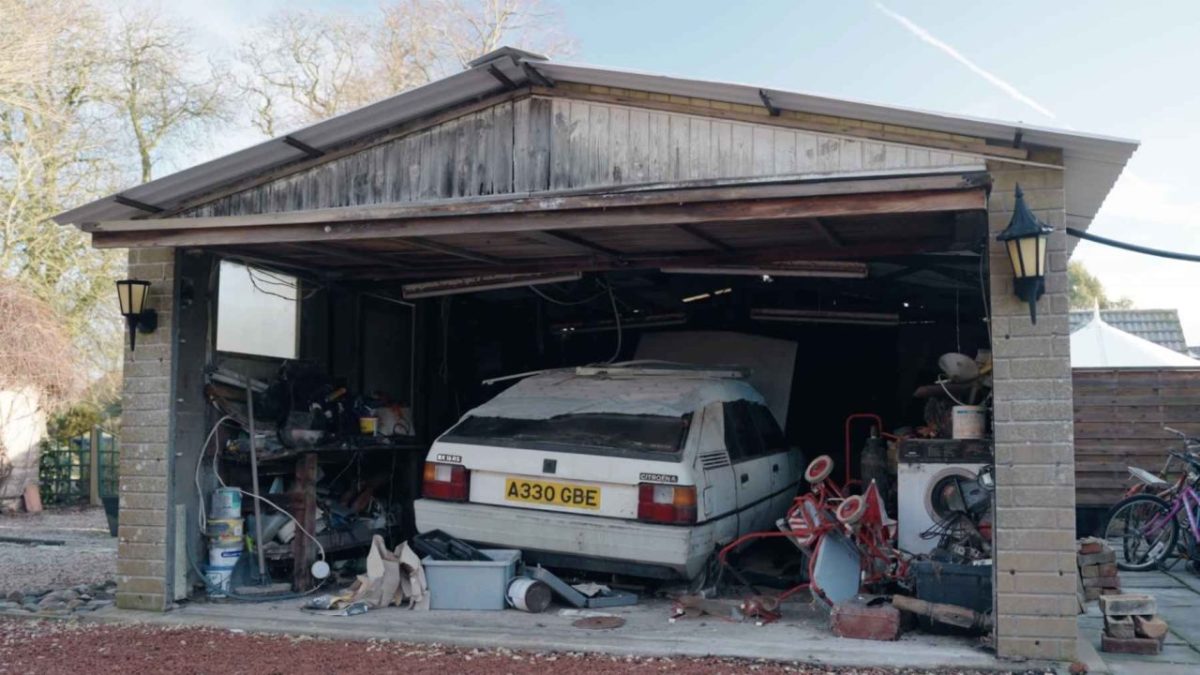
A sticker on the rear window said it all: “Loves driving, hates garages.” The cruel irony is that the car it was stuck to spent 38 years locked inside one.
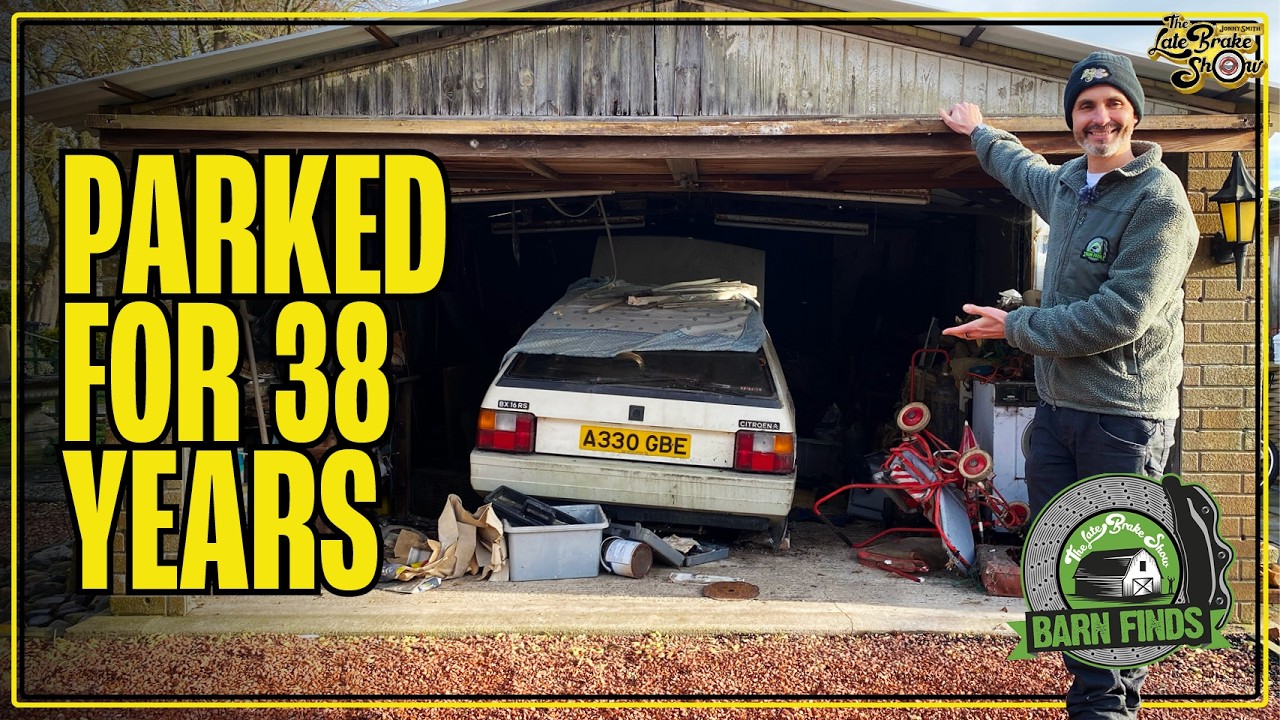
In Lincolnshire, England, a 1983 Citroën BX 16RS has finally been brought back into daylight after sitting completely untouched since 1988. The car belonged to a Royal Air Force jet engineer who had a connection to one of the most dramatic moments in motorsport history — and the story of what was found inside that barn is the kind of thing that makes even non-car people stop scrolling.
This isn’t just a story about a forgotten hatchback. It’s about time, loyalty to a machine, and the quiet hope that something worth saving still can be.
The Man Behind the Car — and His Link to the World Land Speed Record
The original owner wasn’t just any driver. He was a Royal Air Force jet engineer who worked on Thrust 2 — the vehicle that claimed the official world land speed record in October 1983. According to Guinness World Records, driver Richard Noble piloted Thrust 2 to an official average of 633.468 mph. Contemporary reporting on the project put its peak speed even higher, at 650.88 mph.
That’s the kind of engineering work that defines a career. And yet, around that same historic moment, the man bought himself something far more ordinary: a practical family hatchback. Not a racer. Not a collector’s piece. A Citroën BX.
He drove it for roughly five years before parking it for good in 1988. The reasons why aren’t fully known. But the car stayed exactly where he left it — and it stayed there until after his death, when his family decided it was time to open the barn doors again.
What the 1983 Citroën BX 16RS Actually Was
The BX wasn’t built to break records. It was Citroën’s answer to the practical European family car of the early 1980s — hydropneumatic suspension, lightweight construction, and the kind of sensible design that aged quietly rather than loudly.
The 16RS trim was a sportier variant, but it was still firmly in family-car territory. What makes this particular example notable isn’t the model — it’s the condition, the provenance, and the sheer rarity of finding one that has survived at all. Most BX models from this era have long since been scrapped or rusted away entirely.
| Detail | Information |
|---|---|
| Vehicle | 1983 Citroën BX 16RS |
| Last driven (approx.) | Around 1988 |
| Years stored | Approximately 38 years |
| Storage location | Barn in Lincolnshire, England |
| Original owner’s profession | Royal Air Force jet engineer |
| Connection to motorsport | Worked on Thrust 2, world land speed record holder (1983) |
| Thrust 2 official record speed | 633.468 mph (Guinness World Records) |
| Thrust 2 reported peak speed | 650.88 mph |
| Inspected by | Jonny Smith, The Late Brake Show |
What Jonny Smith Found When He Opened the Door
Jonny Smith, host of The Late Brake Show, was brought in to inspect the car. What he found was exactly what 38 years of barn storage looks like — and somehow still surprising to see.
The damage was real and significant:
- Visible rust throughout the body
- Mouse damage to the interior
- One wheel missing entirely
- An engine that refused to start
And yet, there it sat. Largely intact. Still recognizably the car it was when it rolled off the production line in 1983. For a vehicle that has been sitting in a damp English barn for nearly four decades, that’s not nothing.
The sticker on the rear glass — “Loves driving, hates garages” — became the defining image of the whole discovery. Whoever put it there clearly never imagined the car would spend most of its life in exactly the place the sticker warned against.
Why the Family Wants It Restored, Not Forgotten
The owner has since passed away, and it’s his family who brought the car back into public view. Their hope is straightforward: they want someone to restore it rather than let it disappear into a scrapyard or a parts auction.
That’s not a small ask. A BX 16RS in this condition would require significant work — new mechanical components, rust treatment, interior repair, and the kind of patient sourcing of period-correct parts that only dedicated enthusiasts tend to take on.
But the backstory gives it weight that most barn finds simply don’t have. A car connected — however indirectly — to one of the most famous land speed record runs in history has a story worth preserving. The engineer who bought it was present for something extraordinary, and the car he chose to drive in the same year says something quietly human about the gap between the machines we work on and the ones we actually live with.
What Happens to the BX From Here
No confirmed buyer or restorer has been announced based on the available information. The family’s wish is that the car finds someone willing to bring it back — not as a museum piece, necessarily, but as a running, driving machine that honors both the vehicle and the man who kept it.
Whether that happens depends entirely on the right person seeing it and caring enough to take it on. Barn finds at this level of deterioration often face a binary outcome: a full restoration by someone with passion and resources, or a slow disappearance into storage once again.
Given the attention the story has already attracted through The Late Brake Show, the odds of the right person finding it are better than they might otherwise be. The car is no longer hidden. Now it just needs someone to believe it’s worth saving.
Frequently Asked Questions
What car was found in the Lincolnshire barn?
A 1983 Citroën BX 16RS that had been stored since approximately 1988, belonging to a deceased Royal Air Force jet engineer.
What is the connection between the owner and Thrust 2?
The owner was a Royal Air Force jet engineer who worked on Thrust 2, the car that set the official world land speed record of 633.468 mph in October 1983, as recorded by Guinness World Records.
Who inspected the barn-find Citroën BX?
Jonny Smith of The Late Brake Show inspected the vehicle and documented its condition.
What condition was the car in when it was found?
The car had rust, mouse damage to the interior, one missing wheel, and an engine that would not start after nearly four decades of storage.
What does the family hope happens to the car?
The family has expressed hope that someone will restore the vehicle rather than letting it be scrapped or left to deteriorate further.
Has a buyer or restorer been confirmed?
This has not yet been confirmed based on currently available information.

Leave a Reply