
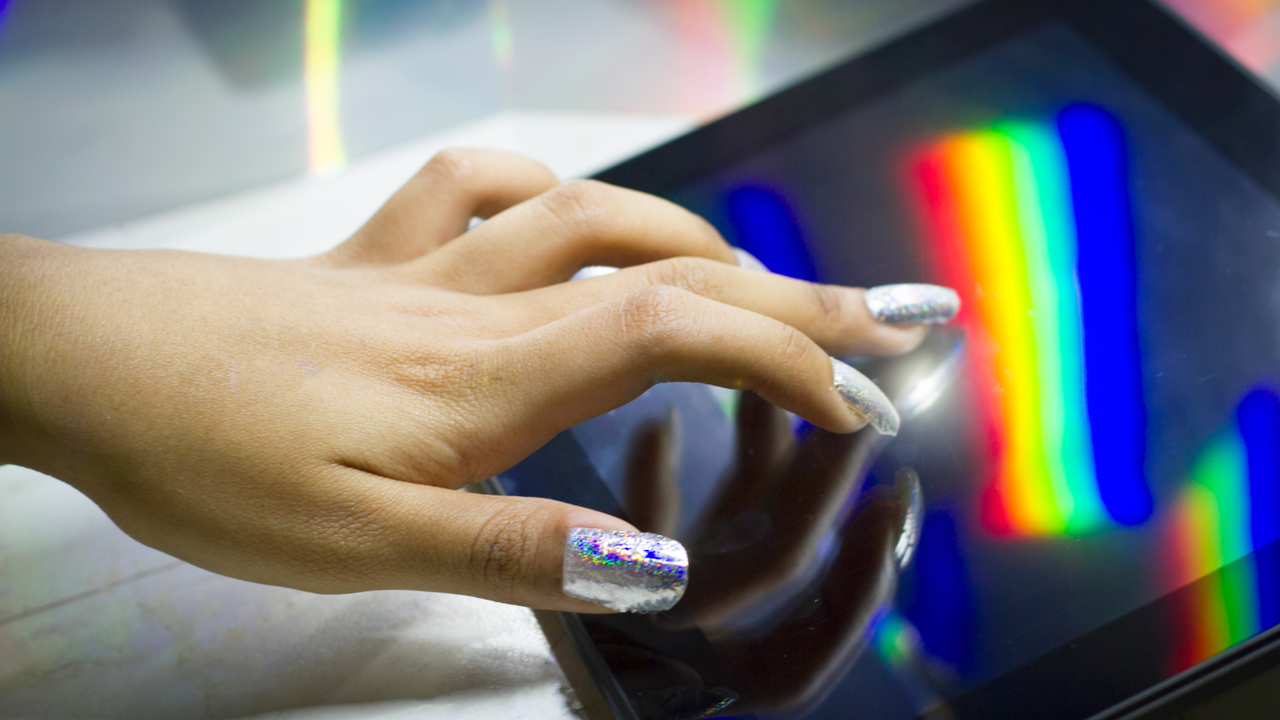
What if painting your nails could turn them into a fully functional touchscreen stylus? That’s no longer a hypothetical. A chemistry student has developed a prototype nail polish designed to do exactly that — and the motivation behind it is more practical than you might expect.
The polish was created after its inventor noticed a real, everyday frustration: people with long fingernails or calloused fingertips often struggle to use their smartphones effectively. Touchscreens rely on detecting the electrical conductivity of human skin, and when a nail tip or hardened skin makes first contact instead of soft fingertip flesh, the screen simply doesn’t respond.
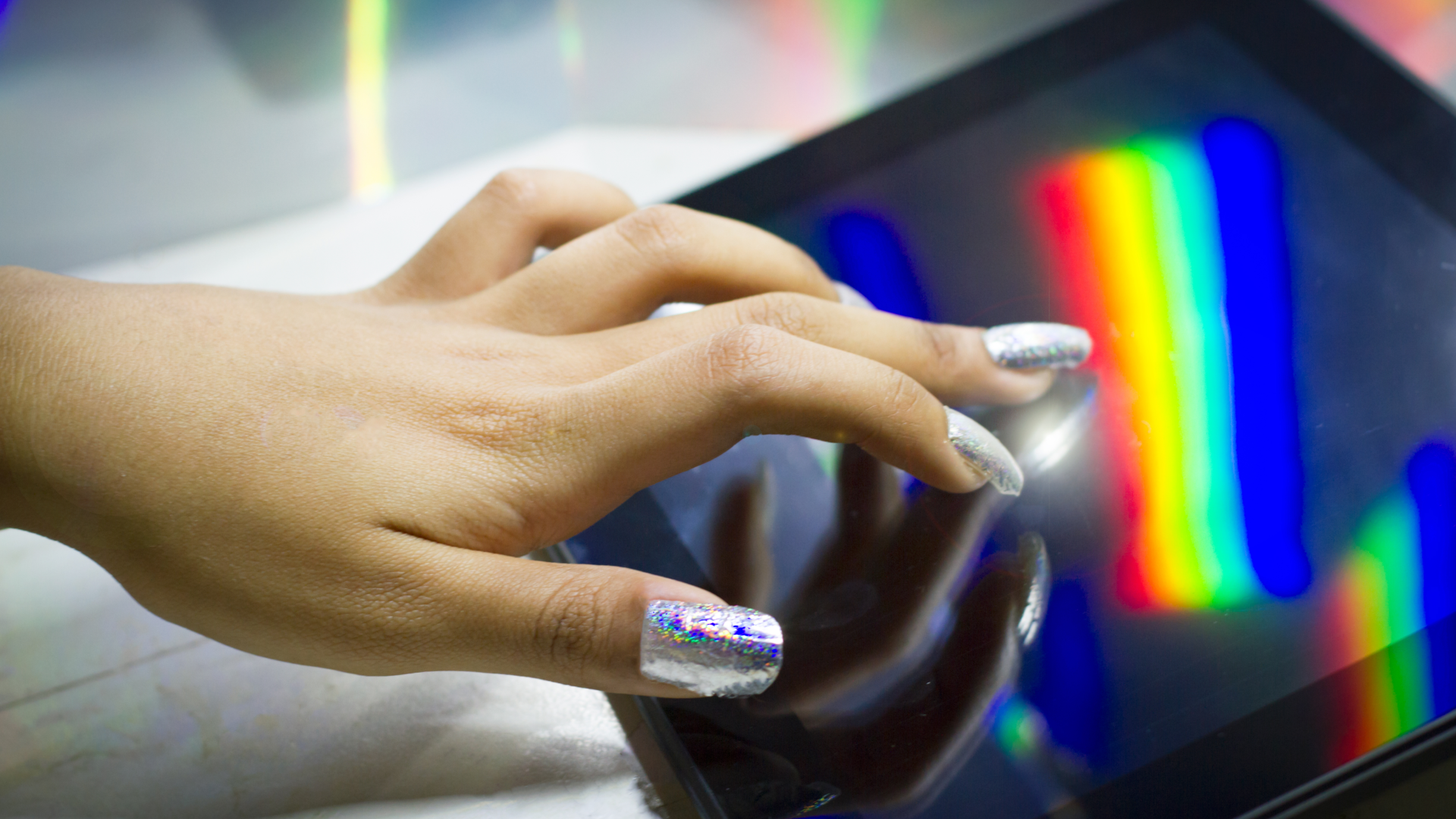
That small daily annoyance became the seed of a research project that’s now drawing attention from the science and tech communities alike.
The Student Behind the Nail Polish Stylus
The polish was developed by Manasi Desai, a student at Centenary College of Louisiana with a focused interest in cosmetic chemistry. She didn’t work alone — her research supervisor, Joshua Lawrence, an associate professor at the college, co-led the project alongside her.
The collaboration between a curious undergraduate and an experienced academic is exactly the kind of pairing that tends to produce genuinely novel ideas. Desai identified a problem that affects a wide range of people and applied chemistry to solve it in a form that’s already part of millions of people’s daily routines: nail polish.
The result is a clear polish — meaning it wouldn’t change the appearance of someone’s nails — that, when applied, allows the nail itself to conduct the kind of electrical signal that touchscreens need to register a tap or swipe.
Why Touchscreens Struggle With Long Nails
To understand why this invention matters, it helps to understand how modern touchscreens actually work. The vast majority of smartphones and tablets use capacitive touchscreen technology, which detects changes in an electrical field caused by the conductivity of human skin.
When you tap a screen with the pad of your finger, the moisture and electrical properties of your skin complete a tiny circuit that the screen can detect. But nails are made of keratin — a hard protein that doesn’t conduct electricity the way skin does. The same goes for heavily calloused skin, which loses much of the moisture and conductivity of softer tissue.
The result? Missed taps, unresponsive swipes, and the awkward habit of turning your finger sideways just to get a screen to react. For people who grow their nails long — whether for aesthetic, cultural, or personal reasons — this is a persistent problem with no elegant solution. Styluses work, but they’re easy to lose and not exactly convenient to carry everywhere.
A conductive nail polish, applied like any other product in a standard beauty routine, sidesteps all of that.
What the Prototype Actually Does
The polish Desai developed is described as clear, which is a significant design choice. It means wearers wouldn’t have to sacrifice the look of their manicure to gain touchscreen functionality. Whether someone’s nails are painted red, French-tipped, or covered in nail art, the conductive polish could theoretically be applied on top without altering the visual result.
The core function is straightforward: the polish introduces conductivity to the nail surface, effectively turning the tip of a long nail into a stylus-like point that a touchscreen can detect and respond to.
| Feature | Detail |
|---|---|
| Developer | Manasi Desai, Centenary College of Louisiana |
| Research Supervisor | Joshua Lawrence, Associate Professor |
| Polish Appearance | Clear (does not change nail color) |
| Primary Function | Turns fingernails into a touchscreen stylus |
| Target Users | People with long nails or calloused fingertips |
| Current Stage | Prototype — not yet market-ready |
Who Actually Stands to Benefit From This
The obvious audience is anyone who grows their nails long. But the scope of people affected by touchscreen responsiveness issues is broader than it first appears.
- People with long natural nails who find standard touchscreen use clumsy or impossible
- People with calloused fingertips — including musicians, manual laborers, and athletes — whose skin has reduced conductivity
- Elderly users whose skin naturally loses moisture and conductivity over time
- Anyone who wears thick gloves in cold weather and doesn’t want to buy special touchscreen-compatible versions
The nail application, though, is where the product has its most natural home. Long nails have been a persistent friction point in the smartphone era, and the beauty industry is a massive, well-established channel for exactly this kind of product.
Not Ready for Store Shelves Yet
It’s worth being clear about where this stands: the polish is still a prototype. According to the source reporting on the project, it is not ready to hit the market just yet. That means questions about commercial availability, pricing, durability, and how it interacts with different nail polish formulations remain unanswered for now.
Research at the prototype stage typically still requires testing for consistency, skin safety, durability through daily use, and compatibility with the wide variety of touchscreen devices on the market. A polish that works on one phone’s screen but not another would have limited practical value.
Still, the concept is sound, and the problem it solves is real. The path from a college research project to a consumer product has been traveled before — and the cosmetic chemistry field is one where academic innovation and commercial application tend to move closer together than in many other disciplines.
Whether Desai’s formula eventually ends up on beauty store shelves or inspires a larger company to develop something similar, the idea itself has already done something useful: it reframed a daily annoyance as an engineering problem worth solving.
Frequently Asked Questions
Who invented the conductive nail polish?
The polish was developed by Manasi Desai, a student at Centenary College of Louisiana studying cosmetic chemistry, working alongside her research supervisor Joshua Lawrence.
What does the nail polish actually do?
It is designed to make fingernails conductive, allowing them to interact with capacitive touchscreens in the same way a stylus or fingertip would.
Will it change the look of your nails?
The prototype is described as clear, meaning it would not alter the appearance of nails or any existing nail polish underneath it.
Is it available to buy right now?
No. The polish is currently a prototype and is not yet ready for commercial release.
Who would benefit most from this product?
People with long fingernails or calloused fingertips who struggle to use touchscreen devices effectively are the primary intended users.
Where was the research conducted?
The project was developed at Centenary College of Louisiana, a small liberal arts college, as part of a student-led research initiative in cosmetic chemistry.



Leave a Reply