
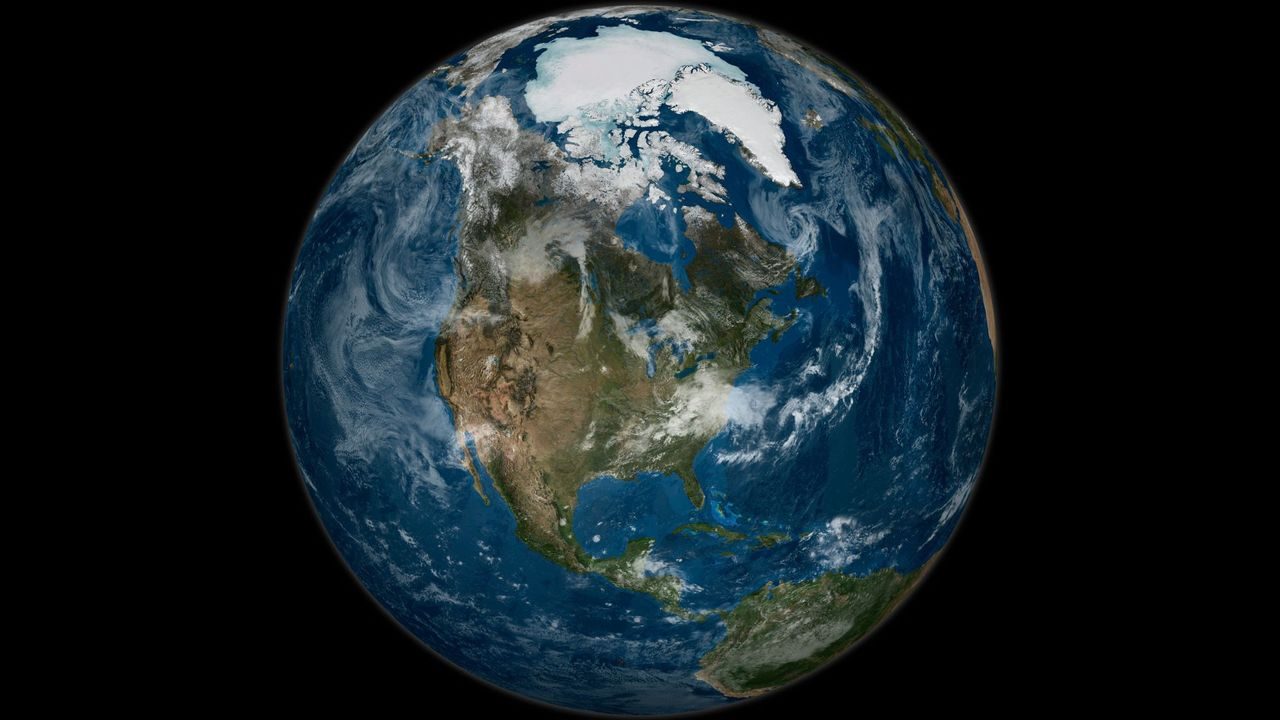
Earth’s days are getting longer — and human-driven climate change is the reason. According to a new study, rising sea levels caused by climate change are slowing Earth’s rotation at a rate not seen in 3.6 million years, adding 1.33 milliseconds to the length of every day per century. That might sound trivial, but in planetary terms, it’s a dramatic shift — and it’s accelerating.
This isn’t a distant, abstract threat buried in a scientific journal. It’s a measurable, ongoing consequence of the same greenhouse gas emissions that are warming oceans, melting ice sheets, and raising sea levels around the world. The planet itself is responding to what humans are doing — and it’s doing so in ways that reach far beyond rising tides.
Understanding why this is happening requires a quick trip back to high school physics — and a surprisingly useful comparison to figure skating.
Why Climate Change Is Making Earth Spin Slower
The key to understanding this phenomenon lies in something called the conservation of angular momentum. Earth spins faster when its mass is concentrated closer to its axis — and slower when that mass spreads outward. Scientists use figure skaters to explain it: a skater pulls their arms in to spin faster, and extends them to slow down.
The same principle applies to our planet. As climate change drives sea level rise, water that was once locked in glaciers and ice sheets — concentrated near the poles — is redistributed across the world’s oceans. That spreading of mass away from Earth’s rotational axis causes the planet to spin more slowly, stretching out the length of each day.
This connection between sea level rise and Earth’s rotation has been known to scientists for some time. What the new study establishes is the scale and historical context of what’s happening right now — placing the current rate of slowdown in a timeline stretching back millions of years.
What the Numbers Actually Tell Us
The figures coming out of this research are striking when laid out clearly. The study finds that the current rate of rotational slowing is unprecedented in at least 3.6 million years — a span of time that predates modern humans entirely.
| Finding | Detail |
|---|---|
| Rate of day lengthening | 1.33 milliseconds per century |
| Primary cause | Climate change-driven sea level rise |
| Historical comparison | Rate not seen in approximately 3.6 million years |
| Mechanism | Redistribution of mass from poles to oceans slows Earth’s spin |
Key points from the research include:
- Earth spins faster when mass is concentrated near its axis, slower when mass spreads outward
- Melting ice sheets and glaciers redistribute water from polar regions to the world’s oceans
- This outward redistribution of mass is directly slowing Earth’s rotation
- The rate of slowdown is historically unusual — not seen in millions of years of geological record
- The driver is identified as human-caused climate change, not natural variation
How This Connects to the Bigger Climate Picture
It’s easy to think of climate change effects as things that happen on the surface — hotter summers, stronger storms, coastal flooding. But this research is a reminder that the consequences reach into the fundamental mechanics of the planet itself.
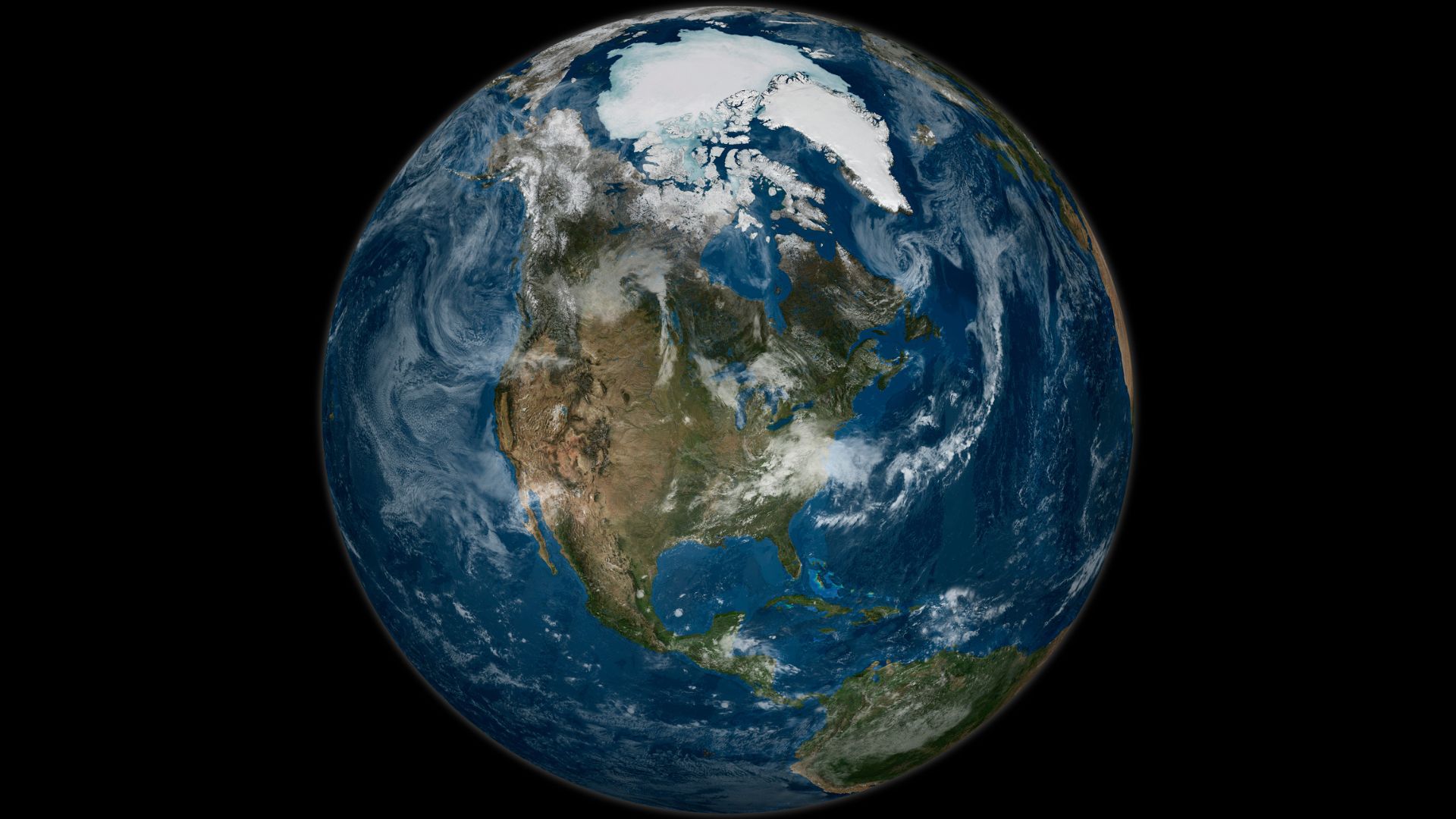
When ice melts at the poles, it doesn’t just raise sea levels locally. It shifts the physical distribution of mass across the entire Earth. That shift has a measurable effect on how fast the planet rotates. The Earth is not a static object — it responds dynamically to what happens on its surface, and right now, human activity is pushing it into territory it hasn’t experienced in millions of years.
The 3.6 million year benchmark is particularly significant. That timeframe predates Homo sapiens entirely — meaning that in the entire history of our species, Earth has never experienced a rotational slowdown of this kind. The current generation is witnessing something genuinely without human precedent.
Does a Longer Day Actually Affect Anyone?
At 1.33 milliseconds per century, the change in day length isn’t something anyone will feel walking to work. But the implications extend into systems that depend on extraordinary precision.
Modern GPS satellites, financial trading systems, telecommunications networks, and scientific instruments all rely on highly accurate timekeeping. Even tiny, cumulative shifts in Earth’s rotation can create discrepancies that engineers and timekeepers must account for. Leap seconds — occasional one-second adjustments added to Coordinated Universal Time — already exist partly because Earth’s rotation isn’t perfectly consistent.
As the rate of slowdown increases, the frequency and complexity of those corrections could grow. It’s a technical challenge that sits quietly in the background of the digital infrastructure billions of people use every day.
Beyond timekeeping, the research adds another layer of evidence to the case that climate change is reshaping Earth in ways that compound and interact. Sea level rise doesn’t just threaten coastlines — it alters the rotation of the planet. These are not isolated effects. They are interconnected consequences of a warming world.
What Comes Next for This Research
The study places the current moment in a geological timeline, but the trajectory going forward will depend heavily on how much further sea levels rise — which in turn depends on how aggressively greenhouse gas emissions are reduced in the coming decades.
If warming continues at its current pace, ice sheets will keep melting, sea levels will keep rising, and the redistribution of mass that is slowing Earth’s rotation will continue. The 1.33 milliseconds per century figure represents the current rate — not a fixed ceiling.
Researchers will likely continue refining these measurements as sea level data improves and longer observational records become available. For now, the study stands as a striking illustration of just how deeply human activity has become embedded in the physical systems of the planet — right down to the speed at which it turns.
Frequently Asked Questions
How much is climate change slowing Earth’s rotation?
According to the new study, climate change-driven sea level rise is increasing the length of days by 1.33 milliseconds per century.
Why does sea level rise slow Earth’s rotation?
When ice melts and water spreads across the oceans, mass moves outward from Earth’s axis. This redistribution slows the planet’s spin, much like a figure skater extending their arms to slow a spin.
How historically unusual is this slowdown?
The study finds the current rate of rotational slowing is unprecedented in approximately 3.6 million years — a timeframe that predates modern humans.
Will people notice longer days in their lifetime?
At 1.33 milliseconds per century, the change is far too small for any person to perceive directly, though it can affect precision timekeeping systems over time.
Is this slowdown reversible?
The study does not confirm specific reversibility scenarios, but the rate of slowdown is tied to continued sea level rise, which depends on future greenhouse gas emissions and warming trajectories.
Does this affect GPS or other technology?
Changes in Earth’s rotation can create small but meaningful discrepancies in systems that depend on precise timekeeping, such as GPS networks and telecommunications infrastructure.


Leave a Reply