
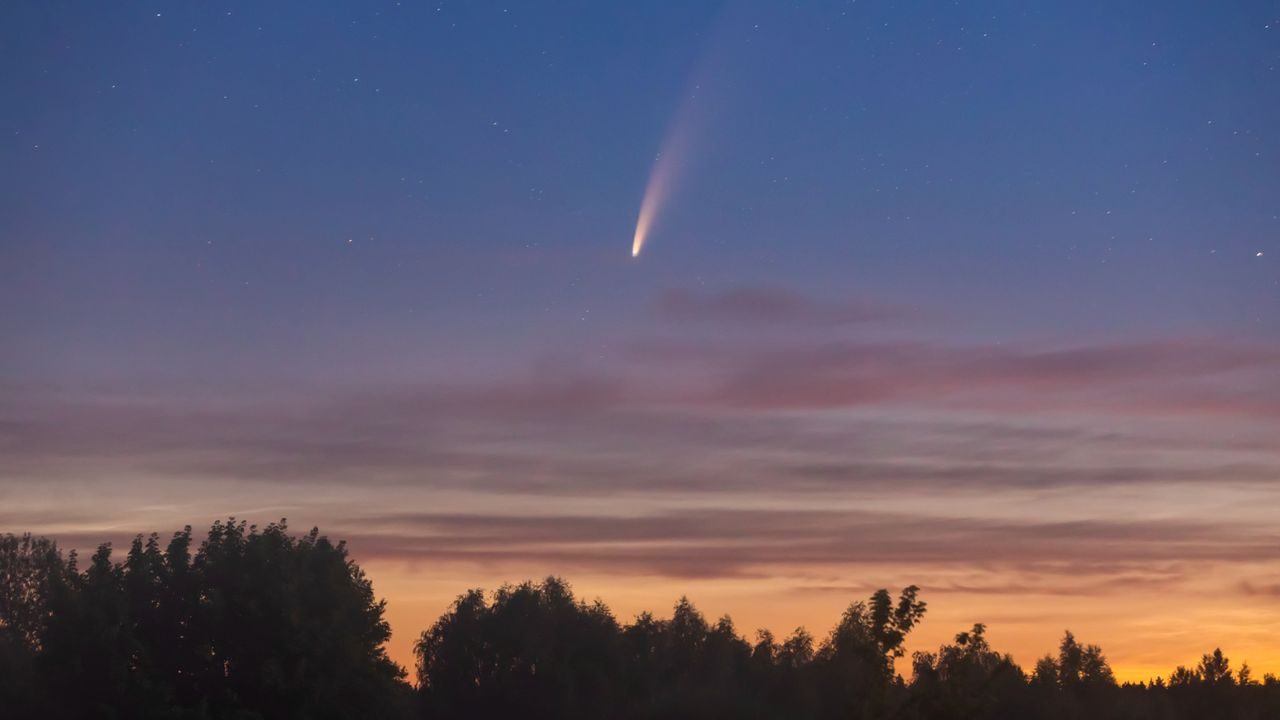
A new comet is brightening in the night sky right now, and skywatchers are watching it closely. Comet C/2025 R3 (PanSTARRS) has been gaining attention among comet hunters as it makes its way toward its closest approaches to both Earth and the sun — and there’s a real chance it could become visible to the naked eye around mid-April.
If that happens, it would mark one of the most memorable skywatching events of the year. But catching it won’t be easy. This comet is a pre-dawn spectacle, meaning you’ll need to set your alarm well before sunrise and find a spot with a clear horizon to stand any chance of seeing it.
The excitement follows a separate comet event — Comet C/2026 A1 — making this an unusually active period for comet watchers. For anyone who missed Comet Neowise back in 2020, C/2025 R3 (PanSTARRS) could offer a similar kind of moment.
What Is Comet C/2025 R3 (PanSTARRS) and Why Is It Getting Attention?
Comets are chunks of ice, dust, and rock that travel through the solar system on long elliptical orbits. As they swing closer to the sun, solar heat causes their icy surfaces to vaporize, releasing gas and dust that forms the glowing coma and tail we see from Earth. The brighter that outgassing becomes, the more spectacular the comet appears in the sky.
C/2025 R3 (PanSTARRS) was discovered by the PanSTARRS survey system, a Hawaii-based telescope network designed specifically to scan the sky for near-Earth objects and other transient astronomical phenomena. The “C/2025 R3” designation tells astronomers it’s a non-periodic comet first observed in 2025.
What’s driving the current excitement is the comet’s brightening trend. As it moves closer to the inner solar system, its brightness has been increasing — and astronomers are watching to see whether it will cross the threshold into naked-eye visibility. Around April 16, conditions could be favorable enough for observers without any equipment to spot it, though binoculars would significantly improve the view.
Comets are notoriously unpredictable. They can brighten faster than expected, or fizzle out entirely. That uncertainty is part of what makes following a comet like this one so compelling for amateur astronomers.
How C/2025 R3 (PanSTARRS) Compares to Comet Neowise
The comparison to Comet Neowise C/2020 F3 is worth understanding. Neowise became one of the most widely seen comets in decades when it appeared in July 2020, visible to the naked eye for weeks and photographed by millions of people across the Northern Hemisphere. It was bright enough to spot even from light-polluted cities, which is extraordinarily rare for comets.
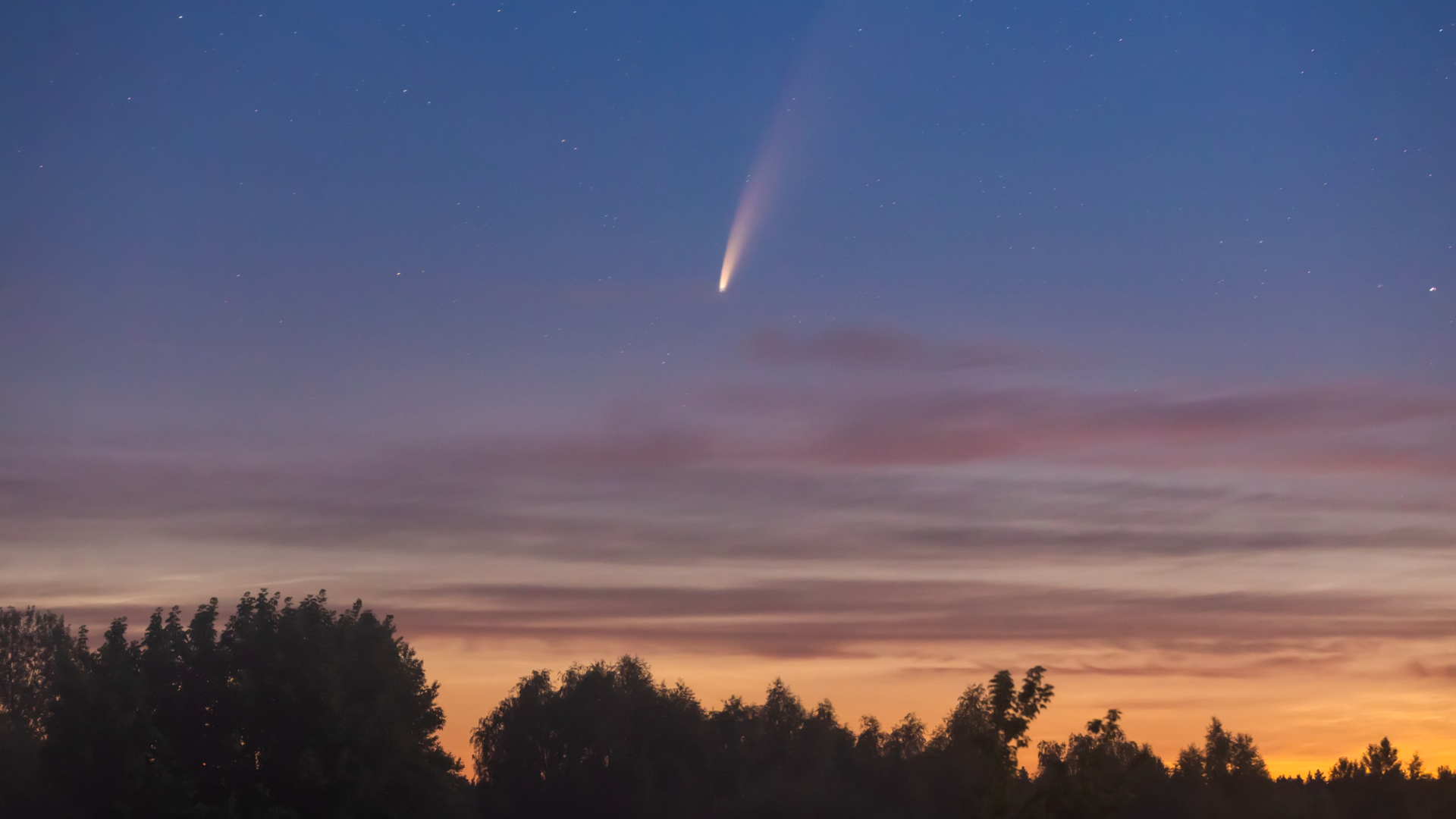
C/2025 R3 (PanSTARRS) has been compared to Neowise in terms of potential visibility, but that doesn’t mean it will necessarily reach the same level of brightness. The key difference is timing and viewing conditions — this comet is best seen in the pre-dawn hours, which limits the number of casual observers who will actually see it.
| Feature | Comet Neowise (C/2020 F3) | Comet C/2025 R3 (PanSTARRS) |
|---|---|---|
| Discovery year | 2020 | 2025 |
| Best viewing time | Pre-dawn and evening sky | Pre-dawn sky |
| Potential naked-eye visibility | Confirmed — widely seen | Possible around April 16 |
| Related comet event | Standalone event | Follows Comet C/2026 A1 |
Who This Matters to — and What You Need to See It
For casual stargazers, this is the kind of event that only comes around a few times per decade. Most comets are faint smudges that require a telescope and detailed star charts to find. A comet bright enough to see with the naked eye — or even just binoculars — is genuinely rare, and worth making an effort to catch.
Here’s what observers should keep in mind:
- Timing is everything. The comet is a pre-dawn object, so early risers have the advantage. Set your alarm for well before sunrise.
- Find dark skies if you can. Light pollution is the enemy of comet watching. Even getting to the outskirts of a city can dramatically improve what you see.
- Binoculars help significantly. Even if the comet reaches naked-eye brightness, binoculars will reveal far more detail, including the coma and any developing tail.
- Check the weather. Cloud cover can ruin the best comet opportunity. Monitor forecasts in the days leading up to peak brightness.
- Around April 16 is the key date. That’s when conditions could align for the comet to be bright enough for unaided eye viewing, based on current brightening trends.
Photographers will also want to plan ahead. Comet Neowise produced some of the most striking astrophotography of the decade, and C/2025 R3 (PanSTARRS) could offer a similar opportunity for those with camera equipment and a clear pre-dawn horizon.
What Happens Next for This Comet
The coming days and weeks are critical. As C/2025 R3 (PanSTARRS) continues its approach toward the sun and Earth, astronomers will be tracking its brightness closely. If it continues on its current trajectory without any unexpected outbursts or fragmentation, the window around mid-April represents the best opportunity for public viewing.
After reaching its closest approaches, the comet will begin to move away from the inner solar system, and its brightness will fade. These events don’t last long — the peak viewing window for a comet at this scale is typically measured in days to a couple of weeks, not months.
The fact that this comes shortly after the separate Comet C/2026 A1 event means comet watchers have had an unusually active stretch of sky to monitor. Whether C/2025 R3 (PanSTARRS) delivers a truly memorable show remains to be seen, but the current brightening trend has given the astronomical community genuine reason for optimism.
Frequently Asked Questions
What is Comet C/2025 R3 (PanSTARRS)?
It is a comet currently brightening in the night sky, discovered by the PanSTARRS survey system, and now approaching its closest points to both Earth and the sun.
When is the best time to see Comet C/2025 R3 (PanSTARRS)?
Around April 16, the comet could be bright enough to see with the naked eye, and it is best observed in the pre-dawn sky.
Do I need a telescope to see it?
Not necessarily — if the comet reaches naked-eye brightness as expected around mid-April, it may be visible without equipment, though binoculars will provide a much better view.
How does this comet compare to Comet Neowise?
Comet Neowise C/2020 F3 was one of the brightest comets in decades and was widely visible to the naked eye in 2020. C/2025 R3 (PanSTARRS) has been compared to it in terms of potential visibility, but whether it will match that level of brightness has not yet been confirmed.
Is this the only comet visible right now?
No — the appearance of C/2025 R3 (PanSTARRS) follows the separate and unrelated Comet C/2026 A1, making this an unusually active period for comet watchers.
Will the comet be visible from everywhere on Earth?
Specific regional visibility details have not been confirmed in the available information, but observers in areas with dark skies and a clear pre-dawn horizon will have the best chance of seeing it.



Leave a Reply