
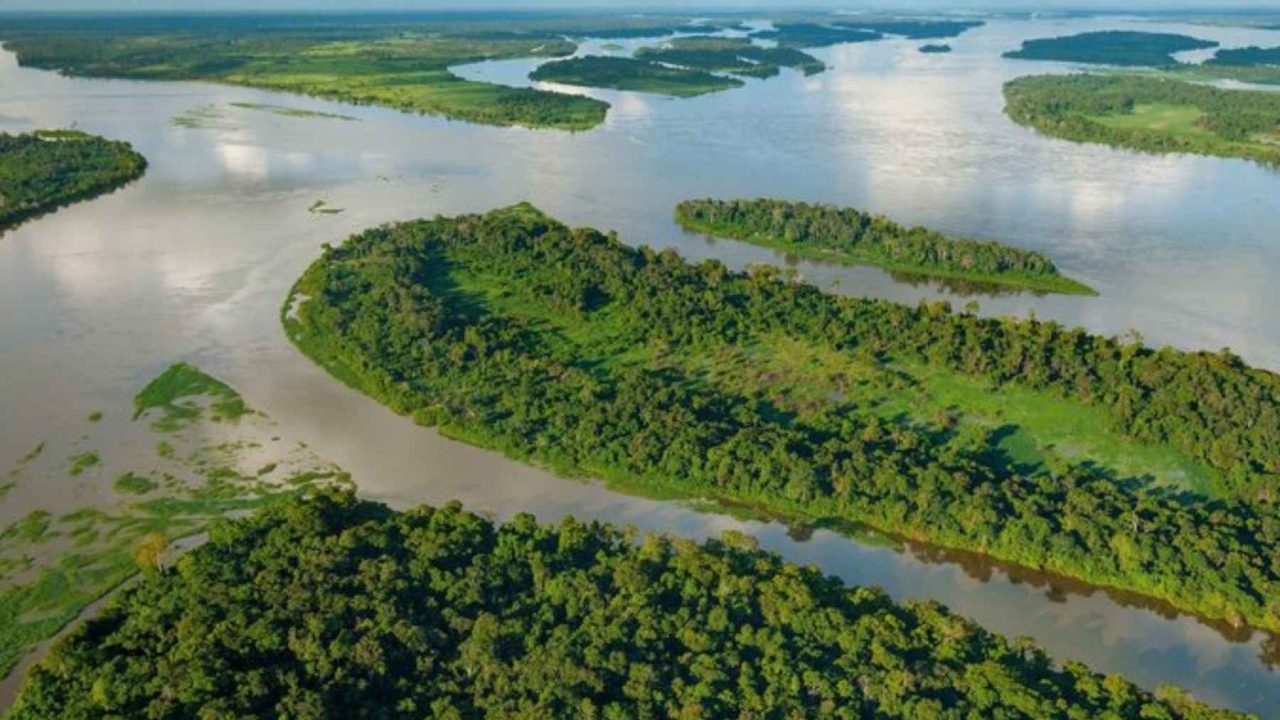
Nearly 40 percent of the carbon dioxide bubbling out of two large lakes in the Democratic Republic of Congo isn’t coming from the living ecosystem around them — it’s coming from peat that formed thousands of years ago. That finding, published in Nature Geoscience on February 23, 2026, is the kind of discovery that quietly rewrites the rulebook on how we understand carbon and climate.
For years, scientists and climate models have treated deep peat carbon as essentially locked away — stable unless something dramatic, like drainage or deforestation, disturbs it. This new research suggests that assumption may have a serious blind spot. There’s a slow, steady leak happening in the heart of Africa, and until now, nobody was accounting for it.
The implications stretch far beyond the Congo Basin. If ancient peat carbon is seeping into the atmosphere through lakes even without obvious human disturbance, the global carbon budget — the accounting sheet that underpins climate projections — may be missing a significant line item.
What Scientists Actually Found in the Congo’s Blackwater Lakes
The two lakes at the center of this study are classified as “blackwater” lakes, a term that refers to their dark, tea-colored water. That color comes from dissolved organic matter, typically leached from surrounding wetlands and peatlands. These aren’t clear mountain lakes — they’re intimately connected to the boggy, carbon-rich landscape around them.
Using radiocarbon measurements, researchers were able to trace the origin of the dissolved inorganic carbon in the lakes — the form of carbon most directly linked to CO2 being released into the air. What they found was striking: roughly 39 to 40 percent of that carbon was ancient, tied to peat that had accumulated in the surrounding peatlands over thousands of years.
That’s not a trace amount. That’s nearly half of the carbon those lakes are exhaling into the atmosphere, sourced not from today’s living plants and animals, but from a carbon archive that predates modern civilization.
Why Tropical Peatlands Are at the Center of the Climate Math
To understand why this matters, it helps to know just how much carbon tropical peatlands are holding. According to ETH Zurich, tropical peatlands across the Amazon Basin, the Congo Basin, and Southeast Asia together store approximately 100 gigatons of carbon — equivalent to roughly 110 billion US tons.
That’s an enormous reservoir. Peat forms when plant material decomposes only partially, usually because the ground is waterlogged and oxygen is scarce. Over centuries and millennia, layer after layer builds up, trapping carbon that would otherwise have returned to the atmosphere. These ecosystems are, in effect, natural carbon vaults.
The prevailing assumption in climate science has been that this stored carbon stays put unless something goes wrong — a peatland gets drained for agriculture, a wildfire burns through, or water tables drop due to drought. What this new study raises is the possibility that even undisturbed peatlands may be leaking ancient carbon into adjacent water bodies, which then release it as CO2.
That’s a quieter, slower process than a peat fire — but it’s potentially happening across vast stretches of tropical wetlands that researchers haven’t been watching closely enough.
Key Findings at a Glance
| Detail | Finding |
|---|---|
| Study publication date | February 23, 2026 |
| Journal | Nature Geoscience |
| Location studied | Two blackwater lakes, Democratic Republic of Congo |
| Ancient carbon share (Lake 1) | ~39% of dissolved inorganic carbon |
| Ancient carbon share (Lake 2) | ~40% of dissolved inorganic carbon |
| Carbon source identified | Surrounding peatlands, thousands of years old |
| Total tropical peatland carbon storage (ETH Zurich estimate) | ~100 gigatons (~110 billion US tons) |
| Method used | Radiocarbon measurements of dissolved inorganic carbon |
- The carbon being released is directly linked to CO2 outgassing from the lake surfaces
- The peat in question accumulated over thousands of years in the surrounding wetlands
- Climate models have generally not accounted for this type of steady, undisturbed peat carbon release
- The Congo Basin is one of the world’s three major tropical peatland regions
The Part of This Story Most Climate Reports Are Missing
There’s a tendency in climate coverage to focus on the dramatic — the wildfire, the flood, the collapsed glacier. But some of the most consequential processes are the ones that happen slowly, invisibly, and without a headline moment.
This study points to exactly that kind of process. The lakes aren’t being drained. The peatlands around them haven’t been burned or converted to farmland. And yet ancient carbon is still making its way into the water and then into the air. Researchers argue this represents a pathway that existing climate models haven’t been capturing.
If similar dynamics are occurring in other blackwater lake systems across the Congo Basin, the Amazon, or Southeast Asia — all regions with extensive peatlands — the cumulative effect on atmospheric carbon could be meaningful. Scientists note that the gap between what models predict and what the atmosphere actually contains has long been a source of frustration in climate science. Findings like this one offer potential explanations for part of that gap.
What Comes Next for Peatland Carbon Research
This study focused on two specific lakes in the Congo, and the researchers used radiocarbon dating to isolate the ancient peat signal from more recent carbon sources. That’s a methodologically careful approach, but it also means the findings need to be tested across a broader range of sites before sweeping conclusions can be drawn.
The next logical steps for the scientific community would involve surveying other blackwater lake systems in tropical peatland regions to determine whether this pattern holds elsewhere. Researchers would also need to quantify the total flux — how much ancient carbon is actually moving from peat into lakes and then into the atmosphere each year — to understand the scale of what’s being missed in current models.
What’s clear from this research is that the Congo Basin’s peatlands, long recognized as a critical global carbon store, are more dynamic than previously understood. The carbon locked inside them may not be as locked as the models assumed.
Frequently Asked Questions
What were the two lakes studied in this research?
The study focused on two large blackwater lakes in the Democratic Republic of Congo. Their specific names were not detailed in the available source material.
What does “dissolved inorganic carbon” mean, and why does it matter?
Dissolved inorganic carbon is a form of carbon found in water that is directly linked to CO2 being released — or outgassed — into the atmosphere. When it originates from ancient peat, it means old, stored carbon is re-entering the climate system.
How much carbon do tropical peatlands store in total?
According to ETH Zurich, tropical peatlands across the Amazon Basin, the Congo Basin, and Southeast Asia store approximately 100 gigatons of carbon, equivalent to around 110 billion US tons.
Does this mean the Congo’s peatlands are being destroyed?
Not necessarily. The study specifically examines carbon release that appears to occur even without obvious human disturbance, which is what makes the finding significant and unexpected.
How did scientists confirm the carbon came from ancient peat?
Researchers used radiocarbon measurements to trace the age and origin of the dissolved inorganic carbon in the lakes, allowing them to distinguish between modern carbon sources and ancient peat carbon.
Will this change how climate models are built?
This has not yet been confirmed, but researchers suggest that current models may be missing this type of steady peat carbon leak, which could contribute to gaps in the global carbon budget. Further study across multiple sites would be needed before models are formally revised.


Leave a Reply