
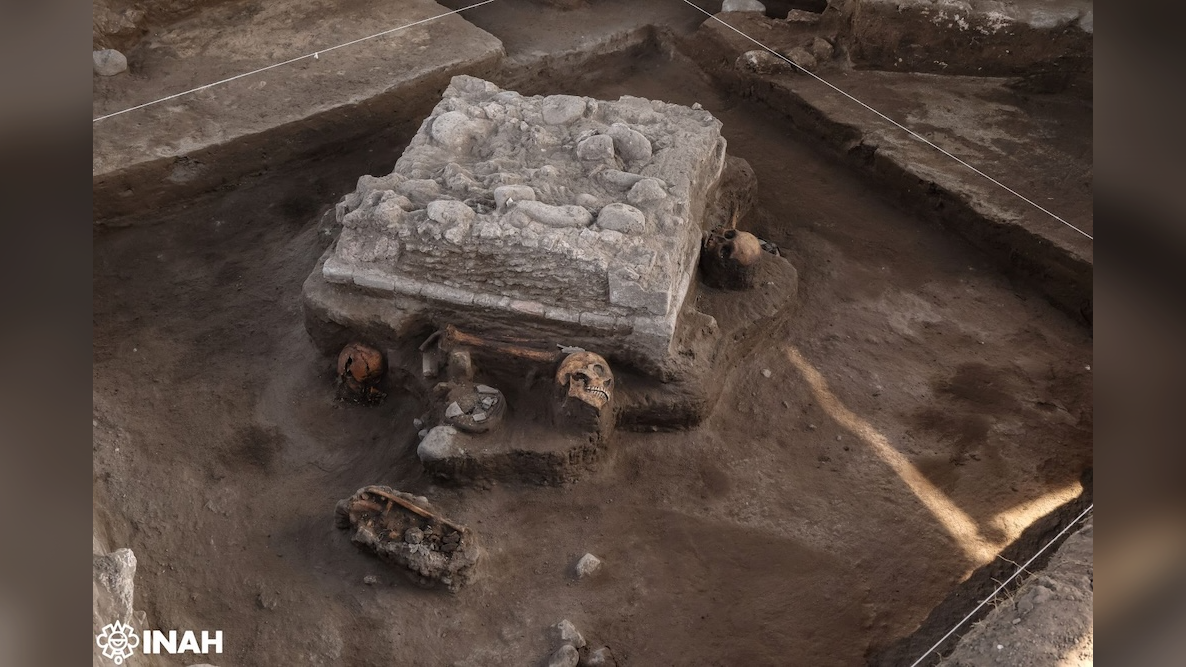
A routine infrastructure project in central Mexico has led to a remarkable archaeological find — a 1,000-year-old stone altar used for human sacrifices during the Toltec Empire, unearthed alongside human bones, obsidian knives, and ancient ceramic vessels.
The discovery was made near Tula, a major Toltec archaeological site located approximately 55 miles (88 kilometers) north of Mexico City. Workers excavating for a transportation project broke ground on something far older and far more significant than anyone anticipated.
Mexico’s National Institute of Anthropology and History (INAH) announced the find in a translated statement posted on March 24, confirming that the altar and associated artifacts are consistent with Toltec ritual practices from over a millennium ago.
What Archaeologists Found Beneath the Ground at Tula
The centerpiece of the discovery is a square stone altar — a structure that archaeologists believe was used for human sacrifice during the height of the Toltec Empire. Around and near the altar, excavators uncovered a collection of artifacts and remains that paint a vivid, if unsettling, picture of ancient ceremonial life.
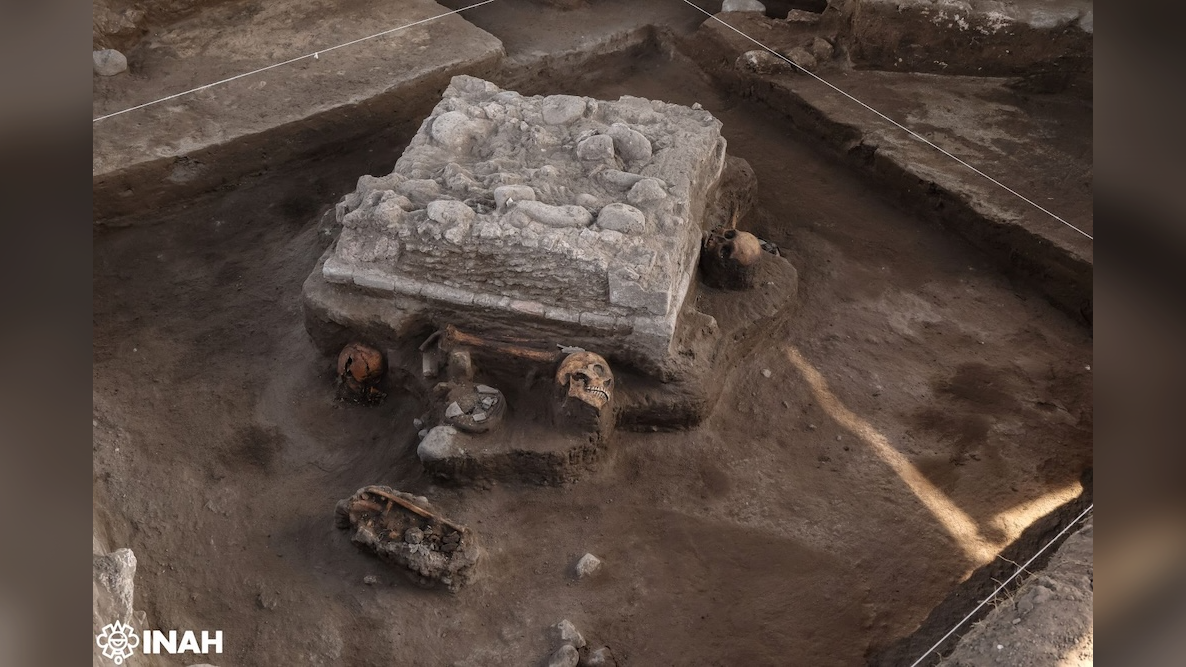
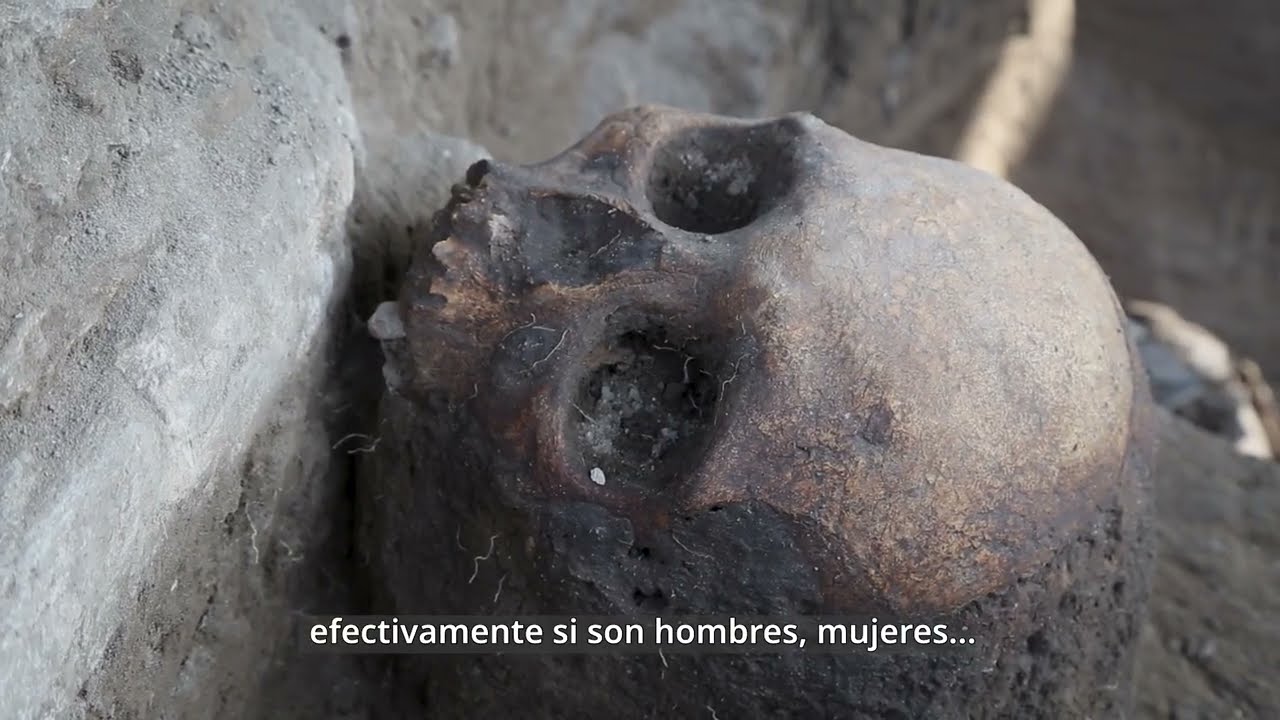
The items found alongside the altar include sacrificed human body parts and bones, sharp obsidian knives — the kind used in ritual cutting and sacrifice — and ceramic vessels that likely held offerings or were used in ceremonies connected to the altar.
Together, these objects form what researchers describe as a coherent ritual assemblage: physical evidence of a sophisticated civilization’s religious practices, preserved for more than ten centuries beneath Mexican soil.
Key Details of the Toltec Altar Discovery
| Detail | Confirmed Information |
|---|---|
| Location | Near Tula, Hidalgo, Mexico |
| Distance from Mexico City | Approximately 55 miles (88 km) north |
| Estimated Age | More than 1,000 years old |
| Altar Shape | Square stone construction |
| Artifacts Recovered | Human bones, obsidian knives, ceramic vessels |
| Announcing Authority | Mexico’s National Institute of Anthropology and History (INAH) |
| Context of Discovery | Excavation for a transportation infrastructure project |
| Announcement Date | March 24 (translated statement) |
What makes this find particularly striking is the context in which it was discovered. This wasn’t a planned archaeological dig — it emerged from construction work, the kind of ground-breaking that happens in cities and towns across Mexico regularly. Discoveries like this serve as a reminder of just how much ancient history still lies just below the surface.
- Square stone altar: The altar’s shape and construction are consistent with known Toltec ceremonial architecture
- Human remains: Sacrificed body parts found at the site indicate ritual use, not burial in the traditional sense
- Obsidian knives: Obsidian was a prized material in Mesoamerican cultures, prized for its sharpness and used in both everyday tools and ritual sacrifice
- Ceramic vessels: These likely served a ceremonial function, possibly holding offerings made during sacrificial rites
Who Were the Toltec — and Why Did They Practice Human Sacrifice?
The Toltec Empire flourished in central Mexico roughly between the 9th and 12th centuries CE, with Tula serving as its capital city. At its peak, the empire was one of the most powerful in Mesoamerica, and Toltec culture would go on to heavily influence later civilizations — including the Aztec, who regarded the Toltec with near-mythological reverence.
Human sacrifice was deeply embedded in Toltec religious practice, as it was across many Mesoamerican civilizations. Offerings to the gods — including human life — were understood as necessary acts to maintain cosmic order, ensure agricultural fertility, and honor deities associated with war, rain, and the sun.
The presence of obsidian knives at the Tula site is especially telling. Obsidian blades were among the sharpest cutting tools available in the ancient world, and they appear repeatedly in archaeological contexts associated with Mesoamerican sacrifice. Their discovery alongside an altar and human remains strongly supports the ritual interpretation of the site.
Tula itself has long been recognized as a site of enormous historical importance. The archaeological zone there is known for its famous warrior columns and pyramid structures. This new discovery adds another layer to our understanding of what life — and death — looked like at the heart of the Toltec world.
Why Discoveries Like This Keep Happening During Construction
Mexico’s rich pre-Columbian past means that ancient structures and artifacts are frequently encountered during modern development. INAH plays a central role in managing these discoveries, requiring construction projects to pause when significant archaeological material is found and ensuring that finds are properly documented and preserved.
Officials have noted that transportation and infrastructure projects — which require deep excavation across large areas — are among the most common triggers for unexpected archaeological finds. In a country with thousands of years of complex civilizations layered beneath its surface, that pattern is unlikely to change.
The Tula region, in particular, has been a productive area for archaeological work given its status as the Toltec capital. Researchers continue to learn from both planned excavations and accidental discoveries in the area.
What Comes Next for the Tula Altar Site
Following INAH’s announcement, the immediate focus will be on careful documentation, preservation, and analysis of the altar and all associated artifacts. The human remains will likely undergo osteological study to determine details such as age, sex, and any evidence of the manner of sacrifice.
The obsidian knives and ceramic vessels will also be analyzed to better understand their origin, craftsmanship, and relationship to known Toltec material culture. Whether additional excavation at the site will be conducted — and how it might affect the transportation project that triggered the find — has not yet been confirmed in available reporting.
What is certain is that this discovery contributes meaningfully to the archaeological record of one of Mesoamerica’s most influential empires, offering a rare and direct glimpse into the ritual world of the Toltec more than a thousand years after it disappeared.
Frequently Asked Questions
Where exactly was the Toltec altar discovered?
The altar was found near Tula, an archaeological site in Mexico located approximately 55 miles (88 kilometers) north of Mexico City.
How old is the altar?
Archaeologists estimate the altar is more than 1,000 years old, dating to the period of the Toltec Empire.
What artifacts were found alongside the altar?
Excavators recovered human bones, sacrificed human body parts, obsidian knives, and ceramic vessels near the stone altar.
Who announced the discovery?
Mexico’s National Institute of Anthropology and History (INAH) announced the find in a translated statement posted on March 24.
How was the altar discovered?
It was uncovered during excavation work for a transportation infrastructure project near the Tula archaeological site — not as part of a planned archaeological dig.
Will further excavation take place at the site?
This has not yet been confirmed in available reporting. INAH will lead any further investigation and preservation efforts at the site.




Leave a Reply