
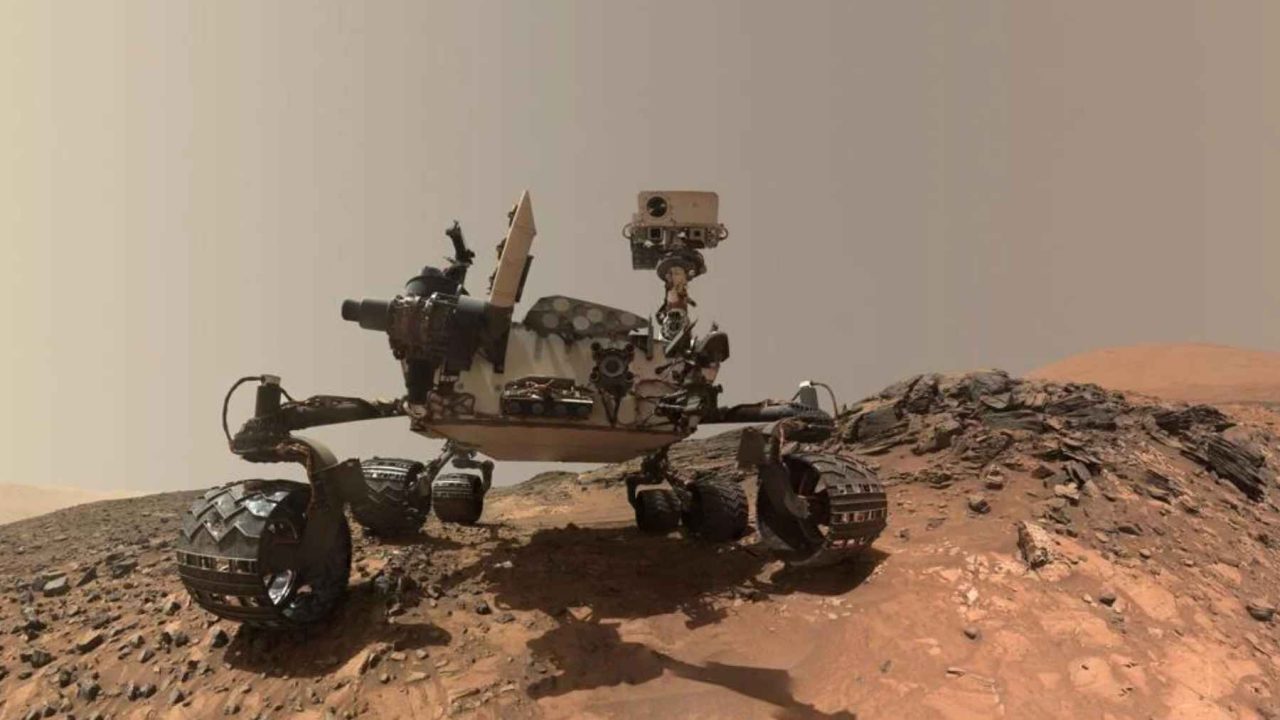
A drill hole made in 2013 is suddenly one of the most talked-about spots in the search for ancient life on Mars. The rock sample, collected by NASA’s Curiosity rover from a site called Cumberland inside Gale Crater, sat quietly in the scientific record for over a decade — until researchers announced in March 2025 that it contained the largest organic molecules ever detected on Mars. Then, in February 2026, a follow-up paper raised the stakes even higher.
That second paper, published on February 4, 2026, concluded that the nonbiological sources scientists tested do not fully account for how much organic material may once have existed in that rock. No one is claiming proof of life. But the scientific community is paying close attention, because what was found in an old drill hole is harder to explain away than almost anyone expected.
The timing is striking. More than twelve years after Curiosity first bored into that ancient lakebed, the Cumberland sample is back at the center of one of the biggest questions in planetary science: Did Mars ever support life?
What Curiosity Actually Found in That Rock
The molecules identified in the Cumberland sample are decane, undecane, and dodecane — carbon-rich compounds that researchers believe may be fragments of fatty acids. On Earth, fatty acids are the building blocks of cell membranes. They are fundamental to biology as we know it.
That does not automatically mean they came from living organisms on Mars. Organic molecules can form through purely chemical processes, and scientists are careful to test those possibilities before drawing any conclusions. The problem, according to the February 2026 paper, is that the nonbiological explanations tested so far do not fully account for the quantity of organic material the sample appears to have once held.
There is another layer to this. Mars is bombarded by surface radiation, and that radiation degrades organic molecules over time. What Curiosity detected is likely only a leftover trace of what was originally present in the rock. The actual concentration of organics in that ancient lakebed may have been significantly higher — which makes the signal even more meaningful to researchers trying to reconstruct what conditions were like billions of years ago.
Why Gale Crater and the Cumberland Site Matter
Gale Crater was chosen as Curiosity’s landing site for a reason. Scientists believe it once held a lake — a body of liquid water that persisted long enough to deposit the layered sedimentary rock the rover has been studying ever since. Where there was water, there was at least the possibility of habitability.
Cumberland sits within that ancient lakebed environment, which is why the organic molecules found there carry extra weight. These are not molecules pulled from a random rock. They come from a setting that geological evidence suggests was once wet, chemically active, and potentially hospitable to microbial life.
The Sample Analysis at Mars laboratory — the instrument suite inside Curiosity — performed the analysis. It is one of the most capable chemistry labs ever sent to another planet, and the fact that it detected these specific compounds in a sample from this specific location is what has researchers taking the result seriously.
Key Facts From the Cumberland Discovery
| Detail | Information |
|---|---|
| Sample name | Cumberland |
| Location | Gale Crater, Mars |
| Year drilled | 2013 |
| Rover | NASA’s Curiosity |
| Molecules detected | Decane, undecane, dodecane |
| Possible molecular origin | Fragments of fatty acids (cell membrane components on Earth) |
| Initial announcement | March 2025 |
| Follow-up paper published | February 4, 2026 |
| Follow-up finding | Nonbiological sources do not fully explain organic material levels |
- The molecules are the largest organic compounds ever detected on Mars
- Mars surface radiation has likely erased a significant portion of the original organic record
- The sample came from what is believed to have been an ancient lake environment
- Researchers are not claiming evidence of life — but they cannot rule it out based on current data
Why This Finding Is Harder to Dismiss Than It Looks
Science moves carefully, and researchers are right to be cautious. Organic molecules are not proof of biology — they form in space, in meteorites, and through geochemical reactions that have nothing to do with living things. Every credible scientist involved in Mars research knows this.
What makes the Cumberland result different is the combination of factors stacking up together. The molecules are the largest organics ever found on Mars. They came from a site with a clear history of liquid water. The nonbiological explanations that researchers specifically tested do not fully account for what is there. And the radiation environment means today’s signal is almost certainly weaker than what existed when the rock formed.
Researchers note that the original concentration of organic material in that rock was likely higher than what can be measured today, because millions of years of surface radiation have been degrading it continuously. If the current trace is already this significant, the original chemistry of that lakebed may have been remarkably rich.
What Comes Next in This Investigation
The Cumberland findings are now part of a broader scientific conversation about where to focus future Mars exploration. Curiosity is still operating in Gale Crater and continues to collect data. The February 2026 paper adds to a growing body of evidence that the organic chemistry on Mars is more complex — and more unexplained — than earlier missions suggested.
Future missions, including those designed to return physical samples to Earth, could eventually allow scientists to analyze Martian material with laboratory tools far more powerful than anything currently on the surface. Until then, the Cumberland sample represents the clearest organic chemical signal Mars has offered so far — and the one that, for now, science cannot fully explain away.
Frequently Asked Questions
What molecules did Curiosity find in the Cumberland sample?
Researchers identified decane, undecane, and dodecane — carbon-rich compounds that may be broken fragments of fatty acids, which help build cell membranes in living organisms on Earth.
Does this mean life existed on Mars?
No. Scientists are not claiming proof of life. The finding means that the nonbiological explanations tested so far do not fully account for the organic material detected, which warrants further investigation.
When was the Cumberland sample collected?
Curiosity drilled the Cumberland rock sample in 2013, but the significance of its organic content was not fully understood until a major announcement in March 2025, followed by a follow-up paper in February 2026.
Why has radiation made this harder to study?
Mars’ surface is constantly bombarded by radiation, which degrades organic molecules over time. Scientists believe today’s signal is only a leftover trace, meaning the original organic content of the rock was likely much higher.
Where exactly is Cumberland located?
Cumberland is a rock site inside Gale Crater, which scientists believe was once an ancient lake — a key reason the organic findings there are considered scientifically significant.
What instrument analyzed the sample?
The analysis was performed by Curiosity’s Sample Analysis at Mars laboratory, one of the most advanced chemistry instruments ever sent to another planet.


Leave a Reply