
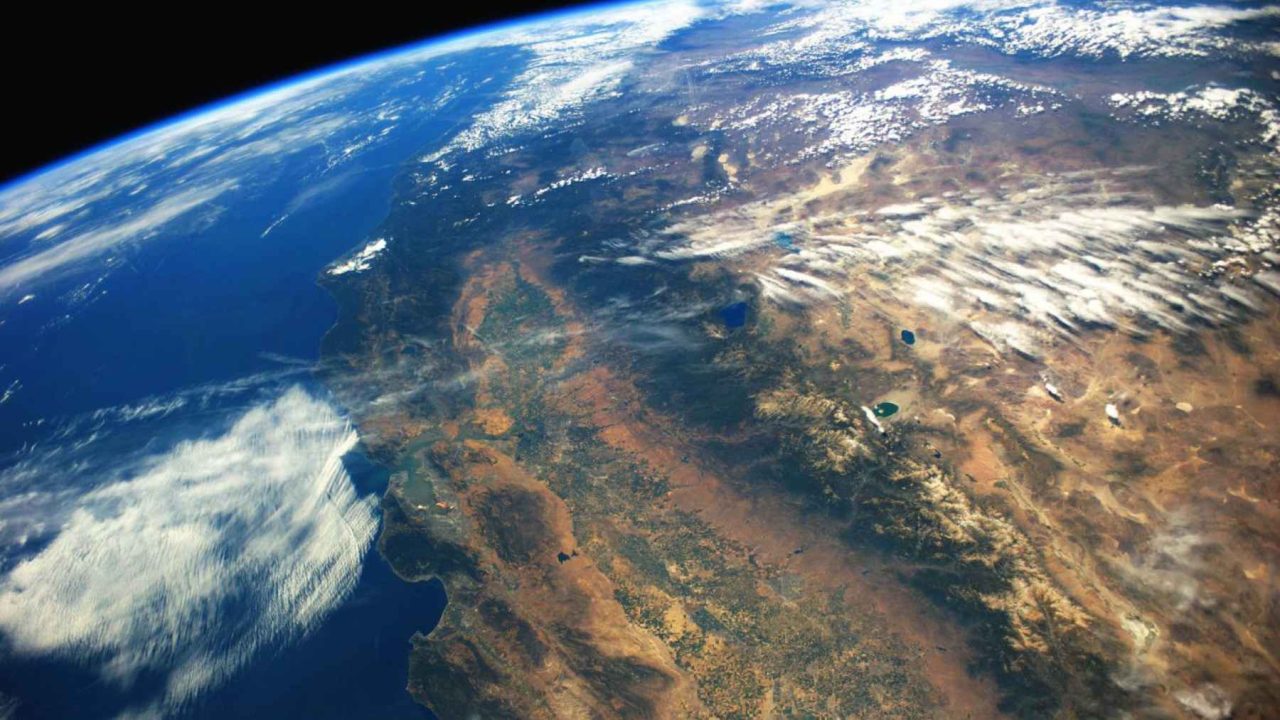
A piece of ancient ocean floor that scientists believed had disappeared into the Earth’s interior 200 million years ago has just been confirmed hiding beneath the coast of Northern California — and it may be quietly reshaping how experts understand earthquake risk along one of the most seismically active coastlines in the world.
The discovery involves the Pioneer fragment, a remnant of the long-lost Farallon tectonic plate. Researchers confirmed its presence using swarms of tiny, low-frequency earthquakes to track movement deep underground. What they found surprised them: this ancient slab of oceanic crust is still active, still moving, and sitting directly beneath the zone where two of the most consequential fault systems in North America — the San Andreas and the Cascadia — converge.
The findings were published in the journal Science. And the implications for West Coast communities could be significant.
The Farallon Plate’s Long-Lost Fragment Has Returned
To understand why this matters, you need a little context about what the Farallon plate actually was. During the breakup of the supercontinent Pangaea, a massive tectonic plate called the Farallon stretched along the entire western edge of North America. Over hundreds of millions of years, it slowly subducted — meaning it slid beneath the North American plate and sank into the Earth’s mantle.
Scientists assumed most of it was gone. The Pioneer fragment was considered a casualty of that process, a piece of crust that had vanished into the deep Earth roughly 200 million years ago and was no longer geologically relevant.
That assumption now appears to be wrong.
The new research confirms that the Pioneer fragment did not fully disappear. Instead, it is attached to the Pacific plate and has been sliding northward beneath North America along a nearly horizontal fault. It is, in geological terms, still very much alive — and it has been moving beneath a region that millions of people call home.
How Scientists Actually Found It
Tracking something buried tens of miles underground is not straightforward. The research team used a method that relies on low-frequency earthquakes — tiny, subtle seismic signals that occur deep in the crust and upper mantle, far below the surface ruptures most people associate with damaging quakes.
These micro-tremors act almost like a sonar system for the deep Earth. By analyzing swarms of them, scientists can map the geometry and movement of structures that are otherwise completely invisible. In this case, the tremor patterns revealed the unmistakable signature of a moving slab — the Pioneer fragment — repositioning itself beneath Northern California.
The critical detail is where it sits. The fragment is located precisely at the junction of the San Andreas Fault and the Cascadia Subduction Zone, two fault systems that already dominate earthquake risk assessments for the western United States. The Pioneer fragment is moving along a fault that is not currently included in standard seismic hazard models.
What This Means for Earthquake Risk on the West Coast
This is where the discovery moves from fascinating geology to something with direct public safety implications.
Seismic hazard models are the tools that governments, engineers, and emergency planners use to decide how buildings should be constructed, where hospitals should be reinforced, and how communities should prepare for major earthquakes. If those models are missing an active fault — especially one sitting at the intersection of two already high-risk systems — they may be underestimating the true level of risk in that region.
Researchers note that the fault along which the Pioneer fragment is sliding is not included in standard hazard models. That gap matters. It means the seismic behavior of this ancient, reactivated slab has not been factored into the risk calculations that shape infrastructure and emergency planning decisions across Northern California and potentially beyond.
| Key Element | Detail |
|---|---|
| Fragment name | Pioneer fragment |
| Original plate | Farallon plate |
| Time since assumed “dead” | Approximately 200 million years |
| Current location | Beneath the coast of Northern California |
| Movement direction | Northward, along a nearly horizontal fault |
| Attached to | The Pacific plate |
| Detection method | Low-frequency earthquake swarm analysis |
| Published in | The journal Science |
| Fault status in hazard models | Not currently included |
The Part of This Story Most Reports Are Missing
It would be easy to read this as purely an academic discovery — a geological curiosity about ancient Earth history. But the real significance is more immediate than that.
The Pioneer fragment is not a relic sitting passively underground. It is actively moving, attached to the Pacific plate, and generating detectable seismic activity. The low-frequency earthquakes that allowed scientists to find it in the first place are evidence of ongoing motion. This is not a frozen snapshot of ancient geology. It is a living system operating beneath a densely populated coastline.
The convergence point of the San Andreas and Cascadia faults is already one of the most closely watched seismic zones in the country. The San Andreas is capable of producing catastrophic earthquakes. The Cascadia Subduction Zone is considered capable of generating a magnitude 9 or greater event. Adding an unmodeled, actively moving slab into that picture raises legitimate questions about whether current risk estimates are complete.
Scientists argue the discovery should prompt a reassessment of how hazard models are built for this region — and whether other ancient, presumed-dead fragments might be lurking elsewhere beneath the continent.
What Comes Next for Research and Hazard Planning
The immediate next step, based on what the research highlights, is integration. The fault along which the Pioneer fragment moves needs to be incorporated into seismic hazard models so that planners and engineers can properly account for its behavior.
Beyond that, the detection method itself — using low-frequency earthquake swarms to map deep crustal structures — opens the door to similar surveys in other regions. If one ancient fragment has survived undetected for 200 million years beneath a major fault zone, the question of where else such remnants might exist becomes worth asking seriously.
For residents of Northern California and the broader Pacific Northwest, this discovery does not mean an earthquake is imminent. What it does mean is that the ground beneath the region is more complex than previously understood — and that complexity deserves to be part of the conversation about how communities prepare.
Frequently Asked Questions
What is the Pioneer fragment?
The Pioneer fragment is a piece of the ancient Farallon tectonic plate, a massive oceanic plate that once stretched along the western edge of North America before subducting beneath the continent over hundreds of millions of years.
Where exactly was the Pioneer fragment found?
It was confirmed beneath the coast of Northern California, at the zone where the San Andreas Fault and the Cascadia Subduction Zone meet.
How did scientists detect something buried so deep underground?
Researchers used swarms of low-frequency earthquakes to track motion deep underground, allowing them to map the presence and movement of the ancient slab.
Why does this discovery matter for earthquake risk?
The fault along which the Pioneer fragment is moving is not currently included in standard seismic hazard models, meaning existing risk assessments for the region may be incomplete.
Is the Pioneer fragment still actively moving?
Yes. According to the research, it is attached to the Pacific plate and sliding northward beneath North America along a nearly horizontal fault.
Does this mean a major earthquake is about to happen?
The research does not indicate an imminent earthquake. It does suggest that hazard models for the region need to be updated to account for this previously unrecognized active fault.

Leave a Reply