
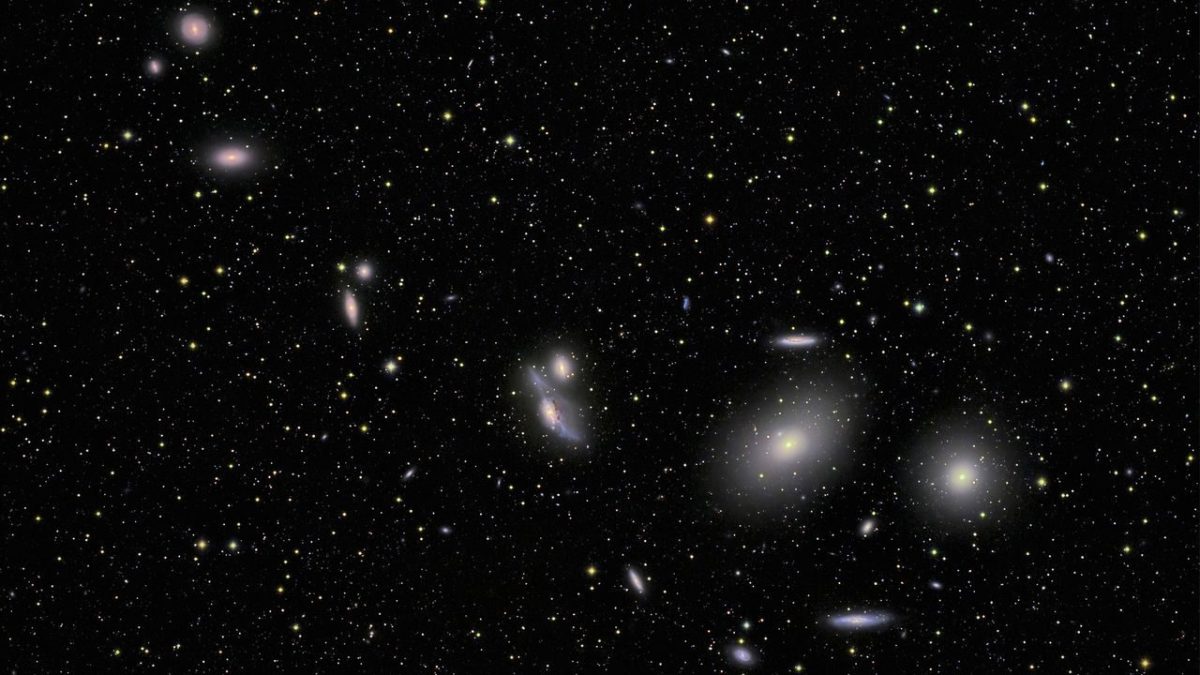
Every year, as winter fades and the nights of March settle in, the sky quietly shifts — and for anyone who loves looking up, it opens a door to something extraordinary. The bright, familiar stars of winter belong to our own cosmic neighborhood, the Orion Spur of the Milky Way. But as spring constellations climb in the east, they pull our gaze in a completely different direction: away from the dense star fields of our own galaxy, and straight into the open universe beyond.
This is what astronomers and stargazers call galaxy season — a stretch of weeks when the geometry of Earth’s orbit aligns perfectly to give us an unobstructed view of deep space. For anyone with a telescope, or even a decent pair of binoculars, it’s the best time of year to explore objects that exist far outside the Milky Way itself.
The winter sky has its icons. Orion’s famous M42 nebula, the dazzling brilliance of Sirius, the soft glow of the Pleiades — these are rightly beloved. But they’re all relatively local, sitting within the same spiral arm our solar system calls home. Galaxy season is something different entirely. It’s a chance to look across millions of light-years and see entire island universes hanging in the dark.
Why Galaxy Season Happens — and Why Spring Is the Sweet Spot
The reason spring delivers the best galaxy viewing comes down to where we’re looking relative to the Milky Way’s disk. During winter, many of our most celebrated targets sit along or near the plane of our own galaxy — beautiful, but crowded with dust and gas that can obscure more distant objects. As Earth moves through its orbit and the spring constellations rise, we find ourselves looking at right angles to that galactic plane, with a much clearer sightline into intergalactic space.
The result is that regions of sky that appear relatively sparse in stars actually contain enormous concentrations of galaxies — some close enough to resolve individual features through a modest telescope, others visible only as faint smudges that represent billions of stars compressed by distance into a tiny point of light.
For observers in the Northern Hemisphere, the constellations of Virgo, Leo, Coma Berenices, and Ursa Major become the prime hunting grounds. These regions host some of the richest galaxy fields accessible to amateur astronomers anywhere in the sky.
What Makes Deep-Sky Galaxy Targets Worth Seeking Out
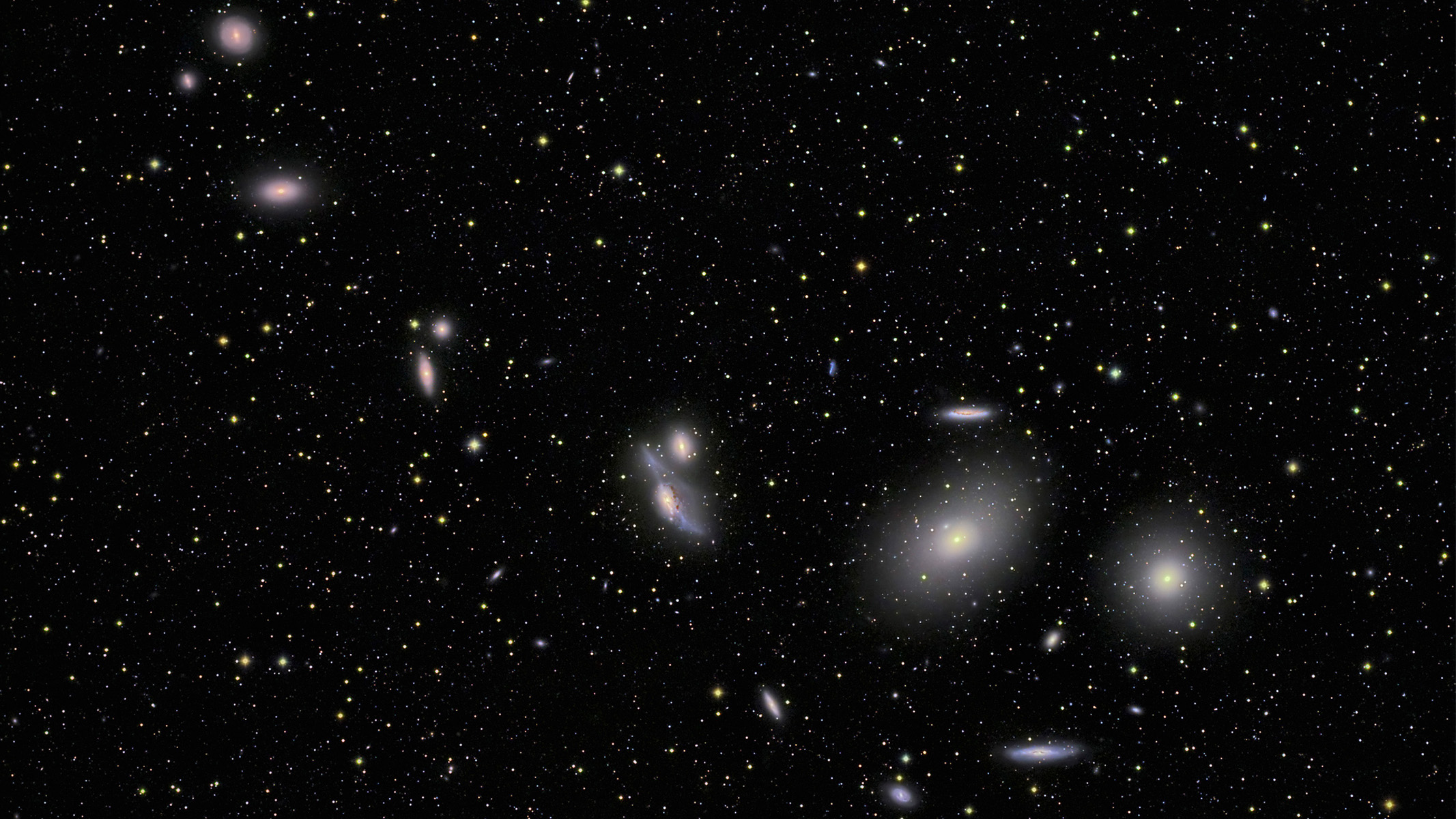
Not all deep-sky targets are created equal, and galaxies in particular reward observers who know what to look for. Some show dramatic edge-on profiles that reveal a dark dust lane bisecting their disk. Others face us directly, displaying spiral arms and bright central cores. Some travel in pairs or groups, close enough that gravitational interaction has visibly distorted their shapes.
The range of what’s available during galaxy season spans an enormous variety of object types and challenge levels — from showpiece targets that reward even a small telescope under suburban skies, to faint, diffuse objects that demand dark skies and patience.
- Face-on spiral galaxies — offer the clearest view of spiral structure and bright nuclei
- Edge-on galaxies — reveal dramatic dust lanes and the flattened disk shape of spiral systems
- Elliptical galaxies — older, rounder systems with less structure but often intensely bright cores
- Interacting galaxy pairs — distorted by mutual gravity, showing tidal bridges and unusual shapes
- Galaxy groups and clusters — multiple systems visible in a single eyepiece field
The Context That Makes Galaxy Season Feel Different
There’s a reason experienced observers talk about galaxy season with a particular kind of enthusiasm. When you look at M42 in Orion, you’re looking at a stellar nursery roughly 1,300 light-years away — impressive, but still very much part of our own galactic backyard. When you turn a telescope toward a galaxy in Virgo or Leo, you’re looking at light that left its source tens of millions of years ago, before humans existed, before most of the dinosaurs were gone.
That shift in scale is part of what makes the experience worth planning for. The objects are often subtler than a nebula or an open cluster — they don’t announce themselves with vivid color or sharp definition. But the knowledge of what you’re actually seeing changes how it feels to observe them.
| Object Type | Best For | Typical Distance | Key Feature |
|---|---|---|---|
| Face-on spiral galaxy | Intermediate observers | Tens of millions of light-years | Spiral arm structure |
| Edge-on spiral galaxy | All skill levels | Tens of millions of light-years | Dark dust lane |
| Elliptical galaxy | Beginners to intermediate | Tens to hundreds of millions of light-years | Bright, compact core |
| Interacting galaxy pair | Intermediate to advanced | Tens of millions of light-years | Tidal distortion |
| Galaxy cluster field | Advanced observers | Tens to hundreds of millions of light-years | Multiple galaxies per field |
Getting Ready Before Galaxy Season Peaks
The practical side of galaxy season matters as much as the astronomical one. Dark skies make a significant difference — light pollution washes out the faint surface brightness of most galaxies far more aggressively than it affects bright stars or planets. If you can get to a darker site during the peak weeks of spring, the difference in what’s visible is dramatic.
Aperture helps too. A larger mirror or lens gathers more light, which is exactly what faint, extended objects like galaxies demand. But even a modest telescope under reasonably dark skies can reveal dozens of galaxies during a single observing session in the right part of the sky.
Planning your targets in advance — knowing roughly where to look, what to expect, and what distinguishes one galaxy from the next — turns a casual session into something genuinely memorable. The spring sky is full of objects that have been drawing observers back year after year for good reason.
Frequently Asked Questions
What is galaxy season?
Galaxy season refers to the period in spring when Earth’s orbital position gives observers a clear view away from the plane of the Milky Way, making distant galaxies much easier to spot in the night sky.
Why are winter deep-sky objects different from spring ones?
Winter showpieces like the M42 nebula, Sirius, and the Pleiades all exist within the Orion Spur — the same spiral arm of the Milky Way that our solar system occupies. Spring targets, by contrast, lie far beyond our own galaxy.
Do I need a large telescope to observe galaxies?
A modest telescope can reveal many galaxies during spring, though larger aperture helps significantly with fainter, more diffuse targets. Dark skies generally matter as much as equipment size.
Which constellations are best for galaxy hunting in spring?
Based on general astronomical knowledge consistent with the source context, the regions around Virgo, Leo, Coma Berenices, and Ursa Major are among the richest areas for galaxy observing in the Northern Hemisphere during spring.
How far away are the galaxies visible during galaxy season?
Distances vary widely, but many of the most accessible spring galaxies lie tens of millions of light-years from Earth — meaning the light you’re seeing left its source long before humans appeared.
Are galaxies hard to see compared to nebulae or star clusters?
Galaxies are often subtler than nebulae or open clusters because their light is spread across a larger area of sky, making them more sensitive to light pollution and requiring darker conditions to observe well.



Leave a Reply