
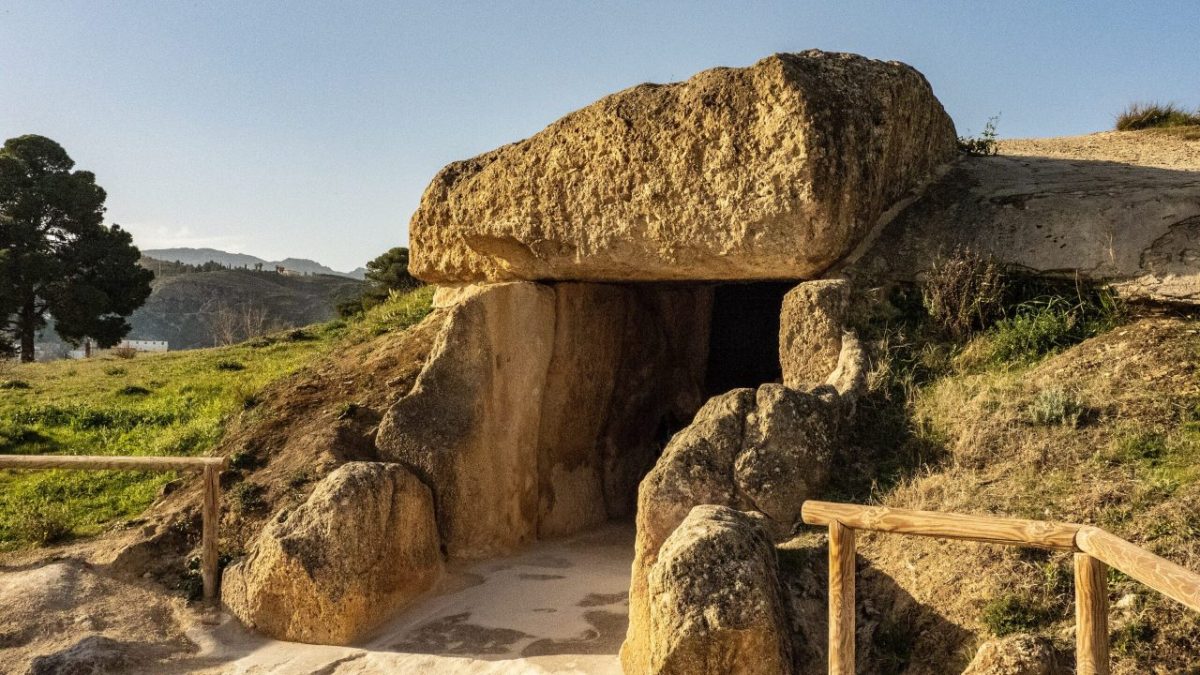
A prehistoric monument in southern Spain that was already ancient when the Roman Empire rose and fell has yielded a remarkable discovery — two medieval men buried inside its walls more than 4,000 years after it was first constructed. The finding suggests that the site never truly lost its power over the people who lived near it, even as civilizations came and went around it.
The Menga dolmen, a massive Neolithic structure near Antequera in the province of Málaga, is one of the largest megalithic monuments in all of Europe. Built somewhere between roughly 3800 and 3600 BC, it has stood through millennia of human history. And now, new research shows that medieval people were still choosing it as a place of burial — a detail that raises fascinating questions about memory, reverence, and the long shadow that ancient places cast over human imagination.
The findings were published in the Journal of Archaeological Science: Reports and produced by an international team spanning four institutions: the University of Seville, the University of Huddersfield, the Francis Crick Institute in London, and Harvard University.
What Researchers Found Inside the Menga Dolmen
The two medieval burials were first uncovered during excavations in 2005, but the new study brings a far more detailed picture into focus. Using a combination of archaeogenetics — the analysis of ancient DNA — and traditional archaeological methods, the research team was able to establish who these men were and when they lived.
Both individuals were older adult men, each estimated to have been over 45 years of age at the time of death. They were buried in simple pits in the atrium of the dolmen — not in elaborate tombs, not with grand ceremony, but in straightforward graves cut into the ground of a monument that had been standing for thousands of years before they were born.
The genetic and archaeological analysis places their burials somewhere between the eighth and eleventh centuries — a broad window that spans the early medieval period in Iberia, a time of significant political and cultural upheaval across southern Spain.
Why This Discovery Matters — and What It Tells Us About Sacred Space
There is something quietly extraordinary about the choice these medieval people made. The Menga dolmen was not a functioning religious structure in the way a church or mosque would have been. It was an ancient monument, already thousands of years old, from a culture whose name and language had long since disappeared.
And yet someone — or a community — decided that this was where these two men should be laid to rest.
Researchers argue that this kind of continued use of prehistoric monuments reflects a persistent sense of symbolic or spiritual importance. Ancient sites across Europe were frequently reused in later periods, sometimes because communities understood them as sacred spaces, sometimes because they served as visible landmarks of identity and memory. The Menga dolmen, with its enormous stone construction and commanding presence in the landscape, would have been impossible to ignore.
The fact that the burials were placed specifically in the atrium — the entrance area of the monument — rather than deeper inside adds another layer of significance that researchers continue to examine.
Key Facts at a Glance
| Detail | Information |
|---|---|
| Monument name | Menga dolmen |
| Location | Near Antequera, Málaga, southern Spain |
| Original construction date | Approximately 3800–3600 BC |
| UNESCO status | Part of the Antequera Dolmens Site, a World Heritage Site |
| Medieval burials discovered | Two older adult men, both estimated over 45 years of age |
| Estimated burial period | 8th to 11th centuries |
| Excavation year | 2005 |
| Study published in | Journal of Archaeological Science: Reports |
| Research institutions involved | University of Seville, University of Huddersfield, Francis Crick Institute (London), Harvard University |
- The Menga dolmen is considered one of the largest megalithic monuments in Europe
- The two men were buried in simple pits, not elaborate tombs
- Their burials were located in the atrium of the monument
- The study combined archaeogenetics with archaeological analysis
- The monument had already been standing for over 4,000 years when these men were buried there
The Long Life of a Monument That Should Have Been Forgotten
The Menga dolmen was built during the Neolithic period — a time before writing, before bronze, before the civilizations most people learn about in school. That it still stands today is remarkable enough. That it was apparently still drawing people to its stones for burial rites more than four millennia after its construction is something else entirely.
The Antequera Dolmens Site, of which the Menga dolmen is a part, now holds UNESCO World Heritage status, recognizing its outstanding universal value. But long before modern heritage bodies arrived to protect it, medieval communities were already treating it as a place worth marking with their dead.
This kind of long-term continuity of use is something archaeologists find across prehistoric sites in Europe, but each new discovery adds to a clearer picture of how ancient landscapes shaped — and continued to shape — the lives of people who came centuries and millennia later.
What Comes Next for This Research
The genetic data collected from these two individuals opens doors beyond this single site. Archaeogenetics has transformed the field of prehistoric and medieval studies in recent years, allowing researchers to trace ancestry, migration patterns, and population histories in ways that traditional archaeology alone cannot achieve.
The involvement of institutions like the Francis Crick Institute and Harvard University signals the scale of analytical resources being brought to bear on questions about who these men were and where they came from. Further analysis of the genetic material may eventually shed light on their origins and their relationship to the broader population of medieval Iberia.
For now, the study confirms what the stones themselves have always suggested — that the Menga dolmen was never just a relic. For the people who lived near it across thousands of years, it remained something worth returning to.
Frequently Asked Questions
Where is the Menga dolmen located?
The Menga dolmen is located near Antequera in the province of Málaga, in southern Spain. It is part of the Antequera Dolmens Site, which is a UNESCO World Heritage Site.
How old is the Menga dolmen?
The monument was built between approximately 3800 and 3600 BC, making it a Neolithic structure that is roughly 5,500 to 5,800 years old.
When were the medieval burials discovered?
The two medieval burials were discovered during excavations carried out in 2005, though the detailed genetic and archaeological study of these individuals was published more recently in the Journal of Archaeological Science: Reports.
Who were the two men found buried at the site?
Both were older adult men estimated to have been over 45 years of age at death. They were buried in simple pits in the atrium of the dolmen, sometime between the eighth and eleventh centuries.
Why were medieval people buried in a Neolithic monument?
The exact reasons have not been confirmed, but researchers suggest the site continued to hold symbolic or spiritual significance for communities living near it long after its original construction.
Which institutions conducted the research?
The study was carried out by an international team from the University of Seville, the University of Huddersfield, the Francis Crick Institute in London, and Harvard University.

Leave a Reply