
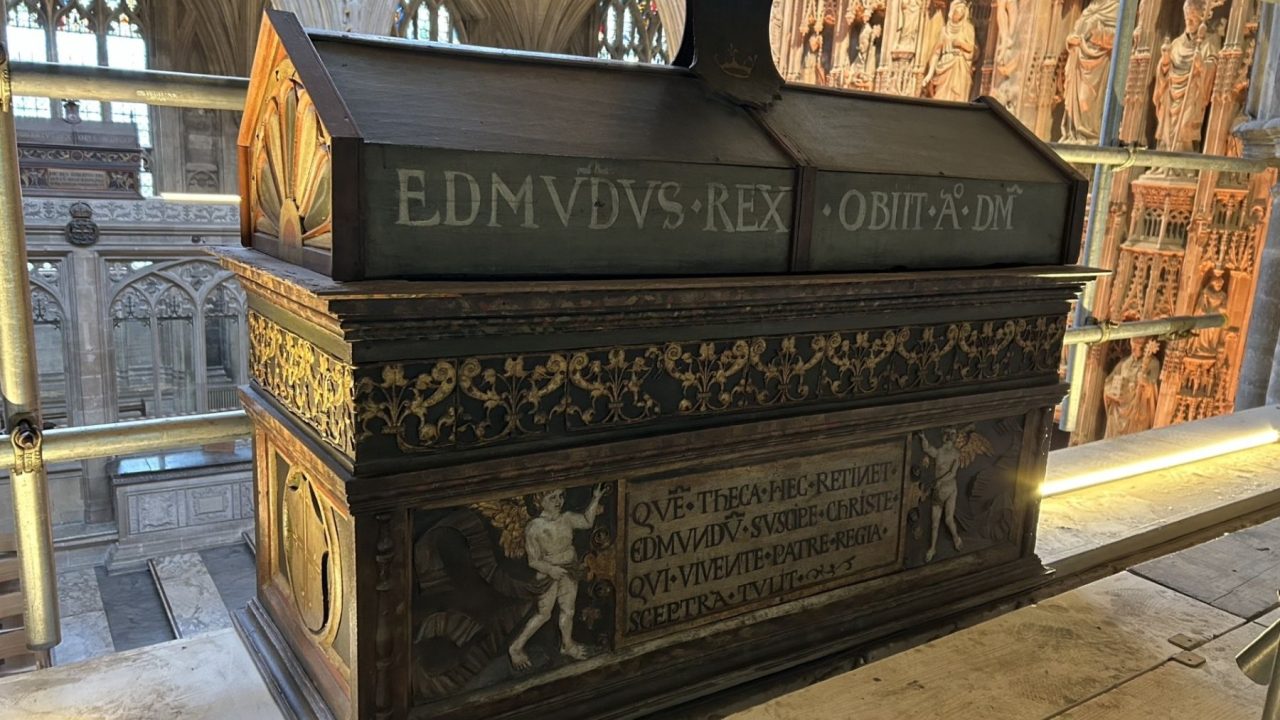
For nearly four centuries, the bones of medieval kings and bishops lay jumbled together inside ornate wooden chests at Winchester Cathedral — their identities scrambled, their stories silenced. Now, after more than a decade of painstaking scientific work, researchers are finally beginning to untangle who those remains belong to.
The Mortuary Chests Project, which began in 2012, has brought together osteologists, DNA specialists, and radiocarbon dating experts in one of the most ambitious forensic history investigations ever carried out on medieval royal remains in England. The results are reshaping what we know about some of the most significant figures of the early medieval period.
https://www.instagram.com/p/DT7fUP4lqGy/
The chaos that made this project necessary dates back to the English Civil War, when the cathedral’s original mortuary chests were destroyed and the bones inside were thrown into disarray. Centuries later, scientists are doing the painstaking work of putting those fragments back together — literally and historically.
What the Mortuary Chests Project Actually Set Out to Do
Winchester Cathedral houses six mortuary chests that once held the carefully arranged remains of medieval royalty and senior clergy. When Civil War soldiers ransacked the cathedral in the 1640s, those chests were damaged and the bones inside were mixed together — making it nearly impossible to determine, from visual inspection alone, which bones belonged to which individual.
The project set out to change that. Using a combination of scientific disciplines rarely applied together on a single historical collection, researchers have been working to separate, reconstruct, and identify the individuals represented in those six chests.
Dr. Heidi Dawson-Hobbis, a Senior Lecturer in Biological Anthropology at the University of Winchester, has led much of the hands-on analysis. Her approach treats the chests essentially as an archaeological site — conducting what she describes as a controlled “excavation” of the bone collection, identifying which fragments belong together and rebuilding individual skeletons using forensic techniques more commonly associated with crime scene investigation.
It is slow, meticulous work. But the results are beginning to speak for themselves.
The Science Behind Identifying Medieval Remains
Three core scientific disciplines have driven the identification process throughout the project’s more than decade-long run:
- Osteology — the study of bones, used to determine age, sex, stature, and physical characteristics of individual remains
- DNA testing — used to establish biological relationships between individuals and, where possible, match remains to known historical lineages
- Radiocarbon dating — used to establish when individuals lived, helping researchers cross-reference biological data against historical records
Together, these tools allow researchers to build a profile for each set of remains — and then compare those profiles against what historical records tell us about the kings, queens, and bishops known to have been interred at Winchester.
| Scientific Method | What It Reveals | Role in the Project |
|---|---|---|
| Osteology | Age, sex, physical traits | Separating and reconstructing individual skeletons |
| DNA Testing | Biological identity and relationships | Matching remains to known historical individuals |
| Radiocarbon Dating | Approximate date of death | Cross-referencing remains with historical timelines |
Eleanor Swire, the cathedral’s curator, has been central to coordinating the historical research side of the project alongside the scientific analysis.
“This project demonstrates the combined power of science, the study of human remains and historical research to discover new information about the six mortuary chests and their occupants which would not have been available to us a generation ago.” — Eleanor Swire, Cathedral Curator
Why Winchester’s Medieval Mortuary Chests Matter So Much
Winchester was one of the most important cities in early medieval England — a royal capital long before London rose to dominance. The cathedral served as the burial site for some of the most powerful figures of the Anglo-Saxon and early Norman periods, and the mortuary chests were created specifically to honor and preserve those remains.
The individuals believed to be represented in the chests include medieval kings and senior bishops whose lives shaped the political and religious landscape of England. Identifying them with scientific certainty would not only resolve longstanding historical questions — it would connect modern science directly to the foundations of English history.
That connection is part of what makes the project so significant. This is not simply an exercise in academic curiosity. It is an attempt to restore identities to people who helped build a nation, and whose remains were treated with profound disrespect during one of England’s most turbulent periods.
What the Researchers Have Found — and What Remains Uncertain
After more than a decade of work, researchers report they are closer than ever to identifying the individuals within the chests. The combination of osteological reconstruction, DNA analysis, and radiocarbon dating has generated data that would have been entirely out of reach for previous generations of historians and scientists.
Dr. Dawson-Hobbis’s forensic reconstruction work has been particularly critical — without first separating the commingled remains into coherent individual skeletons, the DNA and dating work could not proceed meaningfully. That groundwork has now been largely completed, opening the door for more definitive identifications.
However, full confirmed identifications have not yet been publicly announced for all individuals represented in the chests.
What Comes Next for the Winchester Investigation
The project represents a model for how historical human remains investigations can be conducted — combining disciplines that have traditionally operated separately and applying forensic rigour to questions that once seemed permanently unanswerable.
As DNA analysis and radiocarbon dating technologies continue to improve, the potential for even more precise identification increases. Researchers involved in the project have indicated that the work is ongoing, and further findings are expected to emerge as the analysis progresses.
For Winchester Cathedral, the project also carries a preservation dimension. Understanding exactly who is in each chest allows the cathedral to care for those remains more appropriately — and to tell a more accurate story to the millions of visitors who pass through each year.
The bones have been silent for nearly four hundred years. Science is finally giving them back their names.
Frequently Asked Questions
What are the Winchester mortuary chests?
They are six ornate wooden chests housed at Winchester Cathedral that contain the mixed remains of medieval kings and bishops, originally interred there during the early medieval period.
Why were the remains mixed together?
The chests were damaged and the bones were thrown into disarray during the English Civil War, scrambling remains that had previously been separately arranged.
When did the Mortuary Chests Project begin?
The project began in 2012 and has been running for more than a decade, combining osteology, DNA testing, and radiocarbon dating.
Who is leading the scientific analysis?
Dr. Heidi Dawson-Hobbis, a Senior Lecturer in Biological Anthropology at the University of Winchester, has led much of the hands-on forensic reconstruction work.
Have all the individuals in the chests been identified?
Researchers report being closer than ever to identification, but full confirmed identifications for all individuals have not yet been publicly announced — the project is ongoing.
Why does this project matter beyond academic history?
Winchester was a royal capital of early medieval England, and the individuals in the chests helped shape the foundations of English history — confirming their identities would resolve centuries-old historical questions.

Leave a Reply