
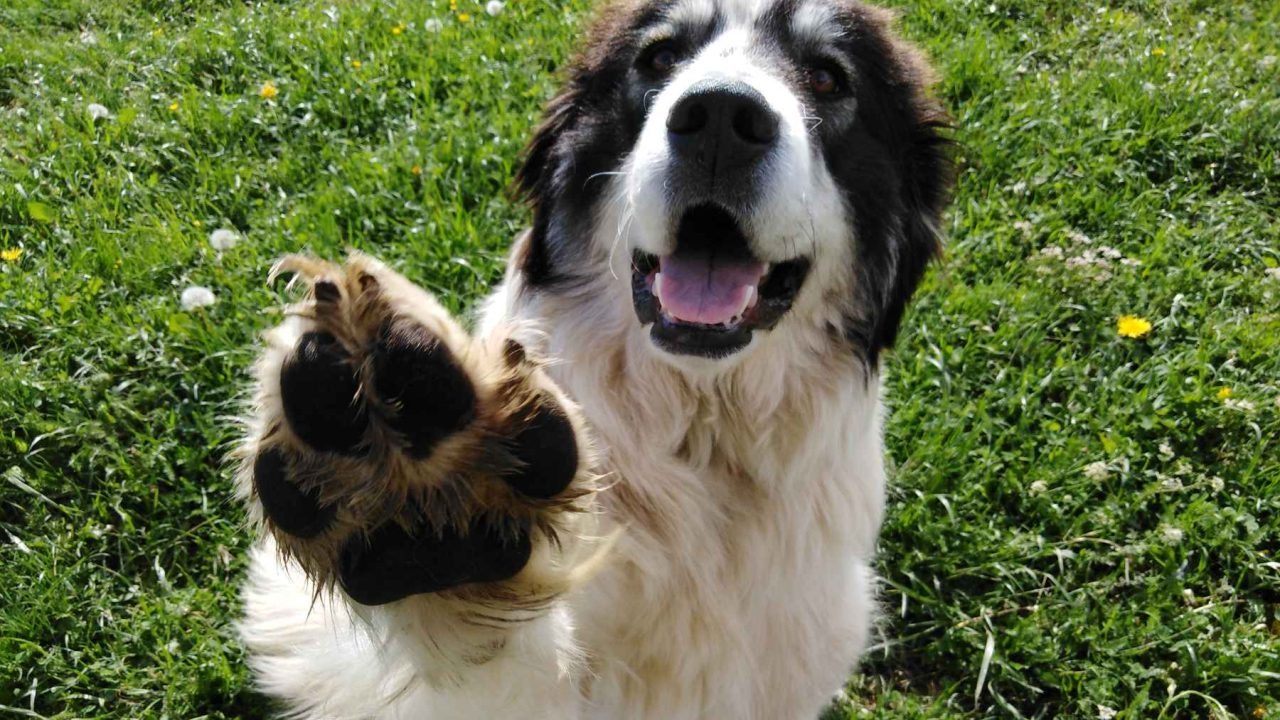
That soft tap on your leg isn’t random. When your dog places a paw on you — whether you’re scrolling your phone, answering an email, or simply sitting still — something far more complex than a simple bid for belly rubs may be happening. According to ethologists and veterinary behavior researchers, that gesture is part of a sophisticated, emotionally layered communication system that dogs have developed specifically around humans.
Most dog owners instinctively interpret the paw as “pet me.” And sometimes, that’s exactly right. But recent research suggests the real picture is richer, more nuanced, and genuinely surprising — touching on stress, comfort, need, and a cross-species bond that operates at a biological level.
Understanding what your dog is actually saying when it reaches out could change the way you read your animal every single day.
Why Dogs Use Their Paws to Communicate With You
Dogs didn’t always communicate this way. The behavior has roots in the very first days of life. Newborn puppies rhythmically knead their mother’s belly with their forelegs while nursing — a reflex described in veterinary behavior texts as a movement that helps stimulate milk flow and keep the pup stable while feeding.
Over time, that instinctive physical contact evolves into something more deliberate. What begins as a survival reflex gradually becomes a social tool — a way for a growing dog to make contact, signal need, and seek reassurance from the beings it lives closest to.
By adulthood, that paw on your arm or leg is no longer reflexive. It’s intentional. Ethologists — scientists who study animal behavior — now describe paw use as one component of a specialized communication system dogs have built around human beings. It works alongside eye contact, tail position, and subtle postural shifts to form what researchers describe as a body-level dialogue between two different species.
What Your Dog’s Paw Is Actually Trying to Tell You
The gesture doesn’t carry a single fixed meaning. Context matters enormously, and the same physical action can signal very different emotional states depending on the situation. Based on what ethologists have documented, a paw placed on you may be communicating any of the following:
- A request for attention or affection — the most common interpretation, and often the correct one
- A need for comfort — dogs experiencing mild anxiety or uncertainty may reach out to their person the way a child reaches for a parent’s hand
- Stress or discomfort — the paw can be a signal that something in the environment is bothering them, even if nothing obvious is happening
- Simple affection — sometimes it’s not about need at all; it’s about closeness and connection
- A learned behavior — if pawing has previously resulted in a reward, whether that’s food, play, or physical contact, dogs will repeat it deliberately
Reading the full picture — what the dog’s tail is doing, whether it’s making eye contact, how its body is positioned — helps decode which message is being sent in any given moment.
The Biology Behind the Bond
What makes this more than just an interesting behavioral quirk is what’s happening inside both bodies during that moment of contact. Studies cited by researchers in this area show that friendly physical contact between a human and a dog produces measurable biological effects on both sides of the exchange.
| Biological Marker | Effect During Human-Dog Contact | Who Is Affected |
|---|---|---|
| Oxytocin | Levels rise | Both human and dog |
| Heart rate variability | Increases (a marker of calm, healthy stress response) | Both human and dog |
| Cortisol (stress hormone) | Levels decrease | Human |
Oxytocin is often called the bonding hormone — it’s the same chemical associated with human connection, trust, and affection. The fact that it rises in both a person and their dog during gentle physical contact suggests that what looks like a simple tap on the leg is actually triggering a shared biochemical response.
That paw isn’t just touching your skin. In a measurable sense, it’s affecting your brain chemistry.
What This Means for How You Respond
If your dog’s paw carries emotional weight — and the science suggests it does — then how you respond to it matters more than most people realize.
Ignoring the gesture consistently may leave a dog’s attempt at communication unacknowledged, which over time can affect how confidently the animal tries to connect. Responding thoughtfully, by taking a moment to assess what the dog might actually need rather than automatically reaching down to pet it, can strengthen the quality of the relationship between you.
This doesn’t mean every paw tap demands a full stop to your day. It means paying attention to the fuller context — the tail, the eyes, the posture — and treating the gesture as the genuine communication attempt it appears to be.
Dogs have spent thousands of years learning to read human beings. That paw on your leg is evidence that they’ve also learned to speak to us, in the only physical language available to them.
From Reflex to Relationship
The journey from a newborn puppy kneading its mother’s belly to an adult dog resting a paw on a human’s arm is a remarkable one. What starts as pure biological reflex becomes, over the course of a dog’s development, a nuanced social signal — one that carries emotional content, reflects internal states, and actively shapes the bond between animal and person.
Ethologists describe this as part of a broader communication architecture that dogs have built specifically around life with humans. No other species has adapted quite this way to living alongside people — and the paw, small and easy to overlook, is one of the clearest expressions of that adaptation.
Next time you feel that familiar tap, it’s worth pausing for just a moment before you react. Your dog is saying something. The question is what.
Frequently Asked Questions
Why does my dog put its paw on me when I’m not paying attention to it?
Ethologists suggest this is a deliberate communication attempt — your dog may be signaling a need for attention, comfort, or connection, particularly when it senses you are focused elsewhere.
Is a dog pawing at me always a request to be petted?
Not always. While attention-seeking is a common reason, the gesture can also signal stress, discomfort, a need for reassurance, or simple affection — context and the dog’s overall body language help clarify the message.
Does the pawing behavior start when dogs are puppies?
Yes. Veterinary behavior texts describe the origin of this behavior as a nursing reflex, in which newborn puppies knead their mother’s belly with their forelegs to stimulate milk flow — a reflex that gradually evolves into a social communication tool.
Does physical contact with my dog actually affect my stress levels?
Research cited by ethologists indicates that friendly contact with a dog can lower cortisol — the primary human stress hormone — while also raising oxytocin and heart rate variability in both the person and the dog.
Do dogs learn to use their paws intentionally, or is it always instinctive?
Both. While the behavior has instinctive roots, dogs also learn through experience — if pawing has previously resulted in a reward such as food, play, or affection, they will repeat it deliberately.
Should I always respond when my dog paws at me?



Leave a Reply