
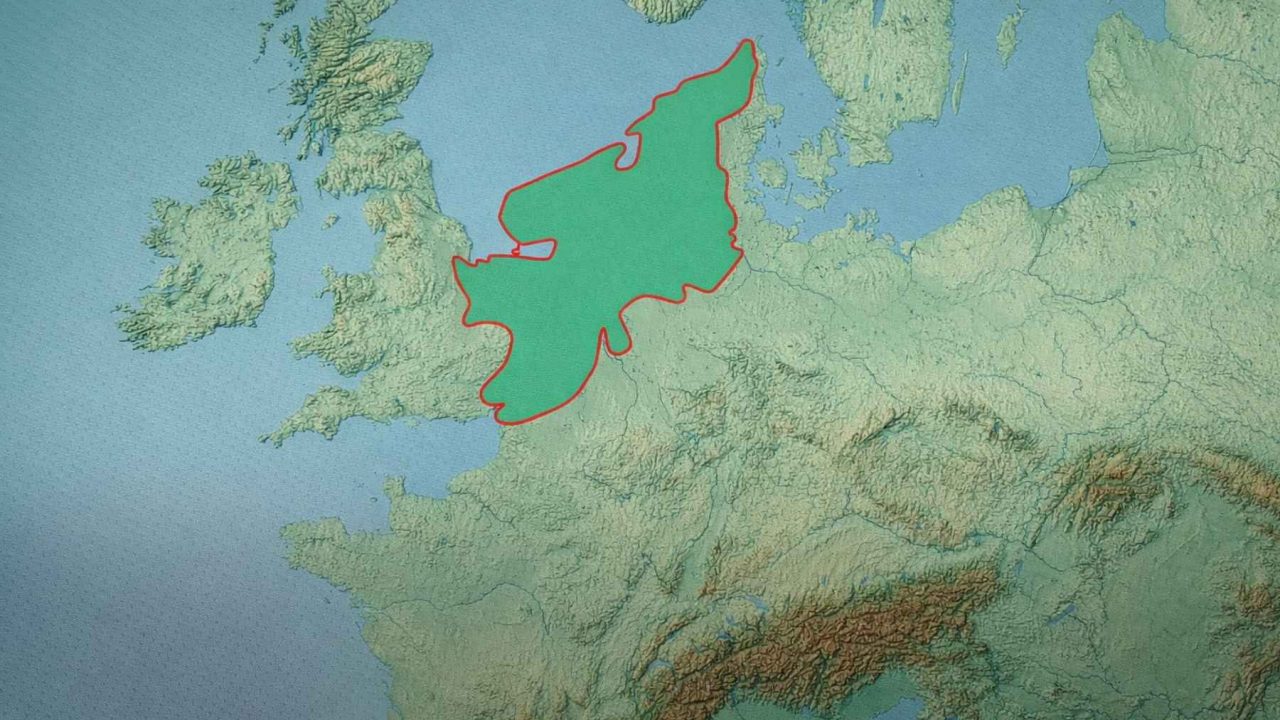
Beneath the choppy surface of the North Sea — one of the world’s busiest shipping lanes — lies something most people would never imagine: the buried remnants of a vast, forested landscape that people once walked across on dry land. And now, scientists have found the genetic evidence to prove just how rich and alive that world once was.
A research team led by the University of Warwick analyzed ancient DNA recovered from 252 seabed samples drawn from 41 marine sediment cores. What they found pushes back the timeline for temperate forest in the region by a significant margin — and raises new questions about how and when the North Sea as we know it actually formed.
The findings were published in the Proceedings of the National Academy of Sciences, one of the most respected scientific journals in the world. The implications stretch well beyond botany — touching on human migration, Ice Age ecology, and our understanding of a lost world hiding in plain sight under the waves.
What Is Doggerland — and Why Does It Matter?
Doggerland is the name researchers use for the now-submerged region that once connected Great Britain to mainland Europe. During and after the last Ice Age, when global sea levels were significantly lower, this area was dry, habitable land. You could, in theory, have walked from what is now eastern England directly into continental Europe without ever crossing open water.
For a long time, Doggerland was described in shorthand as a “land bridge” — a convenient corridor people used to move between landmasses. But that framing undersells what the new DNA evidence suggests. This wasn’t just a strip of passable terrain. It appears to have been a genuinely lush, ecologically rich environment, with established woodland that would have supported both wildlife and human populations.
The genetic signatures recovered from the seabed point to the presence of oak, elm, and hazel in southern Doggerland more than 16,000 years ago — earlier than many previous records had indicated these species were established in the region.
How Scientists Read Ancient DNA From the Ocean Floor
Recovering usable genetic material from the bottom of the sea is no small feat. Sedimentary ancient DNA — sometimes called sedaDNA — is extracted from layers of material that have accumulated on the seafloor over thousands of years. Each layer acts like a biological time capsule, preserving traces of the plants, animals, and microorganisms that lived and died in the area long ago.
The University of Warwick-led team worked with samples from 41 separate marine cores — essentially cylindrical columns of sediment drilled from the seabed — and pulled DNA from 252 individual samples within those cores. The scale of the sampling effort is what makes the findings particularly credible: this wasn’t a single lucky find, but a systematic sweep across a wide geographic area.
The results consistently pointed toward temperate woodland conditions in southern Doggerland during a period that many researchers had assumed was still too cold and inhospitable for established broadleaf forest.
What the Ancient DNA Actually Revealed
| Finding | Detail |
|---|---|
| Number of seabed samples analyzed | 252 samples from 41 marine cores |
| Age of forest evidence | More than 16,000 years ago |
| Tree species identified | Oak, elm, and hazel |
| Location | Southern Doggerland (now beneath the North Sea) |
| Research institution | University of Warwick |
| Published in | Proceedings of the National Academy of Sciences |
The study also raises a secondary but significant question about the North Sea itself. Researchers suggest the sea may have fully formed later than previously assumed — meaning the transition from dry land to open ocean happened more gradually, or more recently, than existing models have proposed. That’s a timeline shift with real consequences for how scientists reconstruct the post-Ice Age world.
Why This Changes the Picture of Post-Ice Age Europe
The conventional view of life after the last Ice Age tends to focus on gradual warming and slow ecological recovery — a world cautiously greening as glaciers retreated. The Doggerland findings complicate that picture in an interesting way.
If oak, elm, and hazel were already established in southern Doggerland more than 16,000 years ago, it suggests that at least parts of this now-submerged landscape were ecologically advanced much earlier than the broader regional record implied. Temperate woodland doesn’t appear overnight — it takes generations of ecological succession to develop. Finding it that far back in time suggests the environment was stable and productive well before researchers had assumed.
This also has direct implications for human history. Doggerland wasn’t just geography — it was living space. A forested, resource-rich landscape would have been attractive to hunter-gatherer communities moving through post-glacial Europe. The presence of established woodland could mean the region supported denser or more settled human populations than previously thought, for longer than previously thought.
Researchers note that the study’s timeline revision — suggesting the North Sea formed later than assumed — could shift how scientists model both ecosystem development and patterns of human movement across northwestern Europe after the Ice Age.
What Researchers Are Still Working to Understand
The study opens as many questions as it answers. Sedimentary ancient DNA can tell scientists what species were present, but it can’t yet draw a complete picture of the landscape — how dense the woodland was, how far it extended, or exactly how quickly it gave way to rising seas.
The revised timeline for when the North Sea fully formed will likely prompt follow-up research into the specific mechanisms of inundation — whether it was gradual, punctuated by sudden flooding events, or something more complex. For the communities that may have lived in Doggerland, that distinction matters enormously.
What is clear is that the seabed holds far more information than we have yet extracted from it. The 252 samples analyzed in this study represent a fraction of what the ocean floor may still preserve — and techniques for recovering ancient environmental DNA from marine sediments are improving rapidly.
Frequently Asked Questions
What is Doggerland?
Doggerland is the name for a now-submerged landmass that once connected Great Britain to mainland Europe, exposed during the last Ice Age when sea levels were lower.
What did scientists find in the North Sea seabed samples?
Researchers found ancient DNA evidence of temperate forest, including oak, elm, and hazel, in southern Doggerland dating back more than 16,000 years.
How many samples were analyzed in the study?
The University of Warwick-led team analyzed 252 seabed samples taken from 41 marine sediment cores.
Where was the study published?
The findings were published in the Proceedings of the National Academy of Sciences.
Does this change what we know about when the North Sea formed?
The study suggests the North Sea may have fully formed later than previously assumed, which researchers say could affect how scientists think about ecosystems and human movement after the last Ice Age.
Could people have lived in Doggerland’s forested landscape?




Leave a Reply