
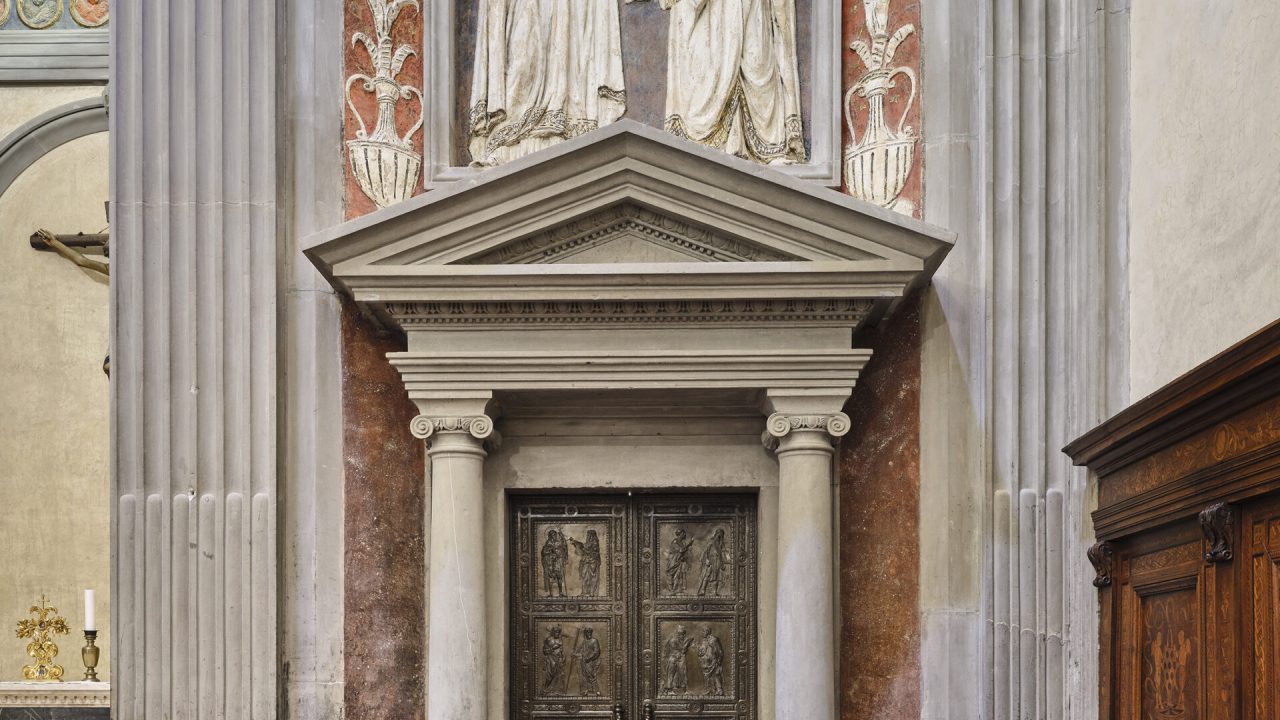
Eighty-two-year-old Francesca Benedetti had walked past the same church entrance in Florence every morning for six decades. Today, she stopped dead in her tracks, her weathered hands trembling slightly as she reached toward the gleaming bronze doors that seemed to shimmer with new life.
“Madonna mia,” she whispered, tears forming in her eyes. “They’re home.”
After years of painstaking restoration work, Donatello’s magnificent medieval bronze doors have returned to their rightful place in Florence, marking one of the most significant art restoration achievements in recent Italian history. The doors, which had been carefully removed for conservation, now stand as a testament to both medieval craftsmanship and modern preservation techniques.
A Renaissance Master’s Bronze Legacy Returns
Donatello’s bronze doors represent far more than mere church entrances—they’re windows into the soul of Renaissance Florence. Created in the 15th century, these masterpieces showcase the revolutionary techniques that made Donatello one of history’s most influential sculptors.
The restoration project, which took several years to complete, involved some of Italy’s most skilled conservators working with cutting-edge technology. Every detail, from the intricate relief panels to the decorative hinges, received meticulous attention.
These doors aren’t just art—they’re living history. Every scratch, every patina mark tells the story of Florence itself.
— Dr. Alessandro Conti, Art Restoration Specialist
The bronze work demonstrates Donatello’s mastery of perspective and human emotion, techniques that would influence generations of artists. Unlike the flat, stylized figures of earlier medieval art, these doors burst with three-dimensional life and psychological depth.
What the Restoration Uncovered
The conservation process revealed fascinating details about both the original creation and the doors’ journey through centuries. Conservators discovered layer upon layer of history embedded in the bronze itself.
Here’s what the restoration team accomplished:
- Removed centuries of accumulated grime and inappropriate previous repairs
- Stabilized the bronze structure using modern conservation techniques
- Restored the original patination where possible
- Enhanced the visibility of fine details previously obscured
- Installed climate control systems to prevent future deterioration
- Created detailed digital documentation for future preservation efforts
The restoration also involved extensive research into Donatello’s original techniques. X-ray analysis revealed how the master sculptor built up his compositions, while chemical analysis helped conservators understand the original bronze alloy composition.
| Restoration Phase | Duration | Key Focus |
|---|---|---|
| Documentation | 6 months | Photography and condition assessment |
| Cleaning | 18 months | Removal of dirt and previous repairs |
| Structural work | 12 months | Stabilization and bronze treatment |
| Final details | 8 months | Patination and protective measures |
We found evidence of at least four different repair campaigns over the centuries. Each generation tried to preserve these doors in their own way.
— Maria Rossi, Lead Conservator
Why These Doors Matter Today
In our digital age, you might wonder why medieval bronze doors deserve such attention and resources. The answer lies in what these artifacts represent—not just artistic achievement, but human creativity and cultural continuity.
For Florence, the return of Donatello’s doors means more than tourism revenue, though that’s certainly significant. These doors connect modern Florentines to their ancestors, creating a tangible link across centuries.
The restoration also serves as a model for similar projects worldwide. The techniques developed during this project will help preserve bronze artworks from Florence to Beijing.
When visitors see these doors, they’re not just looking at bronze—they’re experiencing the same artistic vision that amazed people 600 years ago.
— Prof. Giovanni Alberti, Renaissance Art History
Local residents have already begun incorporating the doors back into their daily routines. Morning joggers pause to admire details they’d never noticed before. Tourists arrive with newfound appreciation for the craftsmanship involved.
The doors also represent a victory for public-private partnerships in art conservation. Funding came from multiple sources, including the Italian government, private donors, and international foundations committed to preserving world heritage.
The Bigger Picture for Art Preservation
This project highlights the urgent need for proactive art conservation. Climate change, pollution, and urban development threaten countless artistic treasures worldwide. The success of Donatello’s door restoration provides a roadmap for similar efforts.
Florence has committed to regular maintenance schedules and monitoring systems that should prevent the need for such extensive restoration in the future. The city is also training the next generation of conservators to continue this vital work.
For art lovers planning visits to Florence, the restored doors offer an unprecedented viewing experience. The cleaning revealed details invisible for generations, while improved lighting allows visitors to appreciate the full range of Donatello’s artistic vision.
These doors remind us that art conservation isn’t about the past—it’s about ensuring future generations can experience these masterpieces firsthand.
— Dr. Elena Marchetti, Cultural Heritage Director
The project has already inspired similar restoration efforts across Italy and beyond. Museums and churches worldwide are reassessing their own bronze collections, seeking to apply lessons learned from the Donatello restoration.
As Francesca Benedetti now tells her grandchildren, some things are worth waiting for. The patience required for proper restoration ensures these doors will continue inspiring wonder for centuries to come.
FAQs
How long did the restoration take?
The complete restoration process took approximately four years from start to finish.
Can visitors see the doors up close?
Yes, visitors can view the doors during regular church hours, though touching is prohibited to preserve the restoration work.
What made this restoration different from previous repairs?
Modern conservation techniques focused on preserving original materials rather than replacing them, using reversible treatments when possible.
How much did the restoration cost?
The total project cost was approximately 2.3 million euros, funded through various public and private sources.
Are there plans for future maintenance?
Yes, Florence has established a regular monitoring and maintenance schedule to prevent deterioration and ensure long-term preservation.
What other Donatello works can visitors see in Florence?
Florence houses numerous Donatello sculptures in museums like the Bargello and various churches throughout the city.
Leave a Reply