
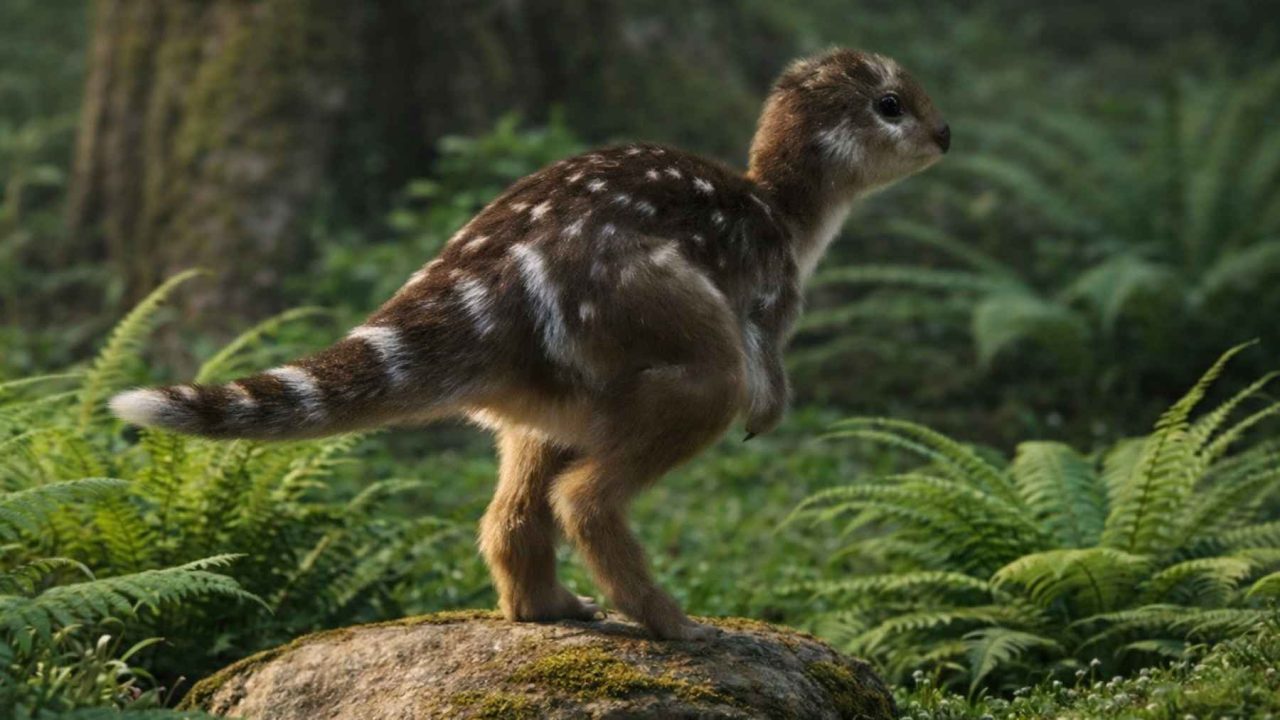
What scientists initially dismissed as little more than a lump of rock with a few bones poking out turned out to be one of the most significant paleontological finds in South Korea’s history. A juvenile dinosaur, now formally named Doolysaurus huhmini, has been identified from a fossil recovered on Aphae Island — and the discovery is already rewriting what researchers thought they knew about dinosaur life on the Korean Peninsula.
The find is remarkable not just for what it is, but for how it was found. The skull bones were completely sealed inside a stubborn block of rock, invisible to the naked eye. It took high-resolution X-ray micro-CT scanning technology to reveal what was hiding inside. Without that technology, this dinosaur may have remained unknown indefinitely.
The result? South Korea now has its first dinosaur fossil ever reported with portions of a skull — and the first new dinosaur species described from the country in 15 years.
Why Doolysaurus huhmini Is Such a Big Deal for South Korean Paleontology
To understand why this discovery matters, you have to understand the unusual nature of South Korea’s fossil record. The country is actually well-known in paleontological circles — but mostly for trace fossils: footprints pressed into ancient mud, fossilized nests, and eggshells. Physical skeletal remains of dinosaurs are genuinely rare there.
That imbalance has long made it difficult for scientists to build a complete picture of what dinosaur species actually lived in the region, how they moved, how they were built, and how they relate to species found elsewhere in Asia and beyond. You can tell a lot from a footprint, but a skull tells you so much more.
According to the Natural History Museum, Doolysaurus is only the third named dinosaur species from South Korea. It is also the first South Korean dinosaur fossil to preserve skull elements — a distinction that makes this specimen uniquely valuable to researchers studying the region’s prehistoric past.
The 15-year gap since the last named South Korean dinosaur species also puts this find in sharp relief. This is not a routine addition to a long list. It is a rare event, and the scientific community is paying close attention.
How Technology Unlocked a Fossil That Looked Like a Rock
The story of how Doolysaurus came to light is as interesting as the dinosaur itself. When the fossil was first recovered from Aphae Island, it did not look like much. A block of rock. A few legs. Some vertebrae. Easy to overlook, easy to underestimate.
What changed everything was the application of high-resolution X-ray micro-CT scanning — a technology that allows scientists to peer inside dense rock without physically breaking it apart. The scans revealed skull bones that had been completely encased in the rock matrix, invisible from the outside.
This is increasingly how paleontology works in the modern era. Fossils that would have been passed over or misidentified in earlier decades are now being re-examined with imaging tools that can detect structure at extraordinary resolution. Doolysaurus is a clear example of what that technology can unlock.
Key Facts About the Doolysaurus Discovery at a Glance
| Detail | Information |
|---|---|
| Species name | Doolysaurus huhmini |
| Discovery location | Aphae Island, South Korea |
| How skull was revealed | High-resolution X-ray micro-CT scanning |
| Specimen type | Juvenile dinosaur |
| Ranking among South Korean dinosaurs | Third named species from South Korea |
| First of its kind | First South Korean dinosaur fossil with skull elements |
| Years since last named South Korean dinosaur | 15 years |
- South Korea is better known for trace fossils — footprints, nests, and eggshells — than skeletal remains
- The skull bones were entirely concealed within the rock block when the fossil was first recovered
- The specimen is a juvenile, which adds further scientific interest to its developmental biology
- The Natural History Museum has recognized Doolysaurus as a significant addition to the South Korean fossil record
What This Means for How We Understand Dinosaurs in East Asia
South Korea sits in a part of the world where dinosaur skeletal fossils have historically been harder to come by than in neighboring regions. Skeletal material from the Korean Peninsula is sparse enough that each confirmed species genuinely shifts the scientific picture of what animals lived there during the Mesozoic era.
A skull, in particular, carries enormous scientific weight. Skull morphology helps researchers classify species, understand diet, assess sensory capabilities, and trace evolutionary relationships across geography and time. The fact that Doolysaurus preserves skull elements — even partially — means scientists now have a new data point they simply did not have before.
The juvenile status of the specimen also raises interesting questions. Juvenile fossils can reveal how a species grew and changed over its lifetime, and they sometimes show features that differ meaningfully from adults of the same species. Researchers will likely be studying this specimen carefully for years.
What Comes Next for Doolysaurus Research
The formal description of Doolysaurus huhmini opens a new chapter rather than closing one. Researchers will continue analyzing the CT scan data, and the specimen itself will remain a reference point for any future South Korean dinosaur finds that might help fill in the gaps around this species.
South Korea’s fossil sites — particularly those known for track and egg deposits — may also receive renewed attention in light of this discovery. If one rock on Aphae Island was hiding a skull, the question naturally follows: what else might be concealed in the country’s existing fossil collections, waiting for the right technology to reveal it?
The broader lesson of Doolysaurus is one that applies well beyond South Korea. Modern imaging technology is actively changing what paleontology can accomplish, turning overlooked specimens into scientific revelations. The dinosaur hiding inside that rock had been there all along. It just needed someone — and the right tools — to look properly.
Frequently Asked Questions
What is Doolysaurus huhmini?
Doolysaurus huhmini is a newly identified dinosaur species from South Korea, recovered from Aphae Island and formally described after high-resolution X-ray micro-CT scans revealed skull bones hidden inside a block of rock.
Why is this discovery significant for South Korea?
It is only the third named dinosaur species from South Korea, the first new species described from the country in 15 years, and the first South Korean dinosaur fossil reported with portions of its skull.
How were the skull bones discovered?
The skull bones were completely sealed inside a rock block and could not be seen from the outside. High-resolution X-ray micro-CT scanning technology revealed their presence without physically breaking apart the fossil.
Why are skeletal dinosaur fossils rare in South Korea?
South Korea’s fossil sites are much better known for trace fossils such as footprints, nests, and eggshells. Actual skeletal remains are rare enough that scientists still count the named species on a very short list.
Was Doolysaurus an adult or a juvenile dinosaur?
The specimen is identified as a juvenile dinosaur, which adds additional scientific interest to its study, particularly regarding growth and development.</p




Leave a Reply