

The world’s climate is more out of balance than at any point in recorded history, according to a stark new warning from the United Nations’ weather agency. That finding alone would be enough to anchor a week’s worth of headlines — but it arrived alongside dramatic flooding in Hawaii and fresh preparations at NASA for one of the most ambitious crewed missions in a generation.
These three stories, each significant on its own, share a common thread: the planet and the people on it are being pushed in directions that were unthinkable just a few decades ago. Here is what you need to know about each development and why it matters beyond the news cycle.
Earth’s Energy Imbalance Has Broken a Record — and That Should Concern Everyone
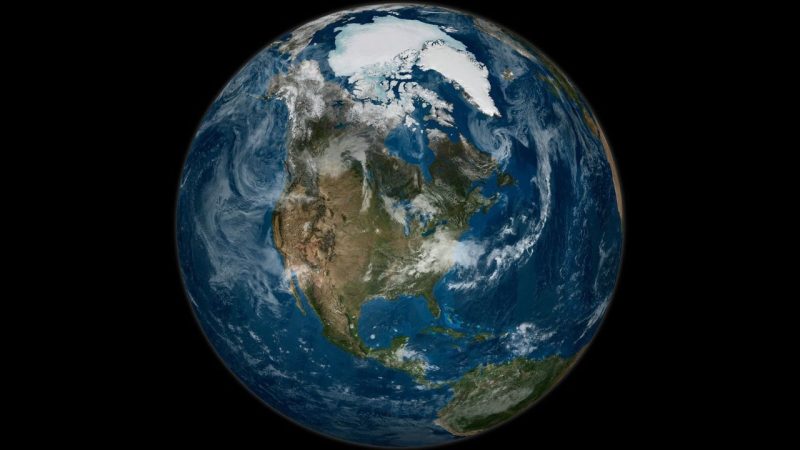
The headline finding comes from the World Meteorological Organization, the UN’s authoritative body on climate and atmospheric science. Officials there have confirmed that Earth’s energy imbalance — the gap between the amount of solar energy arriving on the planet and the amount being radiated back into space — has reached a record high.
To understand why this matters, it helps to think of Earth as a living system trying to regulate its own temperature. When greenhouse gases like carbon dioxide build up in the atmosphere, they act like a thickening blanket, trapping heat that would otherwise escape. The result is more energy being absorbed by the oceans, land, and atmosphere than is being released.
That trapped energy has to go somewhere. It drives warmer oceans, stronger storms, accelerating ice melt, and rising sea levels. The fact that this imbalance is now at a recorded high signals that the planet’s ability to regulate itself is being stretched further than ever before by human-released carbon emissions.
Scientists and climate observers have long warned that the energy imbalance metric is one of the most honest indicators of where the climate system is headed — more revealing, in some ways, than surface temperature readings alone. A record at this level is not a distant warning. It reflects changes already locked into the system.
What the Record Energy Imbalance Actually Means in Practice
| Factor | What It Represents | Why It Matters |
|---|---|---|
| Energy Imbalance | More solar energy absorbed than released by Earth | Drives rising temperatures, stronger storms, sea level rise |
| Greenhouse Gas Emissions | Human-released carbon trapping atmospheric heat | Primary cause of the growing imbalance |
| Record Status | Highest recorded imbalance in measured history | Indicates climate system stress beyond previous benchmarks |
| Source of Warning | UN World Meteorological Organization | Carries significant scientific and policy authority |
The WMO’s warning is not speculative modeling about future scenarios. It reflects measured data on what is happening to Earth’s energy budget right now. That distinction matters when evaluating how seriously to take the finding.
Hawaii Flooding Adds an Immediate, Human Face to the Crisis
While scientists were releasing data on the planet’s energy imbalance, Hawaii was dealing with something far more immediate: the worst flooding the islands have seen in decades.
Images from the aftermath showed the Ala Wai Golf Course completely inundated with water, a striking visual that captured just how overwhelming the flooding had become. Golf courses and green spaces turning into lakes are not just dramatic photographs — they represent the kind of infrastructure failure and community disruption that takes months or years to recover from fully.
Hawaii’s geography makes it particularly vulnerable to intense rainfall events. The islands’ mountainous terrain can channel enormous volumes of water downhill in a short period of time, overwhelming drainage systems and flooding low-lying areas with little warning. When those events intensify — as they have in recent years across many parts of the world — the consequences are severe and fast-moving.
The flooding serves as a direct, real-world illustration of what a warming, increasingly imbalanced climate system produces at the ground level. Record energy imbalance is an abstract measurement. Flooded communities are not.
NASA’s Artemis II Preparations Offer a Different Kind of Milestone
Against that backdrop, NASA has been moving forward with preparations for the Artemis II launch — the mission that will send astronauts around the Moon for the first time since the Apollo era.
Artemis II represents a significant step in humanity’s return to deep space. Unlike Artemis I, which was an uncrewed test flight, Artemis II will carry a crew on a lunar flyby, validating the systems, hardware, and procedures needed for eventual crewed lunar landings further down the line.
The preparations signal that despite the many challenges facing the planet’s surface, the ambition to explore beyond it remains very much alive. For many observers, missions like Artemis II carry a dual significance — advancing human knowledge while also reminding the public that the same scientific institutions tracking Earth’s climate crisis are the ones pushing the boundaries of exploration.
Three Stories, One Bigger Picture
It would be easy to treat these three developments as unrelated items on a news digest. But they connect in ways worth acknowledging.
- The energy imbalance record tells us the climate system is under more stress than ever measured.
- The Hawaii flooding shows what that stress looks like when it arrives at someone’s doorstep.
- The Artemis II preparations reflect humanity’s capacity to respond to challenges — and to keep reaching forward even amid difficult circumstances.
None of these stories exists in a vacuum. The science behind the energy imbalance informs how engineers design future habitats, how emergency planners prepare for extreme weather, and how policymakers weigh the urgency of reducing emissions. The flooding in Hawaii is both a local emergency and a signal of what is coming for coastlines and island communities around the world.
Paying attention to all three at once — rather than in isolation — gives a more honest picture of where things stand.
Frequently Asked Questions
What is Earth’s energy imbalance?
Earth’s energy imbalance refers to the difference between the solar energy arriving on the planet and the energy being radiated back into space. When greenhouse gases trap more heat, this imbalance grows.
Who reported the record energy imbalance?
The warning came from the World Meteorological Organization, the United Nations’ authoritative agency for climate and atmospheric science.
What caused the severe flooding in Hawaii?
Specific meteorological causes were not detailed in the available reporting.
What is Artemis II?
Artemis II is NASA’s planned crewed mission that will send astronauts around the Moon, marking the first crewed lunar flyby since the Apollo era. NASA has been actively preparing for its launch.
Is the energy imbalance record a prediction or a measured finding?
It is based on measured data, not future modeling. The WMO’s warning reflects what instruments have already recorded about Earth’s current energy budget.
How does the energy imbalance connect to extreme weather events like the Hawaii floods?
A growing energy imbalance means more heat is being retained in Earth’s climate system, which intensifies weather patterns and increases the likelihood of extreme precipitation events, though direct attribution requires detailed scientific analysis beyond what the source confirms.


Leave a Reply