
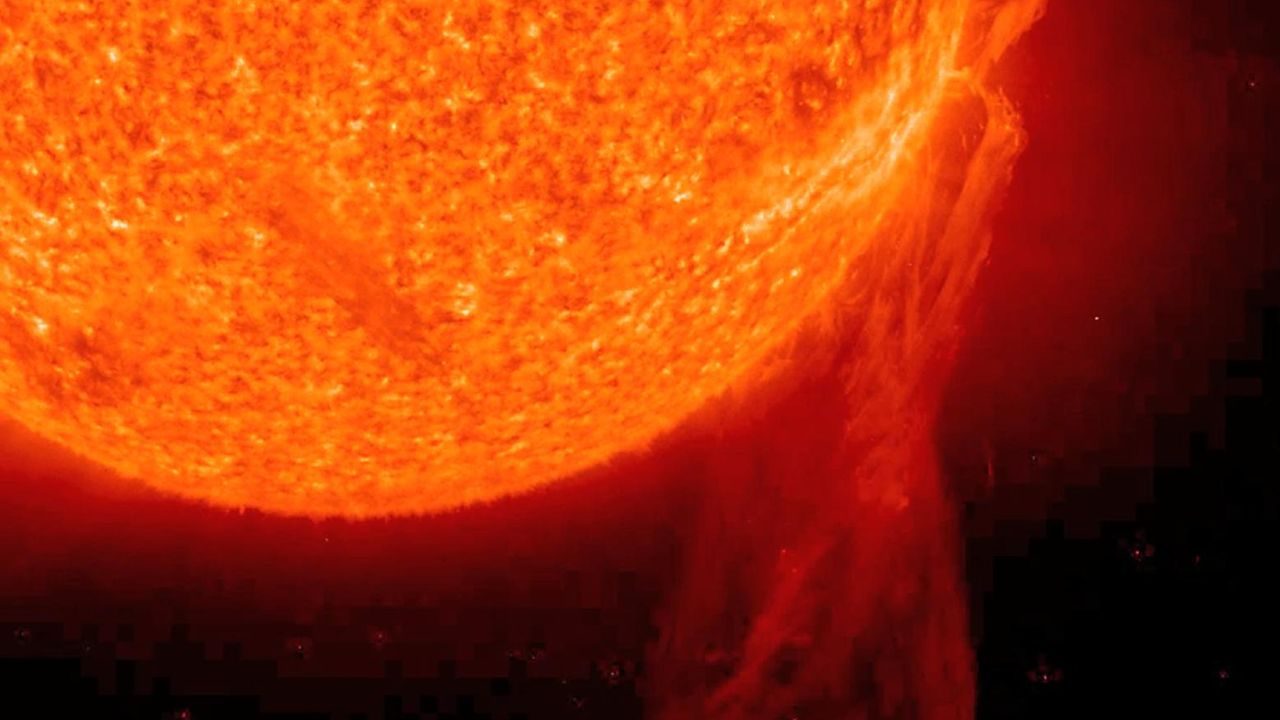
The sun has been burning at the center of our solar system for about 4.6 billion years — and in that entire time, Earth has never spent a single moment without it. But what if that changed? What if the sun simply blinked out of existence right now?
It sounds like pure science fiction. But the question is one that scientists and astronomers take seriously, because the answer reveals just how completely and fundamentally every aspect of life on Earth depends on that distant ball of gas. The results would be catastrophic — and some of them would happen faster than you might expect.
Here’s what we actually know about how the sun formed, how Earth came to depend on it, and what a sunless future would look like for our planet.
How the Sun and Earth Became Inseparable
To understand what losing the sun would mean, it helps to understand how the two became linked in the first place. The sun formed approximately 4.6 billion years ago, when a massive spinning cloud of gas and dust collapsed in on itself and condensed, creating the largest object in what would become our solar system.
Earth and the other planets formed from the material left over after that collapse — the leftover debris that swirled around the newly ignited star and gradually clumped together under gravity. In other words, Earth is, in a very real sense, a byproduct of the sun’s formation. The two have been gravitationally, thermally, and chemically linked ever since.
That connection is not just poetic. It is physical and total. The sun provides Earth with light, heat, and the gravitational anchor that keeps our planet in a stable orbit. Remove any one of those things, and the consequences cascade quickly.
What Would Happen to Earth If the Sun Suddenly Vanished
The effects would begin almost immediately — though not quite at the speed of light you might assume. Here’s how events would unfold:
- Light disappears after 8 minutes: Light from the sun takes about 8 minutes to reach Earth. So for roughly 8 minutes after the sun vanished, we would still see it shining in the sky — completely unaware anything had changed.
- Gravity fails at the same moment: Gravity, like light, travels at the speed of light. The moment that 8-minute delay expired, Earth would no longer be held in orbit. Without the sun’s gravitational pull, our planet would fly off into space in a straight line — following whatever direction it was moving at the instant the sun disappeared.
- Temperatures plummet rapidly: Without solar energy heating the surface, Earth’s average temperature would begin dropping almost immediately. Within a week, surface temperatures would fall well below freezing across most of the planet. Within a year, the average surface temperature could drop to around minus 100 degrees Fahrenheit.
- Photosynthesis stops: Plants rely on sunlight to produce energy. Without it, photosynthesis ceases. The base of nearly every food chain on Earth collapses. Most plant life would die within weeks, triggering a domino effect up the food chain.
- The oceans eventually freeze over: While the surface would freeze quickly, the sheer volume of water in the oceans means the deep ocean could remain liquid for hundreds of thousands of years, insulated by ice above.
- Some life might survive: Deep-sea ecosystems that rely on hydrothermal vents rather than sunlight could potentially continue for a very long time. Earth’s internal heat — driven by radioactive decay in the planet’s core — would persist for billions of years regardless of what happened to the sun.
A Timeline of the Darkness
| Time After Sun Vanishes | What Happens |
|---|---|
| 0–8 minutes | Nothing visible changes — sunlight still reaching Earth |
| 8 minutes | Sky goes dark; Earth leaves its orbit and drifts into space |
| Days to weeks | Surface temperatures drop below freezing; photosynthesis stops |
| 1 year | Surface temperatures potentially reach around minus 100°F |
| Thousands of years | Upper ocean layers freeze solid |
| Billions of years | Earth’s internal heat continues; deep-sea vent ecosystems may persist |
The Part of This Story Most People Miss
Most people imagine a sunless Earth as simply a cold, dark version of the planet we know. But the loss of gravity is the detail that changes everything. Earth would not sit still in space, slowly freezing in place. It would be moving — drifting through the galaxy at tens of thousands of miles per hour, with no star to orbit and no fixed destination.
Over millions of years, Earth could theoretically drift close enough to another star system to be captured by a different gravitational field. But the odds of that happening in any timeframe relevant to life are extraordinarily small. For all practical purposes, a sunless Earth becomes a frozen, wandering rock in the dark between stars.
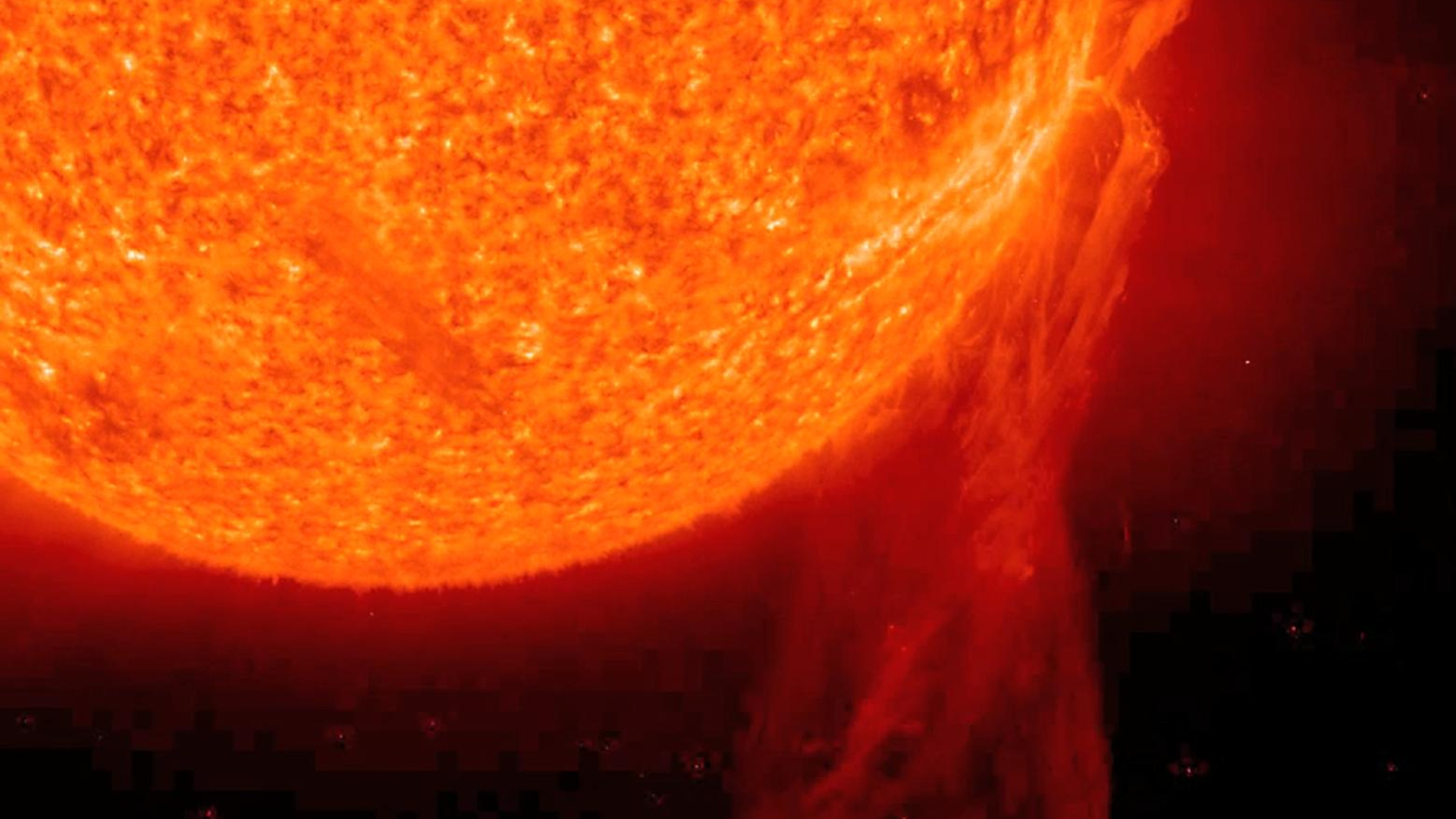
The internal heat of the planet — generated by radioactive decay deep in the core — would keep geological activity going for an enormous span of time. Volcanoes would still erupt. The mantle would still churn. But without sunlight, the surface would be uninhabitable for any life as we know it.
Why This Thought Experiment Actually Matters
Questions like this are not just idle curiosity. Understanding Earth’s total dependence on the sun helps scientists study what makes planets habitable in the first place — and what conditions other planets around other stars might need to support life.
It also puts the sun’s age in perspective. At 4.6 billion years old, our star is roughly halfway through its expected lifespan. Scientists estimate the sun will continue burning in roughly its current state for another 5 billion years before it expands into a red giant. The sudden disappearance scenario is physically implausible — but it is a useful lens for understanding just how precisely balanced the conditions for life on Earth really are.
Every degree of warmth, every green leaf, every ocean wave exists because a star formed in the right place at the right time, and a small rocky planet settled into orbit around it at just the right distance.
Frequently Asked Questions
How long would it take for Earth to go dark if the sun vanished?
Because sunlight takes approximately 8 minutes to travel from the sun to Earth, the sky would remain bright for about 8 minutes after the sun disappeared before going completely dark.
Would Earth stay in its orbit without the sun?
No. Gravity travels at the speed of light, so the moment sunlight stopped arriving, Earth would also lose the gravitational pull holding it in orbit and would drift off into space in a straight line.
How quickly would temperatures drop on a sunless Earth?
Surface temperatures would begin falling almost immediately, dropping well below freezing within days to weeks, and potentially reaching around minus 100 degrees Fahrenheit within a year.
Could anything survive on Earth without the sun?
Potentially. Deep-sea ecosystems that depend on hydrothermal vents rather than sunlight might survive for a very long time, since Earth’s internal heat from radioactive decay would continue for billions of years.
When did the sun form?
The sun formed approximately 4.6 billion years ago from a massive spinning cloud of gas and dust that collapsed and condensed under its own gravity.
Is the sun actually at risk of suddenly disappearing?
No. The sudden disappearance of the sun is physically implausible. Scientists estimate the sun will continue burning in roughly its current state for approximately another 5 billion years.



Leave a Reply