
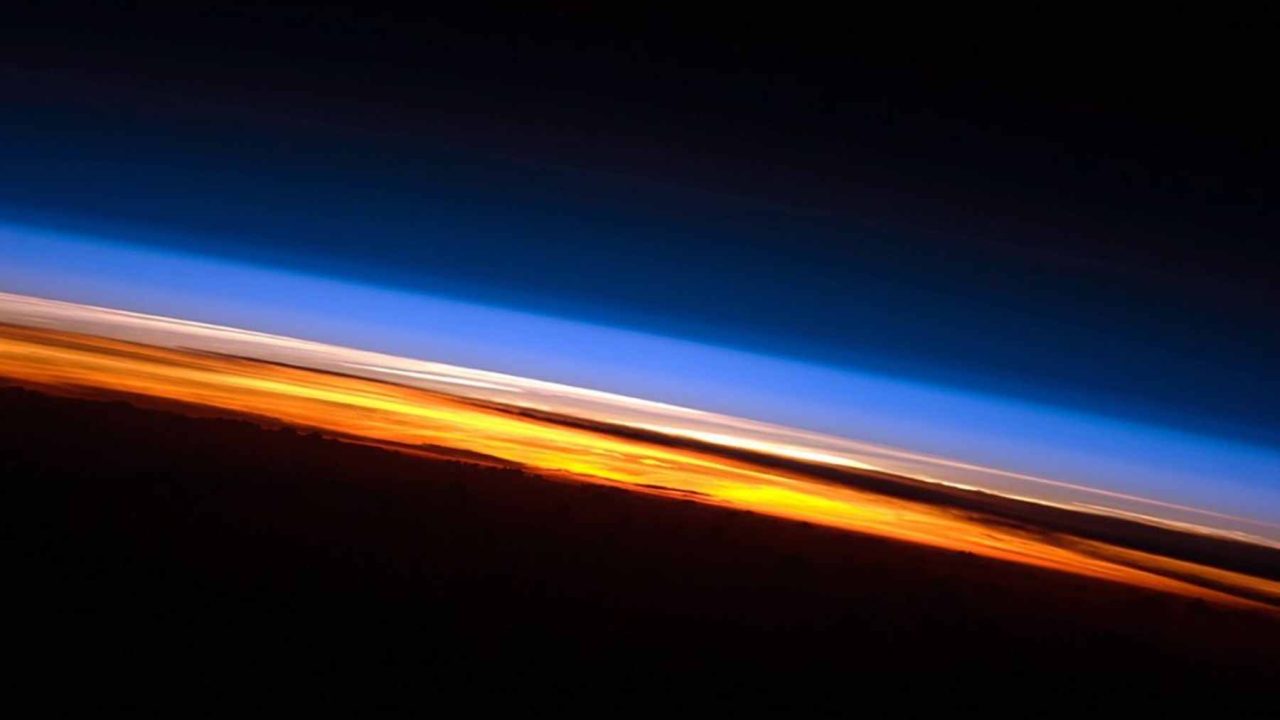
Earth’s breathable atmosphere — the invisible blanket of oxygen that every animal, every human, and nearly every complex living thing depends on — has an expiration date. And according to new scientific research, that date is roughly one billion years from now.
That sounds like an eternity. But the implications of this finding reach far beyond the distant future of our own planet. They strike at one of the most fundamental questions in science: how do we find life on other worlds, and what signs should we actually be looking for?
A study published in the journal Nature Geoscience, supported in part by the NASA Astrobiology Program, suggests that an oxygen-rich atmosphere like Earth’s may be far rarer — and far more fleeting — than scientists previously assumed. That changes everything about how we search for life beyond our solar system.
The Research Behind Earth’s Oxygen Clock
The study was conducted by geoscientist Kazumi Ozaki at Toho University and researcher Christopher T. Reinhard at the Georgia Institute of Technology. Their goal was deceptively simple: figure out how long Earth’s high-oxygen atmosphere can realistically last.
To do it, they built what scientists call an Earth system model — a sophisticated virtual planet that links the atmosphere, oceans, geological processes, and living organisms into a single interconnected simulation. They then varied dozens of parameters across thousands of model runs to account for uncertainty.
The result was a probabilistic forecast rather than a single fixed answer. And what they found was striking. Their simulations point to a mean future lifespan of approximately 1.08 billion years before oxygen in the atmosphere drops below one percent of its current level.
Crucially, the researchers found that this drop would not be a slow, gradual fade. Instead, the models suggest oxygen would fall off in a relatively sudden collapse — a planetary-scale tipping point rather than a gentle decline.
What Actually Drives the Oxygen Away
The mechanism behind this future collapse is rooted in the same star that makes life possible in the first place: the Sun. As our Sun ages, it gradually brightens. Over billions of years, that increasing solar energy will alter the chemistry of Earth’s atmosphere and oceans.
The carbon cycle — the process by which carbon dioxide moves between the atmosphere, living organisms, rocks, and the sea — is central to this story. As the Sun grows more luminous, it is expected to drive changes in the carbon cycle that ultimately reduce the amount of carbon dioxide available to plants and other photosynthetic organisms.
Photosynthesis is the engine of Earth’s oxygen supply. Less carbon dioxide means less photosynthesis. Less photosynthesis means less oxygen being produced. Over time, the balance tips, and the oxygen-rich atmosphere that complex life depends on begins to unravel.
The research suggests Earth could eventually enter a phase with a weakly oxygenated or even anoxic atmosphere — meaning an atmosphere with little to no free oxygen. That would represent a return to conditions not seen on this planet since before complex life evolved, billions of years ago.
Why This Is a Major Red Flag for Finding Life on Exoplanets
This is where the research becomes genuinely important for the future of astronomy and astrobiology. For decades, scientists searching for signs of life on distant planets have treated oxygen as one of the most reliable biosignatures — a chemical signal that, if detected in an alien atmosphere, would strongly suggest the presence of living organisms.
But this study complicates that assumption in two important directions.
- A planet could host abundant, complex life and still have an atmosphere with very little detectable oxygen — if that life exists during a phase when oxygen levels are low.
- Conversely, detecting high oxygen levels on an exoplanet does not guarantee that life has been present for long, or that it is currently thriving.
- The window of time during which a living planet displays an oxygen-rich atmosphere may be narrow in the context of a planet’s full lifespan.
- An anoxic or weakly oxygenated atmosphere should not automatically be read as evidence that a planet is lifeless.
In short, the search for life on exoplanets may need to look beyond oxygen as a primary target — or at least treat its absence with far more nuance than current frameworks allow.
A Timeline Written in Atmosphere
| Phase | Atmospheric Condition | Estimated Timeframe |
|---|---|---|
| Current era | Oxygen-rich atmosphere (~21% O₂) | Present day |
| Pre-Great Oxidation Event | Anoxic / weakly oxygenated | More than 2.4 billion years ago |
| Projected oxygen collapse | Oxygen drops below 1% of current levels | ~1.08 billion years from now (mean estimate) |
| Post-collapse phase | Weakly oxygenated or anoxic atmosphere | Beyond ~1.08 billion years from now |
This timeline puts Earth’s oxygen-rich period in sobering perspective. Complex life has existed for a fraction of Earth’s total lifespan. The window in which that life produces a clearly detectable oxygen signal may be narrower still.
What This Means for the Science of Life Detection
For researchers designing the next generation of space telescopes and atmospheric detection instruments, this study is a call to broaden the toolkit. Oxygen remains a meaningful signal, but it cannot be the only one scientists rely on.
The findings suggest that future missions studying exoplanet atmospheres should be equipped to detect a wider range of biosignatures — chemical combinations that could indicate biology even in low-oxygen or oxygen-free environments. This mirrors conditions that existed on early Earth, long before oxygen became the dominant gas it is today.
The research also reinforces a humbling idea: Earth’s current state is not the default condition of a living planet. It is one chapter in a much longer story — and on other worlds, we may only ever glimpse a different chapter entirely.
Frequently Asked Questions
How long do scientists estimate Earth’s oxygen-rich atmosphere will last?
According to the research by Ozaki and Reinhard, the mean estimated lifespan is approximately 1.08 billion years before oxygen drops below one percent of its current level.
Who conducted this research and where was it published?
The study was conducted by Kazumi Ozaki at Toho University and Christopher T. Reinhard at the Georgia Institute of Technology, and it was published in the journal Nature Geoscience.
What causes Earth’s oxygen levels to eventually collapse?
The models point to the Sun gradually brightening over time, which is expected to disrupt the carbon cycle and reduce photosynthesis — the primary source of atmospheric oxygen.
Will oxygen disappear slowly or suddenly?
The research suggests the drop will happen in a relatively sudden collapse rather than a slow, gradual decline — more like a tipping point than a fade.
Does this mean scientists should stop looking for oxygen on exoplanets?
Not exactly — but the findings suggest that the absence of oxygen should not be treated as proof that a planet is lifeless, and that other biosignatures deserve equal attention.
Was this research supported by any major scientific organizations?
Yes, the work was supported in part by the NASA Astrobiology Program.


Leave a Reply