
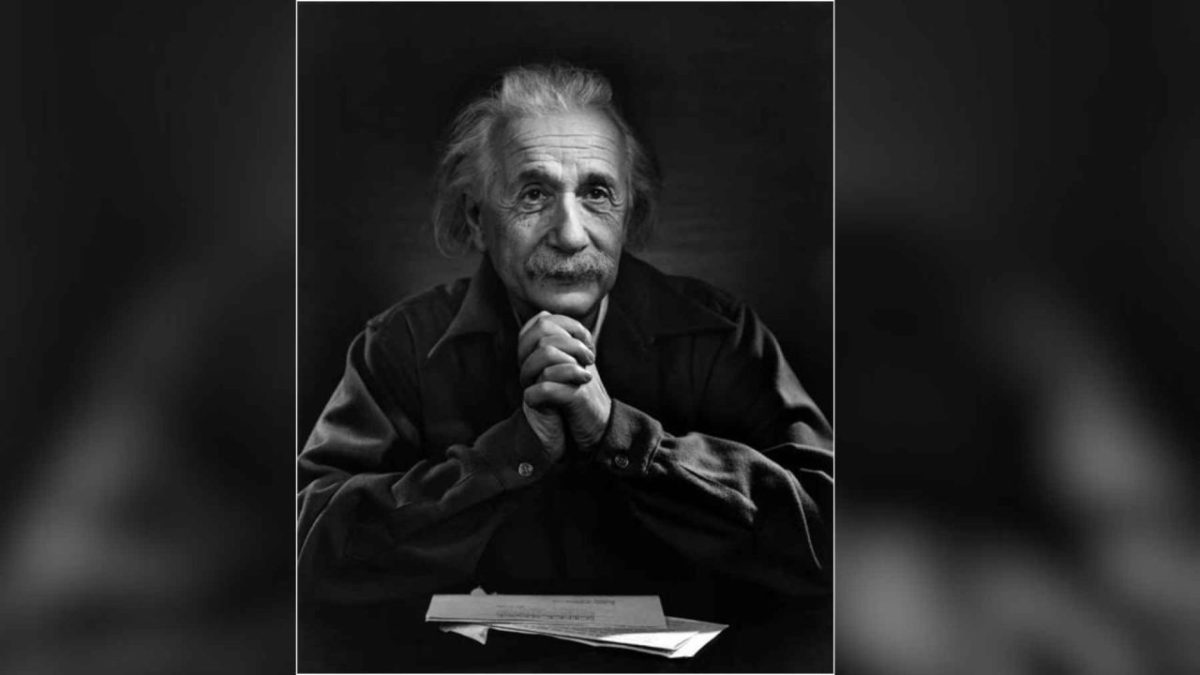
What does a successful life actually look like — and are most of us measuring it the wrong way? Albert Einstein thought so, and he said it plainly in one of the most quietly powerful lines ever attributed to a scientist: “Try not to become a man of success but rather try to become a man of value.”
That line has been printed on posters, shared across social media, and quoted in graduation speeches for decades. But the context behind it matters more than most people realize — and it changes how the words land entirely.
This was not a motivational slogan cooked up for clicks. It came from a documented reflection tied to the final stretch of Einstein’s life, published in a major American magazine shortly after his death. Understanding where it came from is the first step to understanding what he actually meant.
Where Einstein’s Most Famous Life Advice Actually Came From
The quote appeared in LIFE magazine on May 2, 1955 — just weeks after Einstein died on April 18, 1955, in Princeton. The recollection published there captured his thoughts on curiosity, contribution, and how young people should orient their lives.
Einstein was born in 1879 and won the Nobel Prize in Physics in 1921. By the time these reflections were recorded, he had lived through two world wars, the rise and fall of regimes, the birth of the atomic age, and decades of scientific upheaval. He had seen what ambition uncoupled from values could produce at a civilizational scale.
That background matters. The advice did not come from a life coach or a self-help book. It came from one of the most consequential scientific minds in modern history, reflecting on what he had observed across a long and turbulent life.
The broader reflection, according to the source, touched on curiosity, contribution, and perspective — not fame, wealth, or recognition. Success, in Einstein’s framing, was not the goal worth chasing. Value was.
Why the Quote Shows Up in So Many Different Forms
Anyone who has searched for this quote online has probably noticed that the wording shifts depending on where you find it. Some versions say “man of success,” others say “person of success.” Some drop words entirely. Some versions are printed under stock photos of sunsets with no source cited at all.
This is a documented phenomenon. Quote Investigator, a research project that traces the origins of widely circulated quotations, has looked into the modern versions of this line and noted the drift that happens when a quote travels far from its original source.
The LIFE magazine publication gives researchers and readers an anchor — a documented, magazine-sourced recollection that predates the internet entirely. That is precisely why historians and quote researchers point to it when trying to establish what Einstein actually said versus what the internet has gradually reshaped the line into.
The shortened poster versions that circulate today are not wrong in spirit, but they have been stripped of the surrounding context that made the observation meaningful in the first place.
What Einstein Meant by “Value” — and Why It Still Hits Differently
The distinction Einstein was drawing is one that feels increasingly relevant in an era where success is measured in followers, titles, salary figures, and public applause. His framing suggests those metrics miss something essential.
A person of value, in this reading, is someone whose existence contributes something real — to knowledge, to community, to the people around them. Success, by contrast, can be accumulated without contributing anything of lasting worth. You can win the game without the game meaning anything.
Einstein’s own life offered a kind of proof of concept. His contributions to physics — the special and general theories of relativity, his work on the photoelectric effect that earned him the Nobel Prize — were not driven by a desire for status. By most accounts, he was genuinely obsessed with understanding how the universe worked. The recognition followed the curiosity, not the other way around.
That sequence is exactly what the quote points toward: lead with what you can give, not with what you want to receive.
Key Facts About the Quote and Its Source
| Detail | Confirmed Information |
|---|---|
| Einstein’s birth year | 1879 |
| Nobel Prize in Physics awarded | 1921 |
| Einstein’s death | April 18, 1955, in Princeton |
| Publication containing the quote | LIFE magazine, May 2, 1955 |
| Quote’s core themes | Curiosity, contribution, perspective |
| Quote verification research | Traced by Quote Investigator |
Why This Advice Feels More Urgent Now Than Ever
The pressure to perform success visibly — to signal it, broadcast it, optimize it for an audience — has never been more intense. Platforms reward visibility. Algorithms amplify status markers. The metrics of a successful life have become more external, more comparative, and more relentless than at any point in recent history.
Against that backdrop, Einstein’s distinction cuts through the noise in a way that feels almost radical. Not because it is complicated — it is not — but because it asks a question most people avoid: Are you building something of genuine value, or are you just chasing the appearance of success?
Those two paths can look identical from the outside for a while. But they tend to diverge in ways that matter most over time — in how meaningful the work feels, in whether the relationships around you are real, in whether what you built lasts beyond the moment.
Einstein’s line, documented in LIFE magazine in the weeks after his death, was aimed at young people. But it holds up across every stage of life. The question it asks does not expire.
Frequently Asked Questions
Where did Einstein’s “man of value” quote originally come from?
The quote was published in LIFE magazine on May 2, 1955, shortly after Einstein’s death on April 18, 1955, as part of a documented recollection of his reflections on life and curiosity.
When did Albert Einstein win the Nobel Prize?
Einstein was awarded the Nobel Prize in Physics in 1921.
Why does the quote appear in so many slightly different versions online?
According to research by Quote Investigator, the line has drifted from its original wording as it has been shared, shortened, and reprinted across the internet over decades, far removed from its source publication.
What broader themes was Einstein addressing with this advice?
The LIFE magazine recollection situates the quote within a broader reflection on curiosity, contribution, and perspective — not just professional achievement or public recognition.
Is this quote genuinely attributed to Einstein or is it misattributed?
The quote is considered credible because it is tied to a documented magazine publication from 1955, giving it a verifiable source that predates the modern internet era of misattributed quotes.
What did Einstein mean by the difference between success and value?
Based on the sourced material, Einstein’s distinction points toward leading with genuine contribution rather than status-seeking — prioritizing what you give over what you accumulate or are seen to achieve.




Leave a Reply