
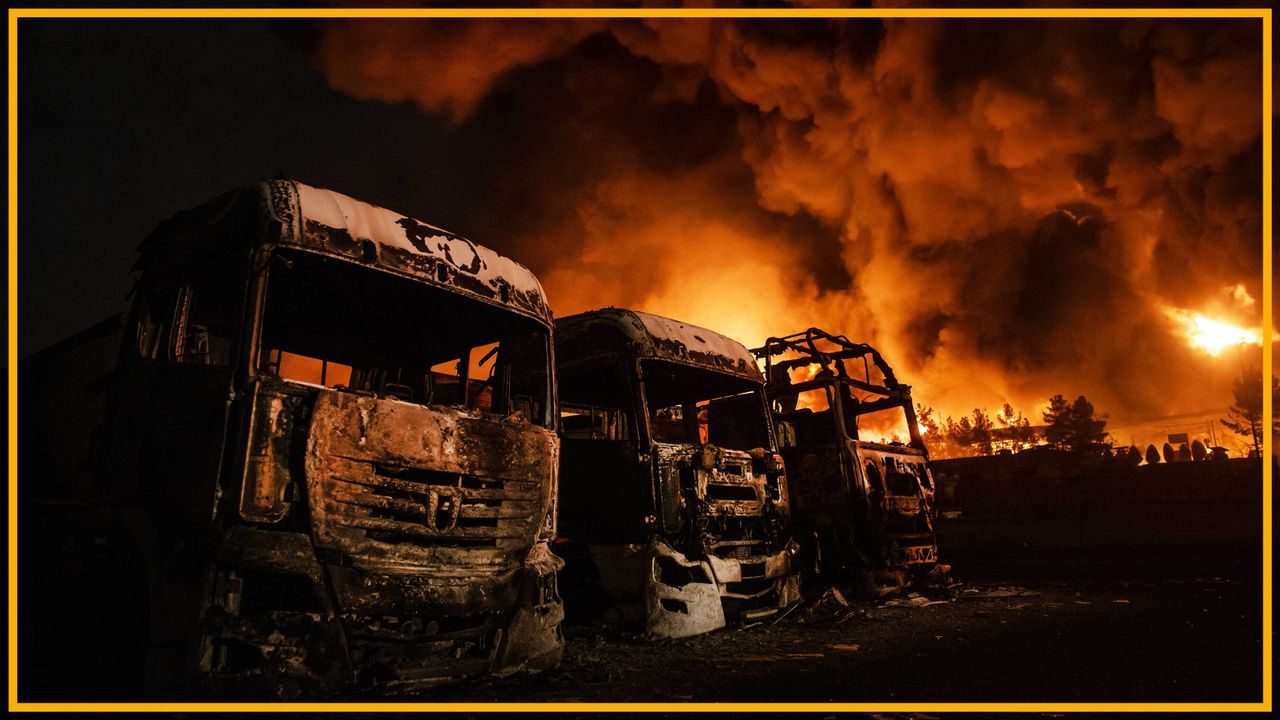
What happens when a single military conflict can send global energy markets into a spiral, spike fuel prices overnight, and expose just how fragile the world’s dependence on oil and gas truly is? That question is no longer hypothetical. The conflict involving the United States and Iran has put energy infrastructure directly in the crosshairs — and the consequences are rippling outward in ways that touch everyday life far beyond the Middle East.
Energy depots inside Iran were reportedly struck as early as March 8, with fires breaking out at oil facilities following military attacks. Infrastructure tied to fossil fuel production and distribution has been heavily targeted since hostilities escalated at the end of February. And every time a pipeline, depot, or refinery becomes a target, the entire global system that depends on uninterrupted oil supply feels the tremor.
For advocates of clean energy, this moment is not just a crisis — it is a clarifying one. The argument for transitioning away from fossil fuels has never rested more squarely on national security, economic stability, and plain common sense.
Why the Fossil Fuel Economy Is So Vulnerable to Conflict
The core problem with an economy built on oil and gas is that it is, by design, fragile. Supply chains stretch across oceans and through politically unstable regions. A single chokepoint — a strait, a pipeline, a storage facility — can disrupt markets that span continents. When military action targets energy infrastructure, as has happened in the Iran conflict, the consequences do not stay contained to the region where the bombs fall.
Fossil fuels require constant extraction, transportation, refining, and distribution. Every step in that chain is a potential point of failure. And unlike renewable energy sources, which can be generated domestically and locally, oil and gas must often travel thousands of miles from where they are extracted to where they are consumed.
That dependency creates leverage — for hostile governments, for armed groups, and for market speculators who profit from volatility. When geopolitical tension rises, energy prices follow. That is not a bug in the system. It is a structural feature of building an economy on a finite, geographically concentrated resource.
What the Iran Conflict Reveals About Fossil Fuel Dependence
The conflict has made one thing unmistakably clear: energy infrastructure is a military target. Oil depots, refineries, and distribution networks are not neutral civilian assets in a modern war — they are strategic objectives. Striking them is a way to cripple an economy, fund a war effort, or send a geopolitical message.
That reality transforms the calculus around where a country gets its energy. A nation that generates power from wind turbines on its own soil, or from solar panels on rooftops and fields within its own borders, cannot have that energy supply bombed, blockaded, or sanctioned by a foreign power. The same cannot be said for a country that depends on oil shipped through contested waters from politically volatile regions.
Advocates of the clean energy transition argue this is precisely the point. Renewable energy is not just environmentally preferable — it is strategically safer. It cannot be held hostage by geopolitics in the same way that oil can.
| Energy Type | Source Location | Vulnerability to Conflict | Supply Disruption Risk |
|---|---|---|---|
| Oil and Gas | Often imported, geographically concentrated | High — infrastructure is a military target | High — global price shocks from regional conflict |
| Wind Power | Domestic, distributed | Low — decentralized generation | Low — not dependent on foreign supply chains |
| Solar Power | Domestic, distributed | Low — rooftop and utility-scale options | Low — locally generated and stored |
| Geothermal | Domestic, site-specific | Low — underground resource, difficult to disrupt | Low — stable baseload generation |
The Case for Renewables Goes Beyond the Environment
Solar, wind, geothermal, and energy storage technologies share one critical characteristic that oil and gas do not: they can be generated domestically, from inexhaustible natural sources, without depending on foreign governments or vulnerable global supply chains.
That is the promise at the heart of a clean energy transition. Not just cleaner air or a more stable climate — though those matter enormously — but a fundamentally more secure and self-sufficient energy system. One that cannot be disrupted by a conflict halfway around the world, or held hostage by price manipulation from a cartel, or targeted by an adversary’s military.
Supporters of the transition point out that every dollar spent building domestic renewable capacity is a dollar that reduces exposure to exactly the kind of shock the Iran conflict is delivering right now. Energy security and energy sustainability, in this framing, are not competing priorities. They are the same priority.
Who Bears the Cost When Energy Markets Destabilize
When oil prices spike due to geopolitical conflict, the burden does not fall evenly. Ordinary households feel it at the gas pump, in heating bills, and in the rising cost of goods that depend on fuel to be manufactured and shipped. Businesses with tight margins get squeezed. Economies that import large quantities of oil find their trade balances deteriorating almost overnight.
The people least responsible for the geopolitical decisions that cause these crises are often the ones who pay the most for them. That structural inequity is one reason the argument for energy transition carries moral weight alongside its economic and strategic dimensions.
Renewable energy, once built out at scale, offers a different model — one where the marginal cost of generating power approaches zero, where prices do not spike because a refinery was bombed, and where energy access does not depend on the stability of governments thousands of miles away.
What Comes Next in the Energy Debate
The Iran conflict is unfolding in real time, and its full impact on global energy markets remains to be seen. What is already visible is the pattern: military action targets energy infrastructure, markets respond with volatility, and consumers and economies absorb the shock.
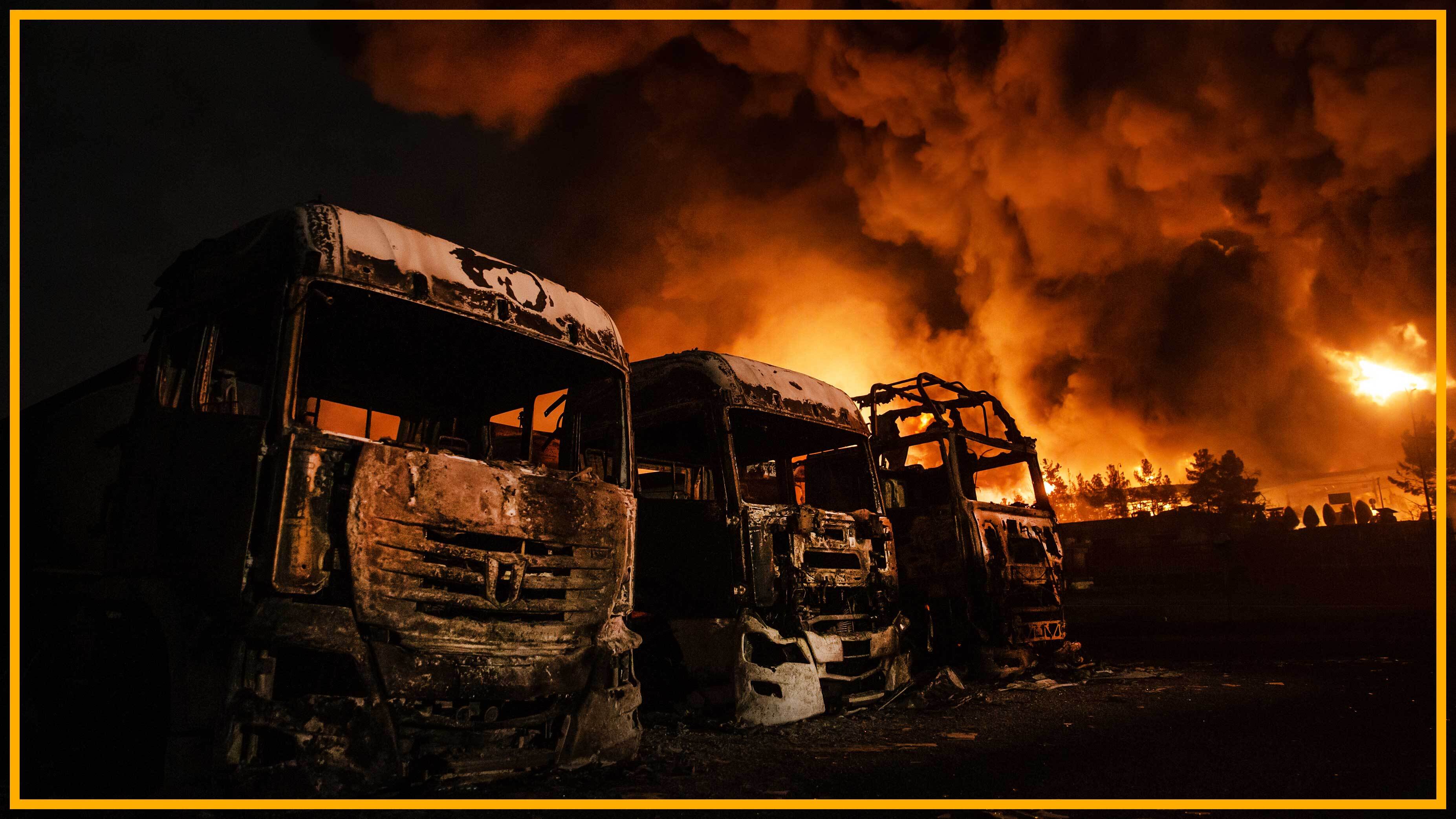
For policymakers, the conflict adds urgency to questions about energy independence that had previously been framed mostly in environmental terms. The strategic case for accelerating investment in wind, solar, geothermal, and battery storage technology is now being made not just by climate advocates, but by anyone watching oil depots burn on the news.
Whether that urgency translates into policy action — faster permitting, greater investment, stronger incentives for domestic clean energy buildout — remains an open question. But the argument that fossil fuel dependence is a structural vulnerability, not just an environmental problem, has rarely been easier to make.
Frequently Asked Questions
What happened to Iran’s energy infrastructure during the conflict?
Fires broke out at an oil depot in Iran following military attacks on March 8, with energy infrastructure reported as heavily targeted since hostilities began at the end of February.
What types of renewable energy are proposed as alternatives to fossil fuels?
Wind, solar, geothermal, and energy storage technologies are identified as the core components of a clean energy transition that could replace fossil fuel dependence.
Why is fossil fuel infrastructure considered vulnerable during conflicts?
Oil depots, refineries, and pipelines are concentrated, fixed assets that can be targeted militarily or disrupted by geopolitical instability, causing supply shocks that affect global markets.
How does a clean energy transition improve national security?
Renewable energy generated domestically cannot be blockaded, bombed, or sanctioned by foreign powers, reducing a country’s exposure to geopolitical energy shocks.
Is the United States currently at war with Iran?
S. military conflict with Iran as context for the energy infrastructure damage described, but the full diplomatic and military details have not been confirmed within the available
Will the Iran conflict accelerate the shift to clean energy?
This has not yet been confirmed, but advocates argue that the conflict strengthens the strategic and economic case for investing in domestic renewable energy sources as a matter of national security.



Leave a Reply