
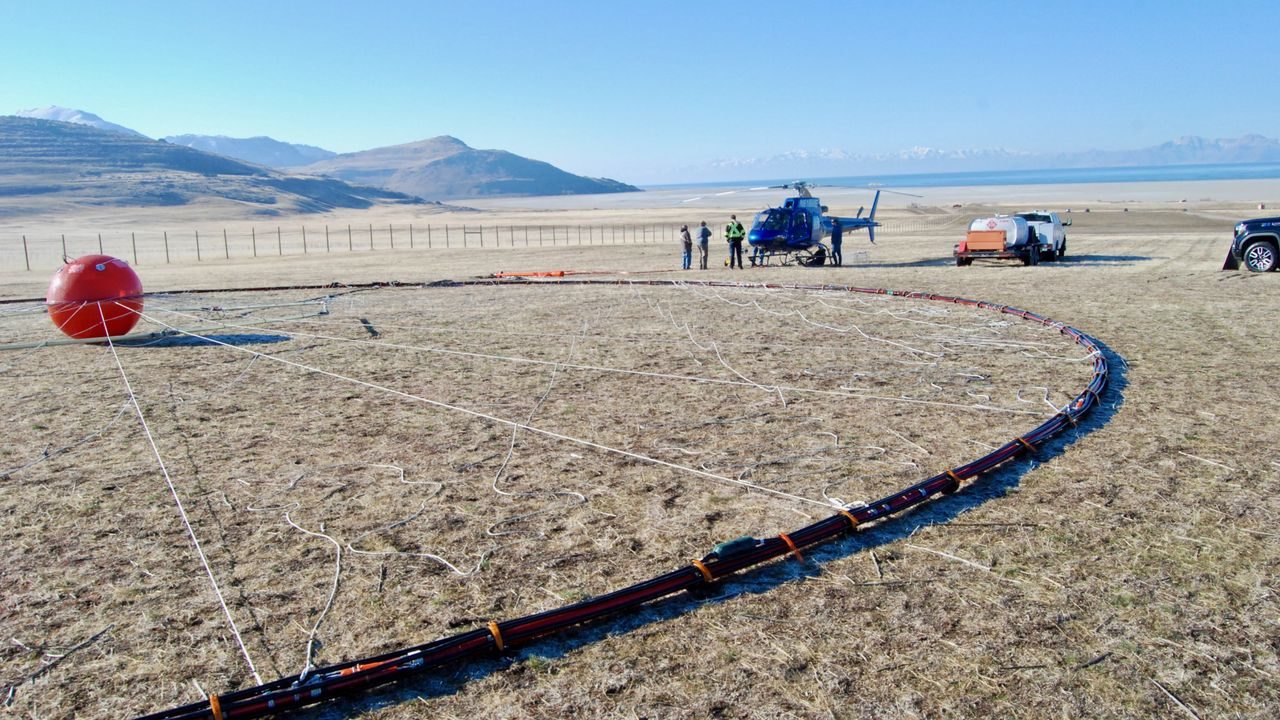
Beneath the shrinking, salt-crusted surface of Utah’s Great Salt Lake, scientists have found something extraordinary — a freshwater reservoir that may stretch across the entire lake and potentially beyond its boundaries. The discovery, confirmed through a cutting-edge airborne survey, could reframe how researchers and water managers think about one of the American West’s most stressed and diminishing water bodies.
The reservoir extends as deep as 2.5 miles (4 kilometers) beneath certain points along the lake’s eastern margin — a depth that surprised researchers and hints at a far larger underground water system than anyone had previously mapped in this region.
For a lake that has lost more than half its volume in recent decades, the idea that significant freshwater may be hiding directly beneath it is both striking and deeply consequential.
What Scientists Actually Found Beneath Great Salt Lake
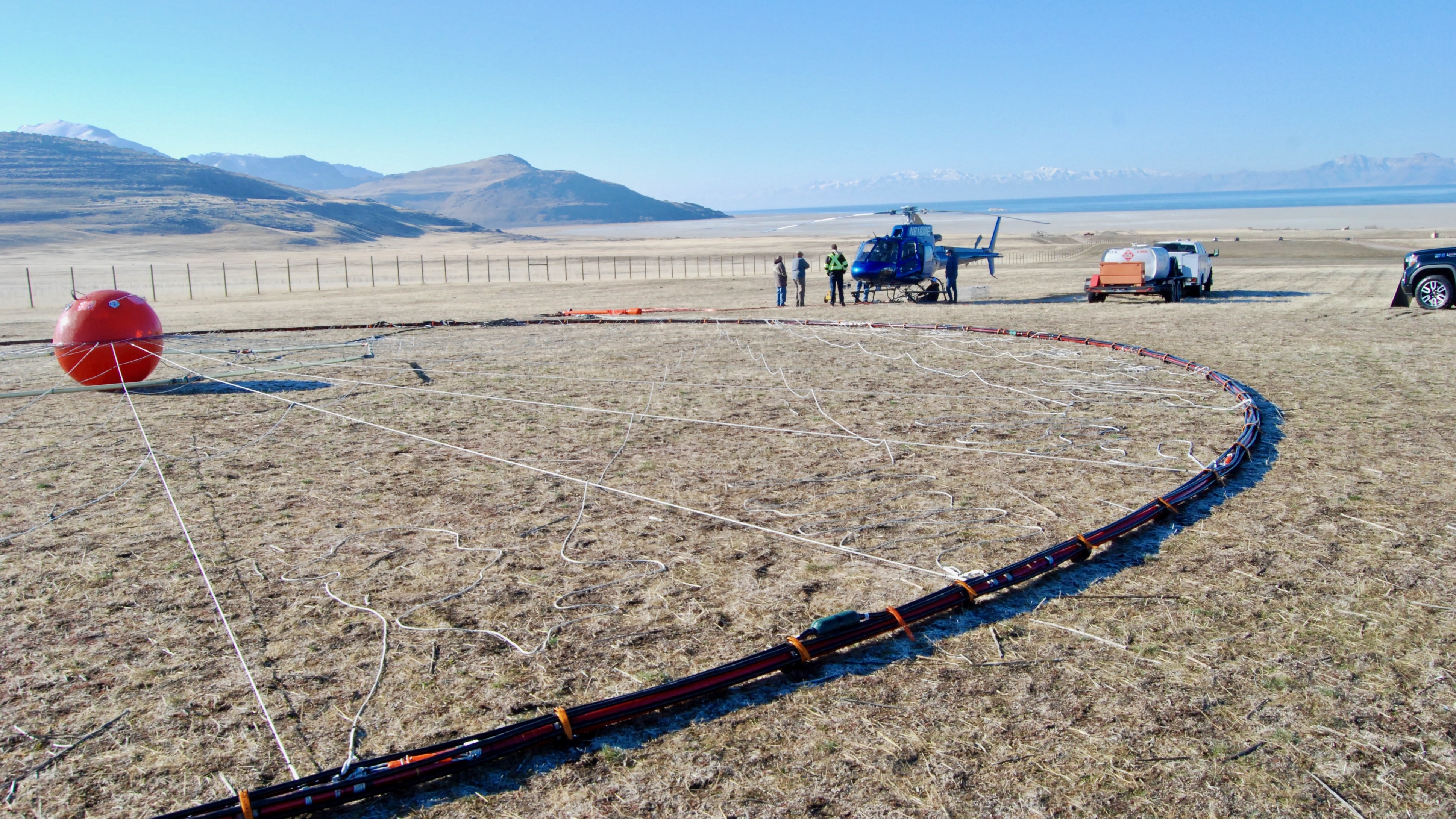
The discovery came through an airborne electromagnetic survey — a technique that uses aircraft-mounted instruments to detect changes in electrical conductivity underground. Because freshwater and saltwater conduct electricity differently, the method can map where freshwater deposits exist beneath the surface without a single drill breaking ground.
Researchers used this approach to build a detailed picture of what lies beneath the lake bed. What they found was a reservoir of freshwater that, at certain locations along the lake’s eastern margin, plunges nearly two and a half miles into the earth.
One of the more visually striking clues on the surface has been the emergence of unusual, reed-covered mounds that have appeared on dried-up sections of the lake bed in recent years. These mounds, sprouting from what should be barren, salt-laden flats, are now understood to be connected to the freshwater system pushing up from below.
The study suggests the reservoir could span the entire area of the lake and beyond — though researchers are careful to note that further investigation is needed to confirm the full extent of what lies beneath.
Key Details From the Discovery
- The survey method used was airborne electromagnetic imaging, conducted from aircraft
- The freshwater reservoir reaches depths of up to 2.5 miles (4 kilometers) beneath the lake’s eastern margin
- Strange, reed-covered mounds on the lake’s dried surfaces are believed to be connected to the underground freshwater system
- The reservoir may span the entire footprint of Great Salt Lake and potentially extend further
- Future confirmatory studies will be required before the full scale of the reservoir can be established
| Feature | Detail |
|---|---|
| Survey Method | Airborne electromagnetic survey |
| Maximum Depth Detected | 2.5 miles (4 kilometers) |
| Location of Deepest Deposits | Eastern margin of Great Salt Lake |
| Estimated Lateral Extent | Potentially the full area of the lake and beyond |
| Surface Indicators | Reed-covered mounds on dried lake bed |
| Confirmation Status | Pending further studies |
Why This Matters for the American West
Great Salt Lake has been in crisis for years. Decades of water diversion, prolonged drought, and rising temperatures have caused the lake to shrink dramatically. Exposed lake bed — known as playa — has created dust storms carrying toxic sediment across the Salt Lake Valley, threatening air quality and public health for millions of residents in the region.
Against that backdrop, a potentially enormous freshwater reservoir sitting directly beneath the lake is significant news. It raises immediate questions about whether that water could be accessed, how it got there, and what role it plays in the lake’s broader ecosystem.
Researchers note that the reed-covered mounds emerging from the dried lake bed may offer a visible sign that underground freshwater is already interacting with the surface environment. These unusual formations, once mysterious, now appear to be part of a larger hydrological story playing out beneath the salt flats.
For scientists studying the lake’s decline, the discovery also opens new lines of inquiry. Underground freshwater systems can influence lake levels, sediment behavior, and the biological communities that depend on the lake — including the brine shrimp and migratory bird populations that make Great Salt Lake ecologically irreplaceable.
The Part of This Story That’s Still Unknown
Despite the excitement surrounding the find, researchers are measured in their conclusions. The airborne survey provides a compelling picture, but it is a picture that still needs ground-level verification. The full horizontal and vertical extent of the reservoir has not yet been confirmed.
Key open questions include how the freshwater got there, how old it is, whether it is being recharged by modern precipitation or is ancient fossil water, and whether it could ever be practically accessed without disrupting the lake’s fragile ecosystem.
These are not small questions. Fossil water — groundwater that accumulated thousands or even millions of years ago — is not renewable on any human timescale. If the reservoir turns out to be ancient and isolated, tapping it could deplete it permanently.
Researchers have indicated that future studies will be necessary to answer these questions and to determine the true scale of what has been found.
What Comes Next for Great Salt Lake Research
The airborne electromagnetic survey represents a first look, not a final answer. Scientists will need to conduct follow-up ground-based investigations — likely including drilling and direct water sampling — to confirm the reservoir’s composition, age, and size.
The discovery does, however, change the conversation around Great Salt Lake in a meaningful way. For years, the dominant narrative has been one of loss — shrinking water levels, expanding toxic dust, and a lake under siege. The possibility of a vast freshwater system hidden beneath the surface adds a new dimension to that story, one that researchers and water managers in Utah will almost certainly pursue aggressively.
Whether the reservoir proves to be a practical resource or simply a remarkable geological feature, its discovery underscores how much about this iconic and imperiled landscape remains unknown.
Frequently Asked Questions
Where exactly was the freshwater reservoir discovered?
The reservoir was found beneath Utah’s Great Salt Lake, with the deepest deposits — reaching 2.5 miles down — located along the lake’s eastern margin.
How did scientists detect freshwater so far underground?
Researchers used an airborne electromagnetic survey, a technique that maps underground water deposits by detecting differences in electrical conductivity from aircraft.
How large could the freshwater reservoir be?
According to the study, the reservoir could potentially span the entire area of Great Salt Lake and extend beyond its boundaries, though this has not yet been fully confirmed.
What are the reed-covered mounds on the lake bed?
Strange mounds covered in reeds have appeared on dried sections of the lake’s surface in recent years and are believed to be connected to the underground freshwater system pushing upward.
Can this freshwater be used as a water supply?
This has not yet been confirmed. Researchers need further studies to determine the reservoir’s age, recharge rate, and whether it could be accessed without harming the lake’s ecosystem.
Will there be more research into this discovery?
Yes — scientists have indicated that future studies will be needed to confirm the full scale and nature of the reservoir before any firm conclusions can be drawn.

Leave a Reply