
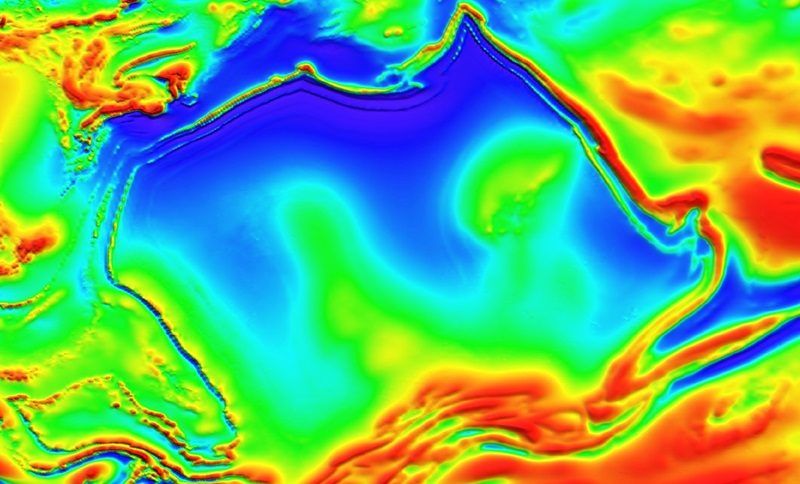
Buried beneath the ancient red deserts of Australia, something enormous and invisible has been quietly waiting to be found. Scientists have now mapped a vast magnetic anomaly sitting under the Northern Territory — a feature so large it appears to mirror the shape of the continent itself, like a shadow cast on the underside of the Earth’s crust.
The feature has been named the Australia Magnetic Anomaly, and it is already forcing geophysicists to reconsider how they understand the deep geological history of one of the world’s oldest landmasses. It may also change where miners look for critical minerals — which means it has consequences that reach far beyond academic research.
This is not a surface-level discovery. The anomaly sits deep beneath the crust, and the geological record it appears to hold stretches back as far as two and a half billion years. That is older than most complex life on Earth.
What the Australia Magnetic Anomaly Actually Is
To understand why this matters, it helps to know what a magnetic anomaly actually means. Earth’s magnetic field is not perfectly uniform. In some regions, the field reads stronger or weaker than expected — and that difference usually points to something unusual buried in the rock below.
In this case, the anomaly appears to be caused by buried rocks that contain large concentrations of magnetic minerals. Those minerals act like tiny compasses frozen in time. When molten rock cools and solidifies, it locks in the direction and strength of Earth’s magnetic field at that exact moment — creating what researchers describe as a kind of “magnetic memory.”
That means the rocks beneath the Northern Territory are not just sitting there passively. They are carrying a record — a geological diary of sorts — that documents conditions on Earth going back billions of years. Reading that record carefully could reveal details about ancient tectonic movements, shifts in Earth’s magnetic poles, and the deep structural history of the Australian continent.
Why This Discovery Has Geophysicists Paying Close Attention
The scale of the anomaly is what makes it so striking. This is not a localized pocket of unusual rock. The feature appears to span a region large enough to roughly mirror the outline of Australia itself — an almost continent-wide signature hidden thousands of kilometers beneath the surface.
For geophysicists, that kind of scale raises immediate questions. What geological processes could produce something this large? How has it persisted for billions of years without being disrupted? And what does it tell us about the deep architecture of the Australian continent — the part that no drill has ever reached?
The discovery also has a very practical dimension. Regions with unusual magnetic signatures often correlate with concentrations of critical minerals — the metals and materials that modern technology, from electric vehicles to renewable energy infrastructure, depends on. Australia is already one of the world’s leading mineral producers, and a better map of what lies beneath the surface could guide the next generation of mining exploration.
Key Facts About the Anomaly at a Glance
| Feature | Detail |
|---|---|
| Name | Australia Magnetic Anomaly |
| Location | Beneath the Northern Territory, Australia |
| Estimated geological age | Up to 2.5 billion years |
| Cause | Buried rocks containing high concentrations of magnetic minerals |
| Scale | Mirrors the outline of the Australian continent |
| Depth | Deep beneath the Earth’s crust |
| Significance | Geological record of ancient events; potential guide for mineral exploration |
- The anomaly is invisible from the surface — it can only be detected through measurements of Earth’s magnetic field
- Magnetic minerals in the buried rocks preserve a record of the planet’s field at the time they cooled
- The discovery could reshape understanding of Australia’s deep geological structure
- Practical implications include identifying where critical mineral deposits may be concentrated
What This Means for the Land Above It
For most people living in or visiting Australia, the anomaly is entirely invisible. There is no crater, no unusual landscape feature, nothing to see from the long empty highways that cut across the Northern Territory. The deserts look exactly as they always have.
But underground maps like this one carry real-world weight. When geologists identify regions where the deep crust holds unusual concentrations of certain minerals, it tends to attract mining interest. That can mean new exploration projects, drilling surveys, and eventually — if deposits prove economically viable — large-scale extraction operations.
Mining in remote Australia already intersects with sensitive ecosystems and, critically, with Indigenous land rights and cultural heritage sites. A discovery that redirects where companies look for critical minerals is not just a scientific footnote. It is the kind of finding that can set off a chain of decisions affecting land use, environmental protection, and communities whose connection to the land stretches back tens of thousands of years.
Researchers argue the anomaly also matters for pure science — as a window into a period of Earth’s history that left very few readable records anywhere on the planet. Two and a half billion years ago, the continents looked nothing like they do today. Understanding what was happening deep in the crust during that era could fill in significant gaps in the story of how the planet evolved.
What Comes Next for This Research
The immediate next step for scientists is interpretation. Mapping the anomaly is one thing — understanding precisely what it means requires careful analysis of the magnetic data against other geological evidence. Researchers will likely cross-reference the anomaly’s shape and intensity with known rock formations, seismic data, and models of how the Australian continent formed over billions of years.
The findings could inform updated geological maps of the continent’s deep interior — resources that mining companies, environmental agencies, and researchers all rely on. Whether the anomaly points to specific mineral-rich zones will require further targeted investigation.
For now, the discovery stands as a reminder that even one of the most studied continents on Earth still holds surprises — not on its surface, but in the deep, ancient layers far beneath our feet.
Frequently Asked Questions
What is the Australia Magnetic Anomaly?
It is a vast region beneath the Northern Territory where Earth’s magnetic field is stronger or weaker than expected, caused by buried rocks containing high concentrations of magnetic minerals.
How old is the geological record stored in this anomaly?
According to researchers, the anomaly appears to preserve a geological record stretching back up to two and a half billion years.
Can you see or feel the anomaly from the surface?
No. The anomaly is entirely invisible from the surface and can only be detected through precise measurements of Earth’s magnetic field.
Why does this discovery matter for mining?
Regions with unusual magnetic signatures often correlate with concentrations of critical minerals, meaning the anomaly could help guide future mineral exploration across Australia.
How do rocks “remember” Earth’s magnetic field?
When molten rock cools and solidifies, magnetic minerals within it lock in the direction and strength of Earth’s magnetic field at that moment — preserving it like a record for billions of years.
Will this change how land is used in the Northern Territory?
This has not yet been confirmed, but discoveries that redirect mineral exploration can influence decisions about land use, drilling projects, and environmental assessments in affected regions.



Leave a Reply