
A shadow the length of a city bus, gliding silently through warm, shallow seas where the Sahara desert now bakes under the sun — that is not a scene from a monster movie. According to new scientific analysis, it is a reasonably accurate picture of what ancient North Africa looked like roughly 56 million years ago.
Researchers have confirmed that an extinct marine snake called Palaeophis colossaeus was the largest sea snake ever known to science. Adults likely stretched somewhere between 8 and 12 meters in length — putting this prehistoric predator in the same size category as the famous giant land snake Titanoboa, and far beyond anything living in today’s oceans.
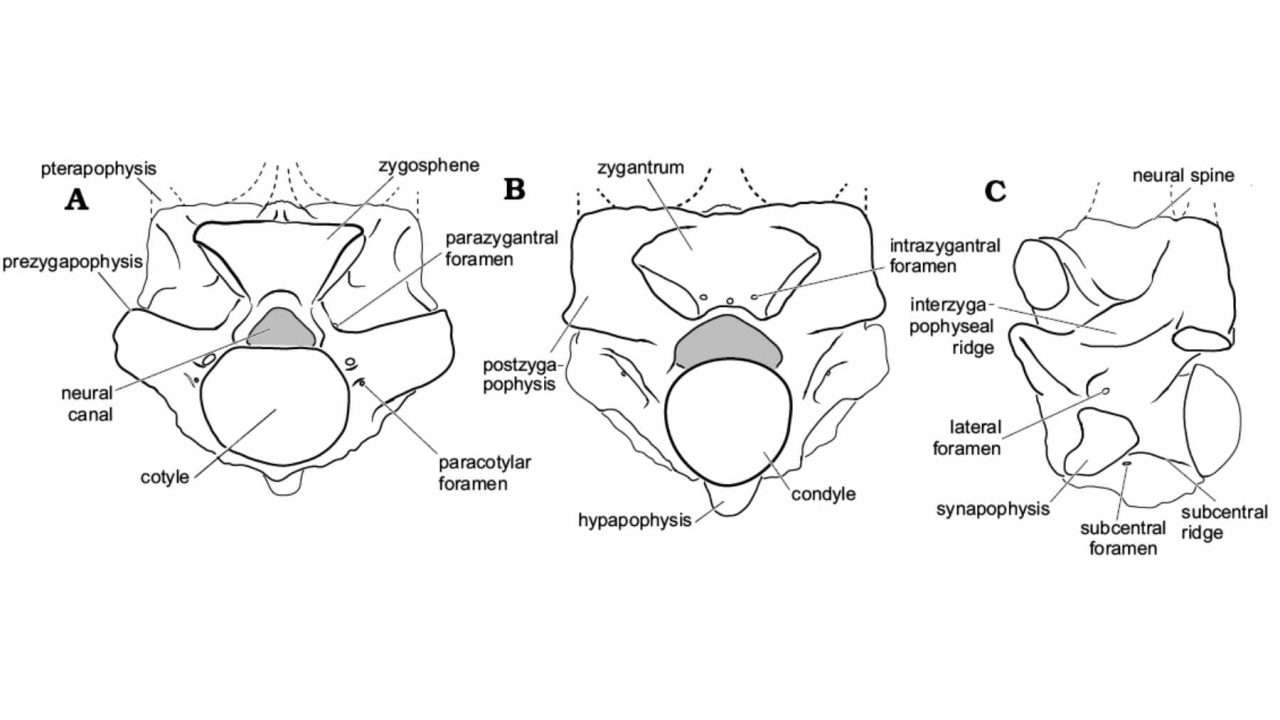
The evidence comes from fossil vertebrae recovered from rocks in what is now Mali, and the story of how those bones went from a desert dig site to a headline-making scientific conclusion spans nearly a decade.
A Sea That Once Flooded the Sahara
To understand why a colossal sea snake once existed where the world’s largest hot desert now stands, you have to rewind to the Eocene epoch, around 56 million years ago. At that time, a vast body of warm, shallow water called the Trans Saharan Seaway covered large portions of North Africa. This ancient sea was an arm of the Tethys Ocean — a body of water that no longer exists in any recognizable form today.
The Trans Saharan Seaway was not a deep, cold abyss. Scientists describe it as warm and relatively shallow, the kind of environment that teems with life. And in those sun-warmed waters, Palaeophis colossaeus apparently thrived — hunting, growing to extraordinary lengths, and eventually leaving behind the bones that would puzzle and fascinate researchers millions of years later.
The fossil vertebrae that sparked this story were recovered from Paleogene rocks in Mali, sediments laid down directly in that ancient seaway. The sheer size of those bones was the first clue that something remarkable once swam here.
What the 2018 Discovery Actually Found
The scientific journey toward understanding Palaeophis colossaeus got a significant boost in 2018, when researchers carefully measured the oversized vertebrae and began comparing them to other known snake fossils. The bones were not just large in an interesting academic sense — they were large in a way that forced scientists to reconsider what was biologically possible for a marine snake.
The new analysis built on that 2018 study to formally confirm the creature’s status as the largest known sea snake in the fossil record. The size estimate of 8 to 12 meters is based on the relationship between vertebral dimensions and total body length — a method paleontologists use regularly when complete skeletons are not available.
For context, the largest sea snakes alive today reach lengths of around 2 to 3 meters. Palaeophis colossaeus was, by the most conservative estimates, more than three times that size.
The Numbers Behind the Giant — Palaeophis colossaeus at a Glance
| Feature | Detail |
|---|---|
| Species name | Palaeophis colossaeus |
| Estimated length | Approximately 8 to 12 meters |
| Time period | Eocene epoch, roughly 56 million years ago |
| Fossil location | Mali, North Africa |
| Ancient habitat | Trans Saharan Seaway (arm of the Tethys Ocean) |
| Key fossil evidence | Oversized vertebrae from Paleogene sediments |
| Comparable species | Titanoboa (giant prehistoric land snake) |
Big Enough to Swallow Sharks — What This Predator Could Actually Do
A snake between 8 and 12 meters long, living in a warm shallow sea, would have been at or near the top of its food chain. Scientists believe Palaeophis colossaeus was capable of taking large prey — including, potentially, sharks that shared its ancient ocean habitat.
That claim is not as dramatic as it sounds when you consider the mechanics. Modern large constrictors and aquatic predators routinely consume prey that seems improbably large. At 12 meters, a marine snake would have had the jaw flexibility and body mass to handle substantial prey items. The sharks swimming in the Trans Saharan Seaway 56 million years ago were not necessarily the massive species we associate with modern oceans — making the size mismatch between predator and prey more plausible than it first appears.
Researchers note that the comparison to Titanoboa is meaningful. That famous giant land snake, discovered in Colombia and dating to a similar time period, demonstrated that the early Eocene was an era when reptiles could reach sizes that seem almost impossible by modern standards. Warm global temperatures during the Eocene likely played a role in allowing cold-blooded animals to grow much larger than their descendants do today.
Why This Discovery Matters Beyond the Spectacle
It would be easy to treat Palaeophis colossaeus as simply a thrilling prehistoric curiosity — and it is certainly that. But the scientific significance runs deeper than the wow factor.
The existence of a 12-meter marine snake in the ancient Trans Saharan Seaway tells researchers something important about the ecology of early Eocene oceans. It suggests those warm, shallow seas supported food chains rich enough to sustain apex predators of extraordinary size. It also adds to a growing body of evidence that the period immediately following the mass extinction event that killed the dinosaurs was characterized by rapid, dramatic evolution — with reptiles in particular experimenting with body sizes and ecological roles that no longer exist.
The fossil record from North Africa’s ancient seaway is still being studied, and the vertebrae from Mali represent only a partial picture of what lived there. Each new find has the potential to reshape what scientists understand about life in those vanished waters.
Frequently Asked Questions
What is Palaeophis colossaeus?
It is an extinct species of marine snake confirmed as the largest sea snake known to science, with adults estimated at between 8 and 12 meters in length.
When and where did this giant sea snake live?
Palaeophis colossaeus lived approximately 56 million years ago during the Eocene epoch, in the Trans Saharan Seaway — a warm, shallow ancient sea that once covered parts of what is now North Africa, including modern-day Mali.
How do scientists know how big it was?
Researchers measured oversized fossil vertebrae recovered from Paleogene rocks in Mali and used the known relationship between vertebral size and total body length to estimate the snake’s full dimensions.
When were the key fossils first studied?
A significant study measuring and comparing the giant vertebrae was conducted in 2018, with new analysis building on that work to confirm the snake’s record-breaking status.
How does it compare to snakes alive today?
The largest sea snakes living today reach roughly 2 to 3 meters. Palaeophis colossaeus was, at minimum, more than three times that length — and at its upper estimate, four times larger.
Could it really swallow sharks?
Scientists believe its size made large prey — potentially including sharks in its ancient habitat — a plausible part of its diet, though this has not been definitively confirmed through direct fossil evidence of feeding behavior.


Leave a Reply