
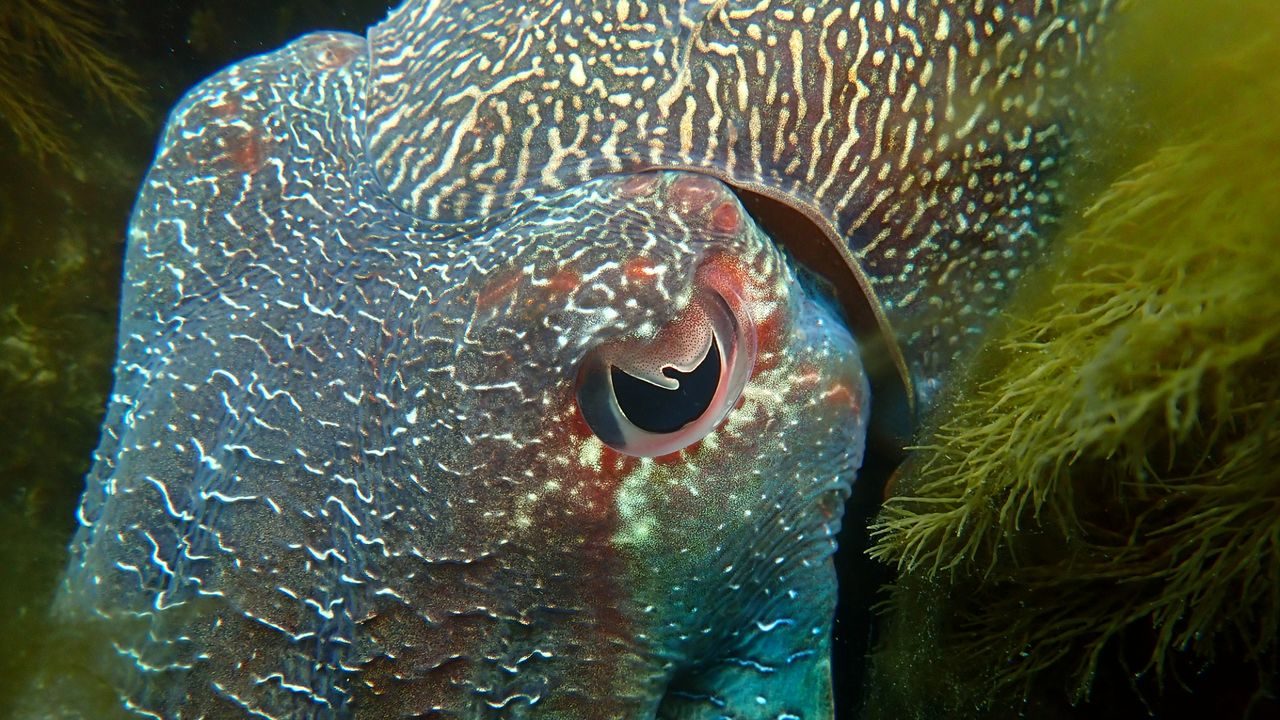
Look into a cat’s eyes and you’ll see something strikingly different from your own reflection staring back — a narrow, vertical slit where a round pupil should be. Stare into the eyes of a goat and the pupil runs sideways, like a horizontal bar. A cuttlefish, one of the ocean’s most visually sophisticated creatures, has a pupil shaped like a W. These aren’t random quirks of evolution. The shape of an animal’s pupil is one of nature’s most precise tools, finely tuned to match how each creature hunts, hides, and survives.
Most of us grew up thinking of pupils as simple openings that expand in dim light and shrink in bright light. That part is true. But the shape of the pupil — something we rarely stop to think about — turns out to carry a remarkable amount of information about an animal’s place in the world.
Scientists who study animal vision have found that pupil geometry is far from arbitrary. It reflects an animal’s ecological role, its position in the food chain, and the specific visual challenges it faces every day.
Why Pupil Shape Matters More Than You’d Think
In a perfect optical system, the shape of the pupil shouldn’t matter much — at least in theory. A round opening and a slit-shaped one would both let in light and allow an animal to see. But eyes are not perfect optical systems. They have imperfections, and the shape of the pupil is one of the ways animals have evolved to manage those imperfections and optimize what they can see.
Different shapes control light in fundamentally different ways. A vertical slit, for example, can close down to an extremely narrow aperture in bright daylight while still allowing the eye to gather a wide field of light in low-light conditions. That gives certain animals — particularly those that are active both day and night — a much wider range of light control than a simple round pupil could provide.
A horizontal pupil, on the other hand, extends an animal’s field of view along the horizon, which is especially useful for prey animals scanning open landscapes for approaching predators. The geometry of the opening literally shapes the world the animal perceives.
A Tour of the Animal Kingdom’s Most Unusual Pupils
The variety of pupil shapes found across species is genuinely surprising. Here are some of the most striking examples confirmed by researchers studying animal vision:
- Vertical slits — Found in cats and many snake species. These allow fine control over light intake and are associated with animals that are active across different light conditions, including ambush predators that operate at dawn, dusk, and night.
- Horizontal rectangles — Found in goats and horses. These extend the field of view along the horizontal plane, helping prey animals detect threats approaching from the sides without needing to move their heads.
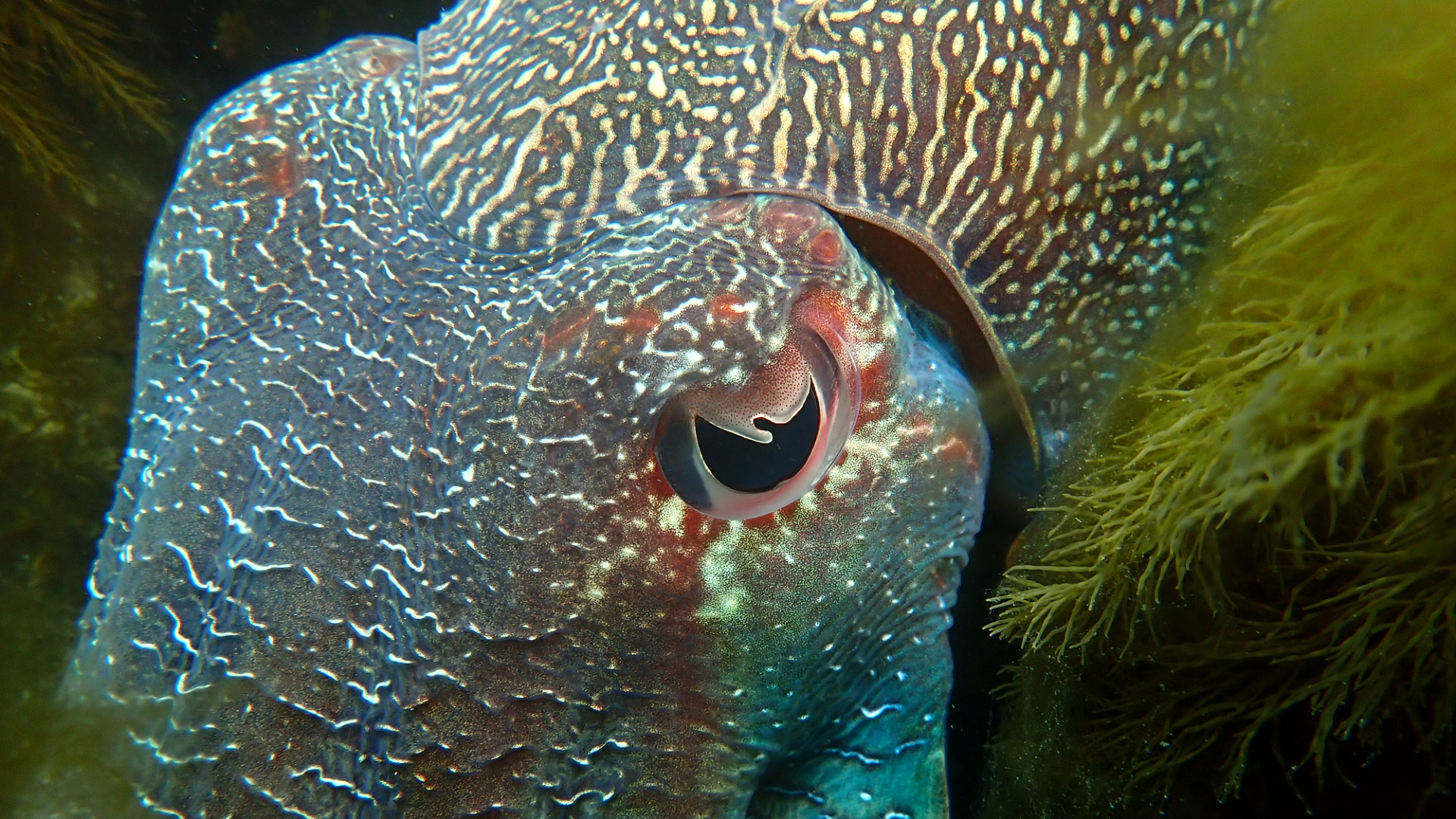
- W-shaped crescents — Found in cuttlefish. One of the most unusual pupil shapes in the animal kingdom, this configuration is thought to help cuttlefish manage light and depth perception in complex underwater environments.
- Round pupils — Common in humans and many other species, including most active daytime hunters. Round pupils offer balanced, versatile vision without specializing too heavily in any one direction.
| Animal | Pupil Shape | Likely Ecological Function |
|---|---|---|
| Cat | Vertical slit | Precise light control; active in varied light conditions |
| Snake | Vertical slit | Ambush predator; low-light hunting capability |
| Goat | Horizontal rectangle | Wide horizontal field of view; predator detection |
| Horse | Horizontal rectangle | Panoramic scanning of open landscapes |
| Cuttlefish | W-shaped crescent | Complex light management in underwater environments |
| Human | Round | Balanced daytime vision; versatile general use |
What Your Eyes Reveal About Where You Stand in the Food Chain
One of the more thought-provoking ideas to emerge from research on pupil shapes is what they suggest about an animal’s role as predator or prey. Horizontal pupils are strongly associated with prey species — animals that need to keep constant watch over a wide, flat visual field. Vertical slits, meanwhile, tend to appear in predators, particularly those that rely on stealth and precise distance judgment to strike at close range.
This isn’t a perfect rule — there are exceptions across the animal kingdom — but the pattern is consistent enough to be meaningful. The geometry of the eye, in a very real sense, encodes the animal’s survival strategy.
For prey animals like goats and horses, the horizontal pupil does something particularly clever. Even as the animal lowers its head to graze, the eye rotates to keep that horizontal slit aligned with the ground. The pupil actively compensates for head movement, maintaining a panoramic view of the horizon at all times. That kind of built-in visual stability is a remarkable adaptation.
The Cuttlefish Problem — And Why It Fascinates Researchers
Among all the unusual pupil shapes in the animal kingdom, the cuttlefish’s W-shaped pupil stands out as particularly striking and still not fully understood. Cuttlefish are already remarkable visual creatures — they are colorblind yet capable of producing extraordinarily complex color patterns on their skin for camouflage and communication.
The W-shaped pupil is thought to play a role in how cuttlefish process light and perceive depth in the water column, but the full picture of why this shape evolved remains an active area of scientific interest. It serves as a reminder that even as researchers map the broad patterns of pupil evolution, individual species continue to surprise.
The deeper point is that eyes are not one-size-fits-all instruments. Every species faces its own set of visual challenges, and the pupil — that small, often-overlooked opening at the center of the eye — is one of evolution’s most elegant solutions to those challenges.
Frequently Asked Questions
Why do cats have vertical slit pupils?
Vertical slit pupils allow cats to control the amount of light entering the eye with great precision, which is useful for animals that are active in both bright daylight and low-light conditions.
Why do goats and horses have horizontal pupils?
Horizontal rectangular pupils extend the field of view along the horizon, helping prey animals like goats and horses scan wide landscapes for approaching predators.
What is unusual about the cuttlefish’s pupil?
The cuttlefish has a W-shaped, crescent-like pupil — one of the most distinctive in the animal kingdom — which is thought to help it manage light and depth perception underwater, though the full reasons for this shape are still being studied.
Do round pupils offer any advantages?
Round pupils, like those found in humans, provide balanced and versatile vision suited to daytime activity without heavily specializing in any single direction or light condition.
Does pupil shape tell us whether an animal is a predator or prey?
Research suggests a broad pattern: vertical slits are more common in predators that rely on stealth and close-range strikes, while horizontal pupils are more associated with prey species that need wide panoramic vision — though exceptions exist across the animal kingdom.
Can animals control the orientation of their pupils?
Some prey animals, such as goats, can rotate their eyes to keep their horizontal pupils aligned with the horizon even as they lower their heads to graze, maintaining a stable wide-angle view of potential threats.




Leave a Reply