
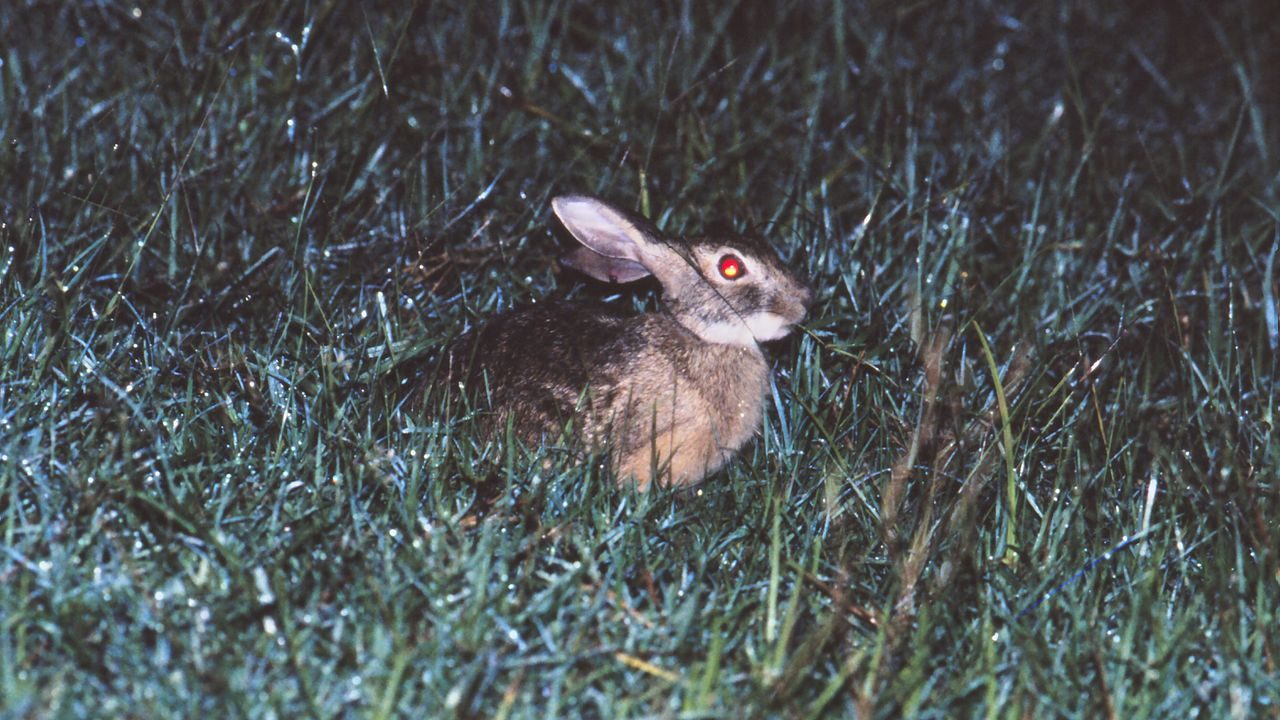
For the first time in roughly 40 years, scientists have confirmed the presence of a critically endangered Hainan hare in a location where it had not been recorded in decades — and the discovery came in the most bittersweet way imaginable. The animal was already dead, its body completely flattened on the side of a road.
It sounds like a tragedy, and in many ways it is. But for researchers focused on one of the world’s least-studied and most threatened mammals, even a roadkill carcass represents a significant and genuinely surprising find. The Hainan hare is so rarely encountered that any confirmed record of its presence carries real scientific weight.
The discovery was made by chance during a field research trip on Hainan, a tropical island in southern China. A team member spotted the flattened remains by the roadside — and despite the severely damaged condition of the carcass, researchers were able to identify it immediately as the elusive species.
What Makes the Hainan Hare So Rare
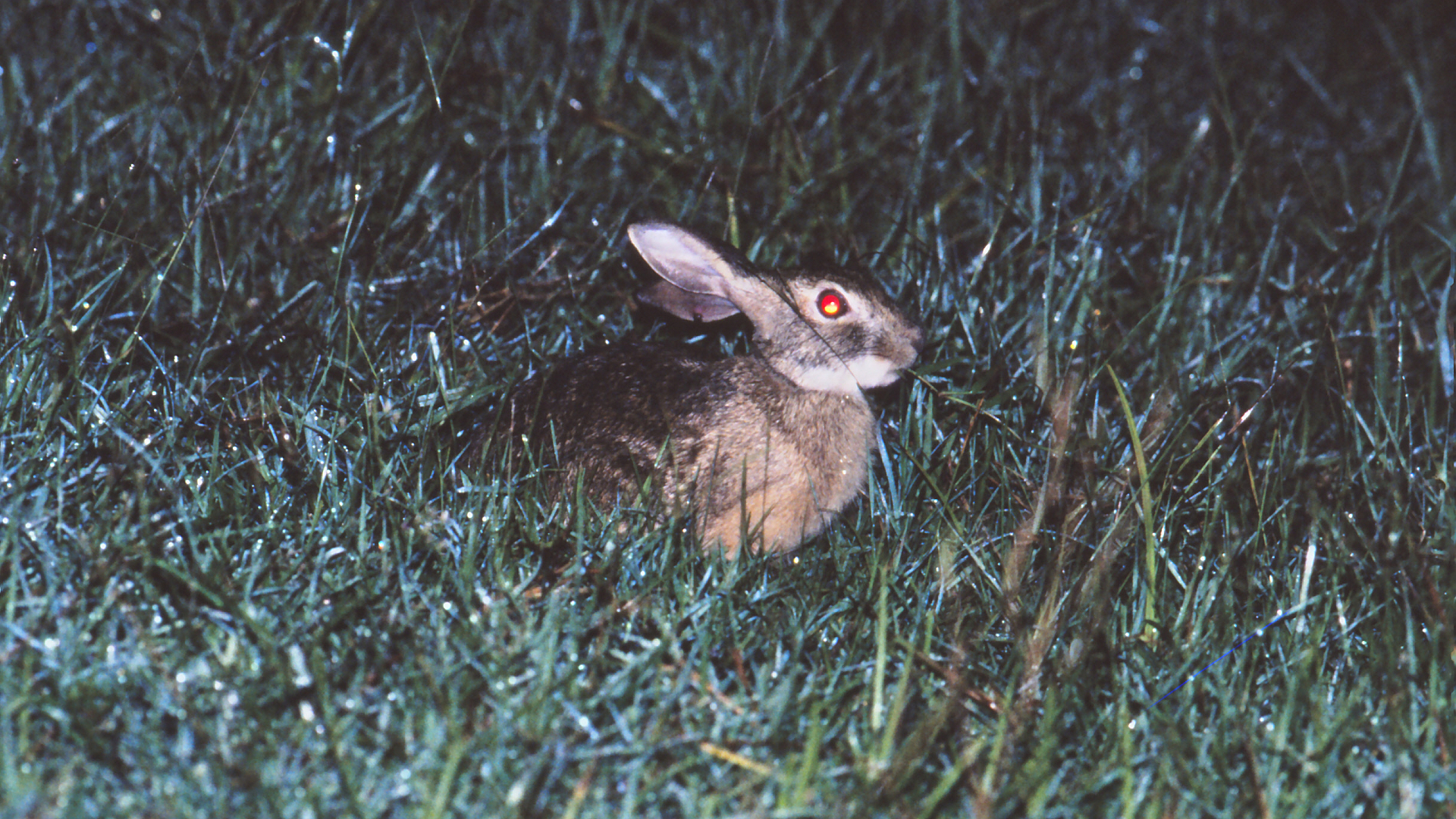
The Hainan hare (Lepus hainanus) is endemic to Hainan Island, meaning it exists nowhere else on Earth. It is listed as critically endangered, placing it in the most serious category of threat recognized by wildlife conservation bodies — one step away from extinction in the wild.
Unlike some endangered species that attract widespread public attention, the Hainan hare has remained largely under the radar. It is a small, secretive animal, and confirmed sightings have been extraordinarily rare. The fact that scientists went approximately four decades without a confirmed record in this particular part of its range gives a sense of just how elusive — or how diminished — the population may be.
Hainan itself is China’s smallest and southernmost province, a tropical island known for its biodiversity. It is home to several species found nowhere else, and conservation efforts there have grown significantly in recent decades. The island hosts protected areas including national nature reserves, one of which — Datian National Nature Reserve — was previously associated with documented Hainan hare sightings, including one recorded in 2001.
A Roadside Discovery That Changes What We Know
The researchers were not looking for hares when they made the find. They were traveling for fieldwork — a routine part of wildlife science — when one member of the team noticed the roadkill by chance. That kind of opportunistic discovery is not unusual in field biology, but it is rarely this consequential.
What makes this particular find significant is not just the species itself, but the location. A confirmed sighting in an area where the Hainan hare had not been documented for roughly 40 years suggests the animal may still be present across parts of its historical range that scientists had effectively written off, or at least stopped actively monitoring.
Even a dead specimen tells researchers something vital: this animal was alive, in this place, recently. That single data point can reshape conservation priorities, survey strategies, and habitat protection efforts for the species.
Why Roadkill Can Be a Conservation Tool
It might seem counterintuitive, but roadkill data has become a recognized and valuable source of information for wildlife scientists around the world. When a species is critically endangered and rarely captured on camera traps or seen in the field, a carcass can provide physical evidence of presence that no amount of remote sensing can match.
Roads are also, of course, a serious threat to wildlife — and for a species as rare as the Hainan hare, every individual lost to vehicle traffic represents a meaningful blow to the population. The same roads that helped researchers confirm this animal’s presence in a new location may be contributing to its decline.
- Roadkill specimens can confirm species presence in areas with no prior recent records
- Physical remains allow for DNA analysis, morphological study, and health assessments
- Location data from roadkill incidents helps map distribution ranges
- Roads fragment habitat and increase mortality risk for small, ground-dwelling mammals
- For critically endangered species, even a single confirmed record can redirect conservation resources
Key Facts About the Hainan Hare Discovery
| Detail | Information |
|---|---|
| Species | Hainan hare (Lepus hainanus) |
| Conservation status | Critically endangered |
| Location of discovery | Hainan Island, southern China |
| How it was found | Roadkill carcass spotted by chance during fieldwork |
| Condition of carcass | Severely damaged, completely flattened |
| Time since last confirmed record in area | Approximately 40 years |
| Previous documented sighting | Datian National Nature Reserve, 2001 |
What This Means for the Species Going Forward
A single confirmed record does not mean the Hainan hare is recovering. It does not tell us how large the population is, whether numbers are stable or declining, or how much suitable habitat remains. What it does do is confirm that the animal has not vanished entirely from this part of its range — and that is not nothing.
For conservationists, the find is likely to prompt renewed survey efforts in the area where the carcass was discovered. If one hare was present there recently, others may be too. Camera trap networks, nighttime spotlight surveys, and habitat assessments could follow as researchers try to determine whether a viable population exists.
The discovery also underscores a broader point about how little we still know about some of the world’s most threatened species. The Hainan hare is not a deep-sea creature or a high-altitude specialist in some inaccessible mountain range. It lives on a populated, well-studied island — and it still managed to go unrecorded for four decades in parts of its own native habitat.
That silence was either a sign of absence, or a sign of how thoroughly the species can disappear from human awareness even when it may still be quietly present. The answer to that question matters enormously for what happens next.
Frequently Asked Questions
What is the Hainan hare and why is it endangered?
The Hainan hare (Lepus hainanus) is a critically endangered species found only on Hainan Island in southern China. Its critically endangered status reflects how severely threatened its survival is considered to be.
How was the hare discovered if it was already dead?
Researchers traveling for fieldwork on Hainan spotted the animal’s completely flattened carcass by the roadside by chance. Despite the severe damage to the body, the team was able to identify it immediately as a Hainan hare.
When was the Hainan hare last confirmed in this area before this discovery?
According to the source reporting, the species had not been confirmed in this part of its range for approximately 40 years. A separate sighting was documented at Datian National Nature Reserve in 2001.
Does this discovery mean the Hainan hare population is recovering?
This has not been confirmed. The find confirms the animal’s recent presence in the area but does not provide information about population size or trend.
Why do scientists consider roadkill a useful conservation finding?
Roadkill provides physical confirmation of a species’ presence in a location, which can be valuable for mapping distribution and directing future survey efforts — especially for species rarely captured on camera or seen in the field.
Will there be further research following this discovery?
This has not yet been confirmed in the available reporting, but the find is expected to draw renewed scientific attention to the species’ range and potential population in the area where the carcass was found.


Leave a Reply