
A volcano in Ethiopia just sent an ash plume 10 to 15 kilometers into the sky — and it hadn’t erupted explosively in roughly 12,000 years. That alone is remarkable. But the bigger story is what this event tells us about the volcanoes we’ve been quietly ignoring because they seemed too old to matter.
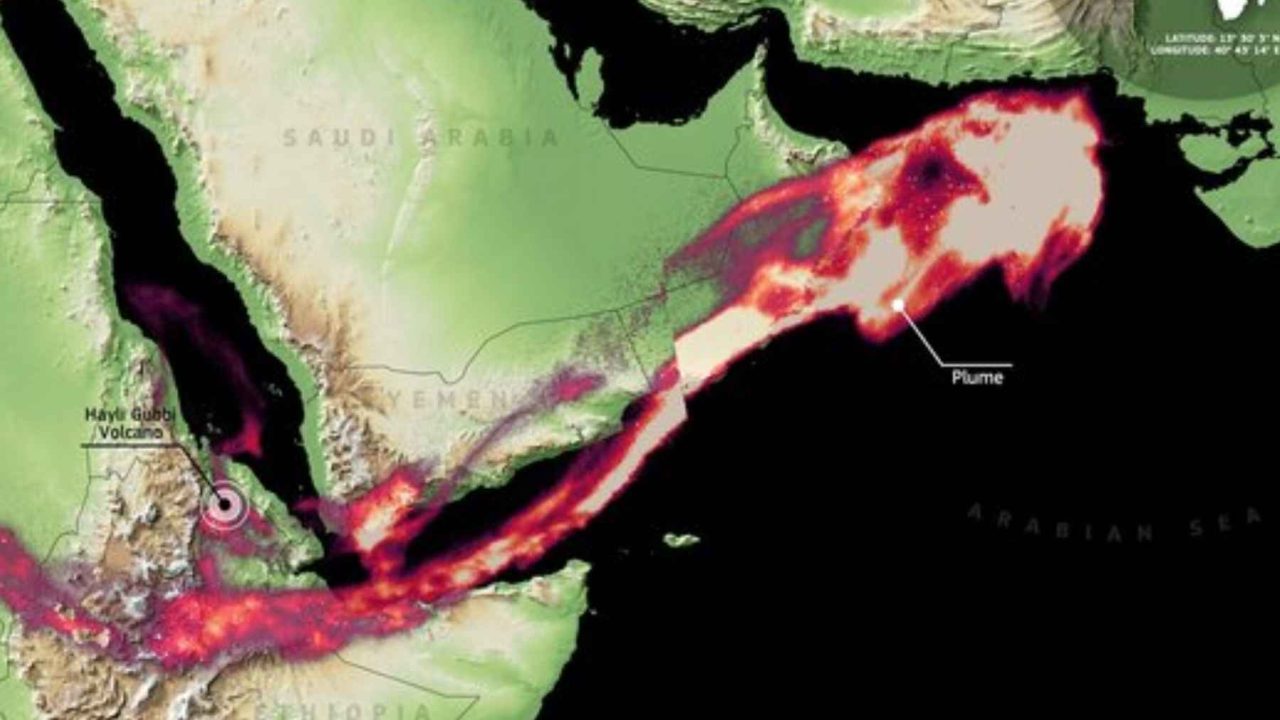
On November 23, 2025, Hayli Gubbi, located in Ethiopia’s Afar region, produced its first recorded explosive eruption. Scientists, satellites, and monitoring agencies around the world took notice almost immediately. The plume of ash and gas was enormous, and the sulfur dioxide it released traveled thousands of kilometers across multiple continents.
The event is a sharp reminder that geology doesn’t follow human timelines. A volcano that appears dormant for millennia can still be very much alive underground — and it can make itself known again without much warning.
What Happened When Hayli Gubbi Woke Up
The eruption on November 23, 2025 was the first explosive eruption ever documented at Hayli Gubbi. Many early reports described it as the volcano’s first eruption in around 12,000 years, though the Smithsonian’s Global Volcanism Program offered a more careful reading of the evidence. Some lava flows on the volcano may actually be younger than 8,000 years — meaning the mountain may have had activity more recently than the headline figure suggests, even if no explosive event had been recorded before.
That distinction matters scientifically, but it doesn’t change the core takeaway: this was an extraordinary geological event that caught much of the world off guard.
The eruption sent ash and gas to altitudes between 10 and 15 kilometers — well into the stratosphere. At that height, volcanic material doesn’t just fall back down locally. It gets picked up by atmospheric currents and carried across vast distances, which is exactly what happened here.
How Far the Plume Actually Traveled
The scale of the atmospheric impact from Hayli Gubbi’s eruption was significant. Copernicus satellite data tracked the ash and gas plume traveling approximately 3,700 kilometers from Ethiopia toward the Arabian Sea. Smithsonian reports indicated the cloud later reached as far as northern India and China.
The Global Volcanism Program reported that the early phase of the eruption released approximately 220,000 tons of sulfur dioxide into the atmosphere. Sulfur dioxide at high altitudes can affect air quality, disrupt aviation, and in large enough quantities, temporarily influence regional climate patterns.
| Detail | Confirmed Data |
|---|---|
| Eruption date | November 23, 2025 |
| Ash plume height | 10 to 15 kilometers |
| Sulfur dioxide released (early phase) | Approximately 220,000 tons |
| Plume distance tracked by Copernicus | Approximately 3,700 kilometers |
| Plume reach (per Smithsonian reports) | Northern India and China |
| Deaths reported | None |
| Last estimated explosive eruption | Approximately 12,000 years ago |
No deaths were reported as a result of the eruption. However, ash fallout in the region around Hayli Gubbi — situated in Ethiopia’s Afar region — would have posed risks to local communities and infrastructure in the immediate aftermath.
The Part of This Story Most Reports Are Missing
The framing of “12,000 years of silence” is compelling, and largely accurate. But the Smithsonian’s geological summary adds nuance that’s worth understanding. The volcano may have had some activity — in the form of lava flows — more recently than 12,000 years ago, with some flows potentially dating to less than 8,000 years old.
What had never been recorded before November 2025 was an explosive eruption at Hayli Gubbi. That’s a specific and important distinction. Effusive activity, where lava flows relatively quietly from a vent, is very different from an explosive eruption that blasts material high into the atmosphere.
The broader lesson that scientists and monitoring agencies point to is this: the absence of recorded eruptions does not mean a volcano is extinct. It may simply mean the volcano hasn’t erupted during the relatively short window of human recorded history — or that previous activity wasn’t explosive enough to leave a clear signature in the geological record.
- A dormant volcano is one that hasn’t erupted recently but is expected to erupt again
- An extinct volcano is one considered unlikely to ever erupt again
- Hayli Gubbi was treated by many as dormant or even extinct — November 2025 proved otherwise
- The Afar region of Ethiopia sits on one of the most geologically active rift zones on Earth, making volcanic activity in the area an ongoing scientific concern
Why the Afar Region Demands Attention
Ethiopia’s Afar region is not a random location for a dramatic volcanic event. The area sits at the junction of three tectonic plates — the African, Arabian, and Somali plates — making it one of the most geologically restless places on the planet. The region is actively pulling apart, a process that creates the conditions for both volcanic and seismic activity.
Hayli Gubbi is one of many volcanic features in this landscape. Its eruption serves as a reminder that the Afar region’s volcanic systems deserve continuous monitoring, even when — especially when — they appear quiet.
The fact that this eruption generated global satellite tracking, atmospheric data from Copernicus, and reports from the Smithsonian’s Global Volcanism Program reflects how seriously the scientific community is now taking long-dormant volcanoes in geologically active zones.
What Comes Next for Hayli Gubbi
As of the reporting available, no further major eruption phases at Hayli Gubbi have been confirmed following the November 2025 event. Monitoring of the volcano and the surrounding region continues through international geological programs.
The sulfur dioxide plume that reached northern India and China will have dispersed over time, though the long-range atmospheric effects of a release of 220,000 tons of the gas are subject to ongoing scientific assessment.
For the communities in Ethiopia’s Afar region, the eruption underscores the need for improved early warning systems and emergency preparedness around volcanoes that have long been considered low-risk due to inactivity. Geological silence, as Hayli Gubbi has demonstrated, is not the same as geological safety.
Frequently Asked Questions
Where is Hayli Gubbi located?
Hayli Gubbi is located in Ethiopia’s Afar region, one of the most geologically active areas on Earth due to the meeting of three tectonic plates.
When did Hayli Gubbi erupt?
The eruption occurred on November 23, 2025, and was the first recorded explosive eruption at the volcano.
How high did the ash plume reach?
The ash and gas plume reached between 10 and 15 kilometers into the atmosphere.
How much sulfur dioxide was released?
The Global Volcanism Program reported approximately 220,000 tons of sulfur dioxide released during the early phase of the eruption.
Were there any casualties?
No deaths were reported as a result of the eruption, according to available reports.
Does this mean other dormant volcanoes could erupt unexpectedly?
Hayli Gubbi’s eruption reinforces the scientific view that a quiet volcano is not necessarily an extinct one — long periods of inactivity do not guarantee a volcano will never erupt again.




Leave a Reply