
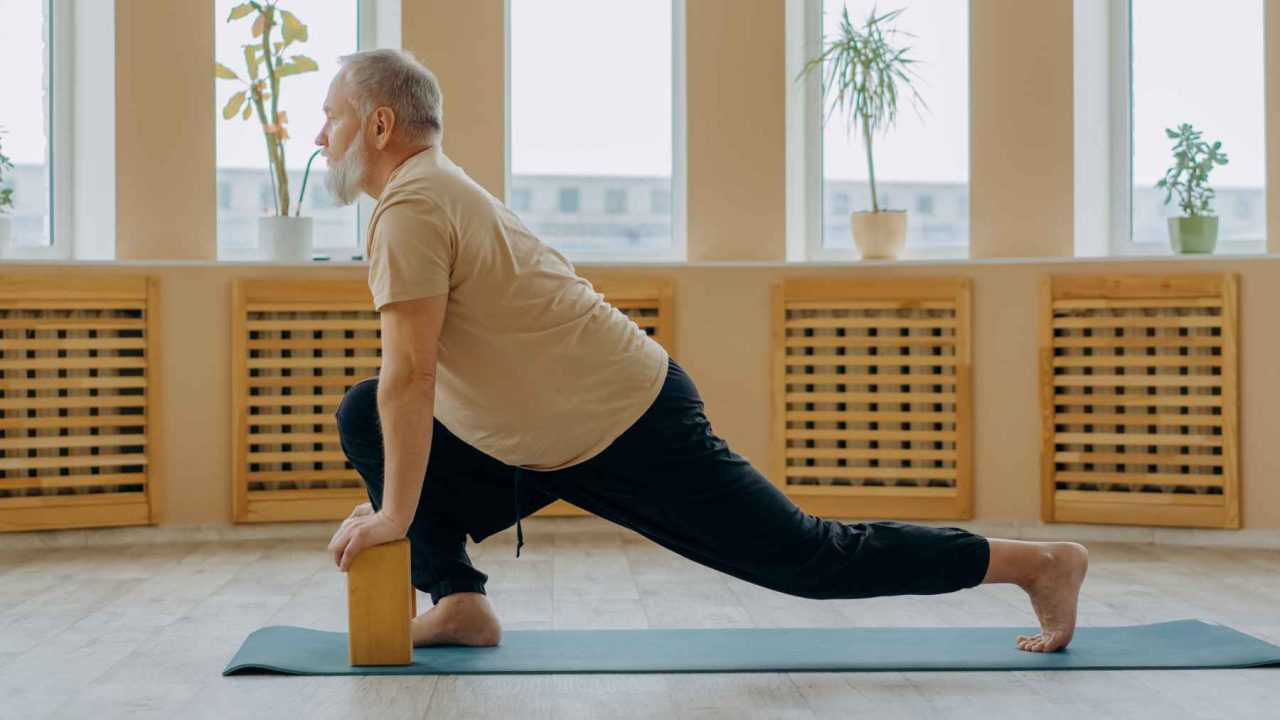
Thirty randomized controlled trials. More than 2,500 people across more than a dozen countries. One clear winner — and it isn’t the treadmill.
A new analysis led by researchers at Harbin Sport University in China found that high-intensity yoga outperformed walking, resistance training, and several other forms of exercise when it came to improving sleep in people already diagnosed with sleep disorders. The findings suggest that the answer to chronic sleeplessness might be sitting on a yoga mat rather than in a pill bottle or a running shoe.
If you’ve spent nights staring at the ceiling, counting hours instead of sheep, this research is worth paying attention to.
What the Study Actually Found
The research, led by Li Li and colleagues at Harbin Sport University, pooled data from 30 randomized controlled trials involving 2,576 participants who had been diagnosed with sleep disorders. Those participants came from more than a dozen countries, making this one of the broader analyses of its kind.
The team used a technique called network meta-analysis, which allows researchers to compare treatments that were never directly tested against each other in the same trial. Think of it as a statistical bracket system — by combining results across multiple studies, scientists can draw comparisons that no single experiment would have been large enough to make on its own.
The result of that analysis pointed consistently in one direction: a specific dose of high-intensity yoga produced stronger sleep improvements than walking, resistance training, and several other exercise types tested across those trials.
The researchers do caution that results will not be identical for everyone. Individual responses to exercise vary, and sleep disorders themselves come in many forms. But the overall pattern across 30 trials is difficult to dismiss.
Why Yoga and Not Cardio or Weights
It might seem counterintuitive. Running gets your heart rate up. Lifting weights builds physical fatigue. Both are widely recommended for overall health. So why would yoga — often associated with gentle stretching and slow breathing — outperform them for sleep?
The source study does not provide a single definitive biological explanation, but the broader scientific literature on this question points to a few likely mechanisms worth understanding as background context:
- Nervous system regulation: Yoga, particularly styles that combine breathwork with movement, is known to activate the parasympathetic nervous system — the body’s “rest and digest” mode, which is the opposite of the stress response that keeps many people awake.
- Cortisol reduction: High-intensity cardio can temporarily spike cortisol levels. Yoga tends to lower them, which may make it easier for the brain to wind down.
- Mind-body awareness: The meditative elements built into many yoga practices may help break the cycle of anxious thinking that fuels insomnia.
- Consistency and accessibility: Yoga sessions are easier for many people to sustain over time, which matters when the study is measuring long-term sleep improvement rather than a one-night effect.
Again, these mechanisms are established general context — the specific study focused on outcomes across trials, not on isolating why yoga worked best.
Breaking Down What the Research Compared
To understand the scope of what was analyzed, it helps to see how the different exercise types compared within this body of research. The study drew on 30 clinical trials with participants who had diagnosed sleep disorders across multiple countries.
| Exercise Type | Included in Analysis | Relative Sleep Outcome |
|---|---|---|
| High-intensity yoga | Yes | Strongest improvement found |
| Walking | Yes | Less effective than yoga |
| Resistance training (weights) | Yes | Less effective than yoga |
| Other cardio exercise | Yes | Less effective than yoga |
The study covered 2,576 people in total — a sample size large enough to lend the findings meaningful statistical weight, even with the natural variation that comes from combining data across different countries and study designs.
Who This Matters Most For
The participants in these trials were not just people who occasionally slept badly after a stressful week. They had diagnosed sleep disorders — conditions that affect quality of life, cognitive function, mood, and long-term health. That distinction matters, because it means the yoga benefit wasn’t measured against a baseline of people who sleep fine. It was tested in the population that needs help most.
Sleep disorders are a significant public health issue globally. Chronic poor sleep is linked to increased risk of cardiovascular disease, metabolic conditions, and mental health challenges. For people in that situation, finding a non-pharmacological approach that actually works — one that doesn’t carry the side effects or dependency risks of sleep medications — is genuinely meaningful.
The research also suggests that frequency and intensity matter. The analysis pointed specifically to a specific dose of high-intensity yoga as the differentiating factor, not just any gentle stretching session before bed. That’s an important practical detail: not all yoga is the same, and the type and effort level appear to influence the outcome.
What This Means If You’re Considering Trying It
The researchers themselves note that individual results will vary. A network meta-analysis draws conclusions at the population level — it tells you what worked best on average across thousands of people, not what will definitively work for you specifically.
That said, the evidence here is more rigorous than a single small study. Thirty randomized controlled trials across more than a dozen countries, analyzed with a methodology designed to make fair cross-exercise comparisons, is a meaningful body of evidence.
If you struggle with sleep and haven’t tried yoga, the science now offers a reasonably strong case for giving it a genuine effort — not a once-a-week gentle flow, but consistent sessions with real physical intensity. The researchers describe it as a “surprisingly powerful tool for long-term sleep improvement,” which is a notable conclusion from a field that has tested many interventions and found most of them modest at best.
Frequently Asked Questions
How many studies were included in this analysis?
The analysis pooled data from 30 randomized controlled trials involving 2,576 people with diagnosed sleep disorders across more than a dozen countries.
Who conducted this research?
The study was led by Li Li and colleagues at Harbin Sport University in China.
What type of yoga was found to be most effective?
The study specifically identified high-intensity yoga as the type that outperformed other exercise forms — not all yoga styles equally.
Did yoga outperform resistance training and walking?
Yes, according to the network meta-analysis, high-intensity yoga produced stronger sleep improvements than walking, resistance training, and several other workout types.
Will yoga work the same way for everyone with a sleep disorder?
The researchers caution that results will not be identical for everyone, as individual responses to exercise vary.
What method did researchers use to compare different exercises?
They used a technique called network meta-analysis, which allows comparison of treatments that were never directly tested against each other in the same trial.



Leave a Reply