
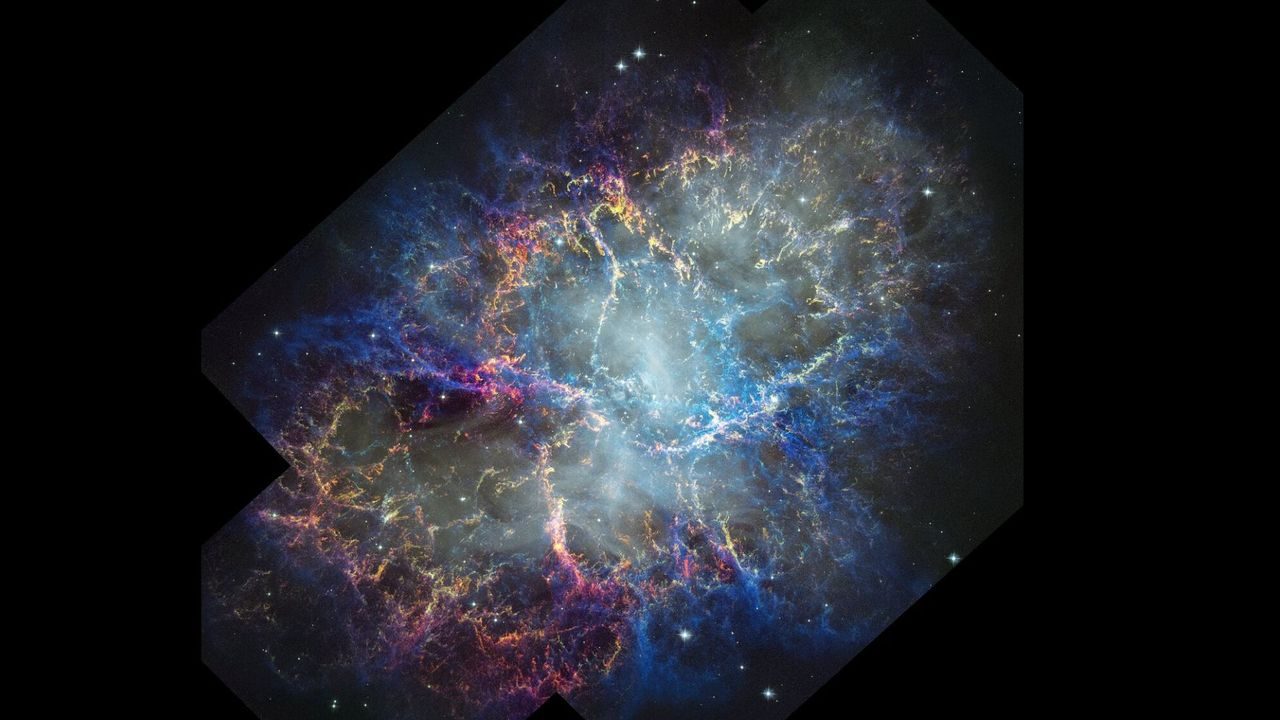
Six thousand five hundred light-years away, in the constellation Taurus, a dead star is still making itself known — and NASA’s Hubble Space Telescope has just given us the clearest proof yet of how dramatically it is changing.
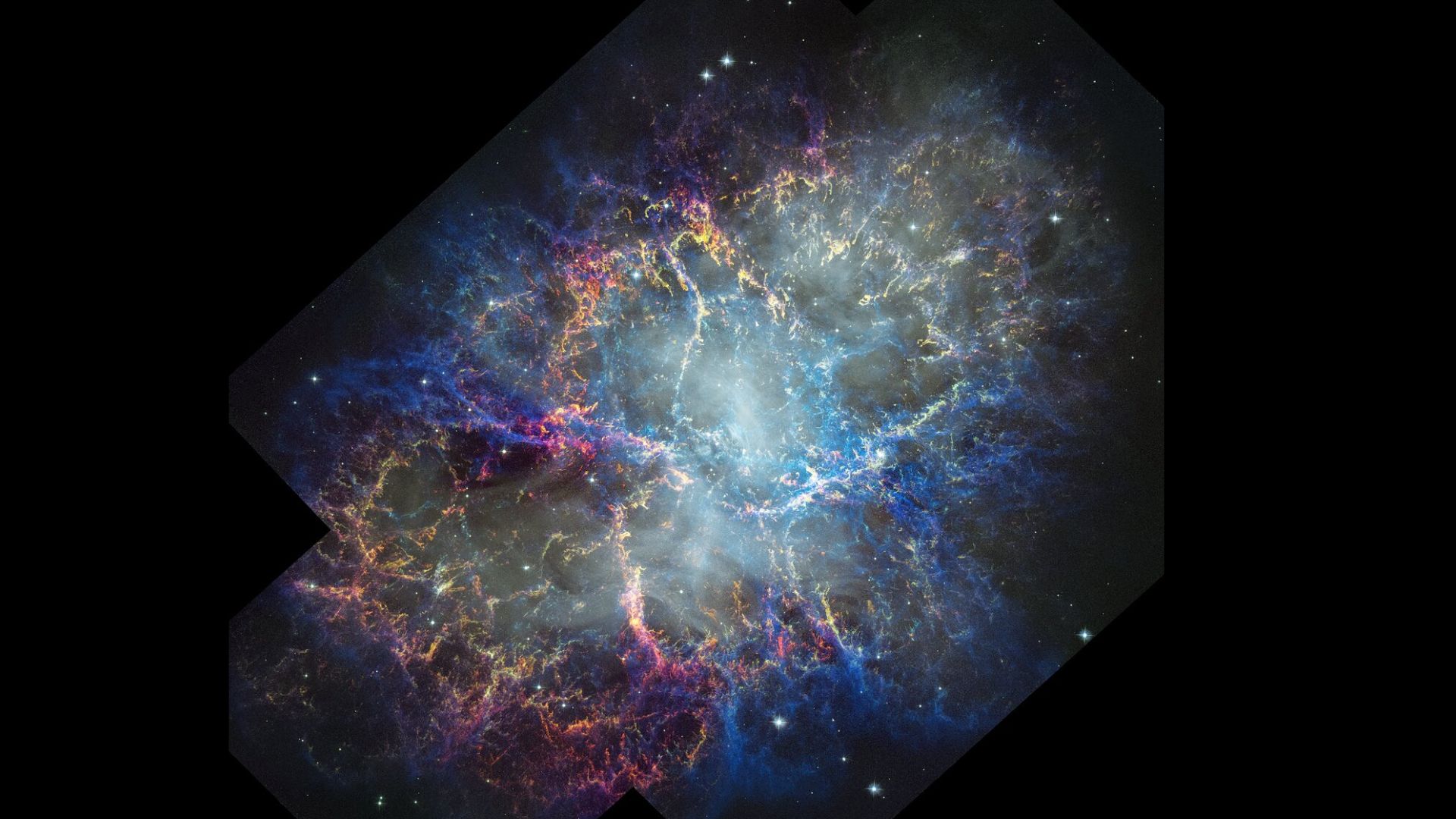
On March 23, 2026, NASA released a striking pair of Hubble images of the Crab Nebula — also catalogued as M1 — taken 25 years apart. The comparison reveals visible, measurable changes in one of the most studied objects in the night sky, offering a rare time-lapse view of a cosmic explosion still unfolding in real time.
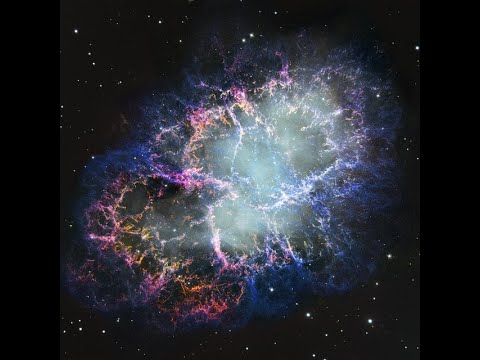
It is the kind of science that only becomes possible when a telescope survives long enough to look back at its own archive — and Hubble, against many expectations, has done exactly that.
What the Crab Nebula Actually Is
The Crab Nebula is what remains after a massive star exploded in a supernova. It sits roughly 6,500 light-years from Earth in the constellation Taurus, and it has been one of astronomy’s most important reference points for decades. Astronomers classify it as a supernova remnant — a cloud of expanding gas and debris still radiating energy from the original explosion.
It earned its place in the catalogue as Messier 1, the very first object recorded in Charles Messier’s famous 18th-century catalogue of celestial objects. That history alone makes it significant. But what makes it scientifically valuable today is precisely what the new Hubble images demonstrate: it is not static. It is moving, expanding, and changing in ways that can now be directly observed and compared across a human timescale.
The images were captured using Hubble’s Wide Field Camera, with image processing carried out by J. DePasquale at the Space Telescope Science Institute. The photography credit goes to W. Blair of Johns Hopkins University, with support from NASA, ESA, and STScI.
Why Two Images Taken 25 Years Apart Matter So Much
Astronomy has always wrestled with the problem of time. The universe operates on scales that dwarf human lifespans, which typically makes observing change directly impossible. A nebula photographed once is just a beautiful picture. A nebula photographed twice, a quarter-century apart, becomes evidence.
That is exactly what Hubble’s surprising longevity has made possible. According to NASA, the telescope’s extended operational life is giving astronomers a chance to observe not only what distant objects look like up close, but how they change over time. The Crab Nebula comparison is one of the most vivid examples of that capability to date.
The 25-year gap between the two images is long enough for the differences to be clearly visible — filaments of gas shifting position, the overall structure expanding outward — yet short enough that the same telescope and scientific teams could be involved in both observations. That continuity matters enormously for the integrity of the comparison.
Key Facts About the Crab Nebula and This Hubble Observation
| Detail | Information |
|---|---|
| Object name | Crab Nebula (also known as M1) |
| Object type | Supernova remnant |
| Location | Constellation Taurus |
| Distance from Earth | Approximately 6,500 light-years |
| Images released | March 23, 2026 |
| Time span between images | 25 years |
| Instrument used | Hubble Space Telescope Wide Field Camera |
| Image processing | J. DePasquale (STScI) |
| Photography credit | W. Blair (Johns Hopkins University), NASA, ESA, STScI |
- The Crab Nebula is catalogued as Messier 1 — the first entry in Charles Messier’s historic catalogue of deep-sky objects.
- It is classified as a supernova remnant, meaning it is the debris field left behind after a massive star’s explosion.
- Hubble’s Wide Field Camera was the instrument used to capture the comparison images.
- The images were shared publicly by NASA on March 23, 2026.
What This Tells Us About Hubble’s Scientific Legacy
Hubble was never originally designed with multi-decade time-lapse science as a primary goal. It was built to see farther and more clearly than any ground-based telescope of its era. But its longevity has turned it into something even more valuable: a long-baseline observatory capable of recording how the universe changes.
The Crab Nebula images are a direct product of that unplanned legacy. A telescope that launched in 1990 and was expected by many to have a far shorter operational life has instead accumulated decades of archival data — data that can now be compared against new observations to reveal motion, expansion, and structural evolution that would otherwise be invisible to us.
For astronomers studying supernova remnants, this kind of direct observational evidence of change is extraordinarily useful. Models predicting how such remnants expand and evolve over time can now be tested against real images rather than relying entirely on theoretical projections.
What Comes Next for Hubble and Objects Like This
NASA has not announced a specific follow-up timeline for additional Crab Nebula observations, but the logic of the 25-year comparison strongly suggests that future images will be taken as long as Hubble remains operational. Each additional observation adds another data point to what is becoming one of astronomy’s most detailed records of a single evolving object.
Hubble continues to operate alongside newer observatories, including the James Webb Space Telescope. The two instruments see the universe differently — Webb specialising in infrared wavelengths — meaning future multi-telescope comparisons of the Crab Nebula could reveal layers of change invisible to either instrument alone.
For now, the 25-year Hubble comparison stands as a remarkable reminder that some of the most important scientific discoveries are not made in a single moment of observation, but across the slow, patient accumulation of time.
Frequently Asked Questions
What is the Crab Nebula?
The Crab Nebula, also known as M1, is a supernova remnant located approximately 6,500 light-years from Earth in the constellation Taurus. It is the debris field left behind after a massive star exploded.
When did NASA release these new Hubble images?
NASA shared the comparison images on March 23, 2026.
How far apart were the two Hubble images taken?
The two images of the Crab Nebula were taken 25 years apart, allowing scientists to directly observe changes in the nebula’s structure over time.
What instrument did Hubble use to photograph the Crab Nebula?
The images were captured using Hubble’s Wide Field Camera, with image processing carried out by J. DePasquale at the Space Telescope Science Institute.
Why does it matter that the Crab Nebula has changed?
Directly observing structural changes in a supernova remnant over 25 years gives astronomers real evidence to test and refine models of how these objects expand and evolve — something that was previously only possible through theoretical calculation.
Will Hubble photograph the Crab Nebula again in the future?
NASA has not confirmed a specific follow-up observation schedule, but Hubble’s ongoing operational status makes future comparative images possible as long as the telescope remains active.



Leave a Reply