
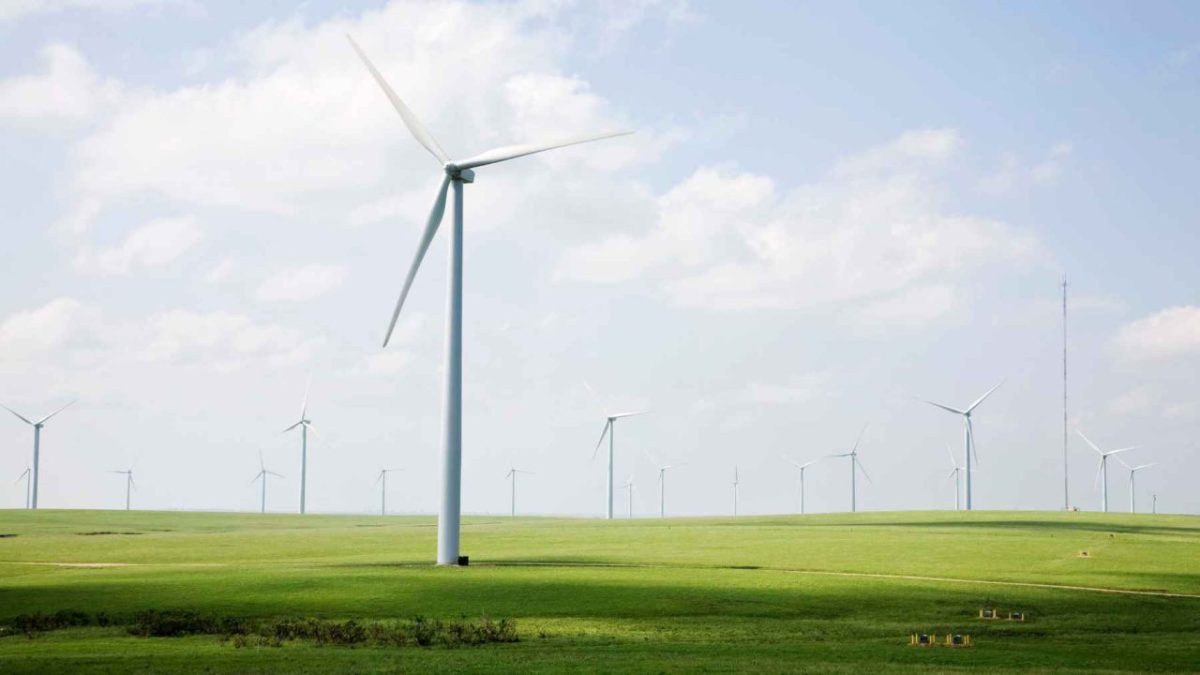
Between 10% and 14% of Ireland’s available wind energy is wasted every single year — not because the turbines break down, but simply because no one needs the electricity at the moment the wind decides to blow. That is a striking amount of clean energy disappearing into nothing, and it points to one of the most frustrating problems in the shift to renewable power: generation and demand rarely line up on their own.
That problem just got a serious answer in County Offaly. Renewable energy company Statkraft has officially opened Ireland’s first four-hour grid-scale battery energy storage system, located beside the Cushaling Wind Farm in the Irish midlands. The facility can store enough electricity to power around 10,000 homes for four hours — and when the grid needs it, the battery can respond in just one tenth of a second.
It is a milestone that energy watchers have been waiting for, and the speed of that response is just as significant as the scale of the storage itself.
Why Ireland Needed This Battery Right Now
Ireland has been building out wind energy at a serious pace, and the country’s geography — exposed Atlantic coastlines, consistent offshore and onshore winds — makes it one of Europe’s most naturally suited places for wind power. But the same grid that carries all that clean electricity has a fundamental limitation: it can only handle what people are actually using at any given moment.
When demand is low — overnight, during mild weather, or on public holidays — grid operators have had to curtail wind farms, essentially telling turbines to slow down or stop even when the wind is blowing hard. All that potential generation goes unused. According to Statkraft Ireland managing director Kevin O’Donovan, who spoke at the opening, that curtailment currently accounts for between 10% and 14% of available wind energy each year in Ireland.
A long-duration battery storage system sitting right next to a wind farm changes that equation. Instead of wasting the surplus, the battery absorbs it. When demand rises again — or when the wind drops and the turbines slow — the stored energy flows back out to the grid.
What the Cushaling Battery Actually Does
The new facility sits beside the Cushaling Wind Farm, a 55.8-megawatt wind installation in County Offaly, a county sometimes called the Faithful County in the Irish midlands. The pairing is deliberate. Locating a battery directly next to a wind farm means the storage system can capture excess generation at the source, before it ever reaches a congested part of the grid.
The four-hour designation refers to how long the battery can discharge at full capacity — enough to supply electricity to approximately 10,000 homes for four hours before it needs to recharge. That puts it in the category of long-duration storage, which energy planners consider essential for grids that rely heavily on variable renewable sources like wind and solar.
But the detail that stands out most is the response time. The battery can go from standby to full output in one tenth of a second. That near-instant reaction means it can stabilise the grid during sudden drops in generation — the kind that happen when wind speeds fall quickly or when a large power plant trips offline unexpectedly.
Key Facts at a Glance
| Detail | Specification |
|---|---|
| Location | Cushaling Wind Farm, County Offaly, Ireland |
| Developer | Statkraft |
| Storage duration | Four hours |
| Homes supplied | Approximately 10,000 for four hours |
| Adjacent wind farm capacity | 55.8 megawatts |
| Grid response time | One tenth of a second |
| Annual wind curtailment in Ireland | 10%–14% of available wind energy |
- Ireland’s first four-hour grid-scale battery energy storage system
- Operated by Norwegian renewable energy company Statkraft
- Designed to capture wind energy that would otherwise be curtailed and wasted
- Can activate in one tenth of a second to stabilise grid supply
- Positioned directly beside a 55.8 MW wind farm for maximum efficiency
What This Means for Irish Energy Consumers and the Grid
For ordinary households, the most immediate benefit is reliability. A battery that can respond in a tenth of a second helps keep the lights on during the brief but disruptive moments when supply and demand fall out of sync. Those moments — sometimes called frequency events — can cause voltage dips or outages if nothing catches them fast enough.
Beyond stability, there is an economic argument. Wind energy that gets curtailed is effectively money left on the table — investment that went into building and operating turbines, generating electricity that never reaches anyone. Reducing curtailment means the existing wind infrastructure earns more of its keep, which over time can put downward pressure on the cost of renewable power.
For Ireland’s broader climate targets, long-duration battery storage is increasingly seen as a prerequisite rather than a bonus. The country has ambitious goals for renewable electricity generation, and meeting them without storage means either building far more generation capacity than the grid can absorb at peak times, or accepting that a significant share of clean power will continue going to waste.
The Part Most Energy Stories Miss
There is a tendency to focus on wind turbine numbers or solar panel installations when talking about the clean energy transition. The less visible but equally critical side of the story is what happens between generation and consumption — the storage, the grid management, the split-second balancing acts that keep electricity flowing smoothly.
Ireland’s Cushaling battery is a concrete example of that invisible infrastructure becoming visible. It does not generate a single watt of electricity on its own. What it does is make the electricity that already exists more useful, more reliable, and less wasteful. That is a different kind of energy story, but arguably just as important as building the next wind farm.
Statkraft, a Norwegian state-owned company and one of Europe’s largest renewable energy producers, has been expanding its footprint in Ireland’s energy market. The Cushaling project represents the first time a four-hour storage system of this scale has been commissioned in the country, marking a threshold that energy planners have been working toward for years.
Frequently Asked Questions
Where is Ireland’s first four-hour battery located?
It is located beside the Cushaling Wind Farm in County Offaly, in the Irish midlands.
Who built and operates the battery?
The facility was developed and opened by Statkraft, a Norwegian renewable energy company with operations in Ireland.
How many homes can the battery power?
The battery can supply electricity to approximately 10,000 homes for four hours before it needs to recharge.
How fast can the battery respond when the grid needs power?
It can activate and reach full output in just one tenth of a second, making it capable of responding to sudden drops in grid supply almost instantly.
Why is wind energy currently being wasted in Ireland?
Between 10% and 14% of available wind energy in Ireland is curtailed each year because turbines are turned off during periods of low demand, even when the wind is blowing strongly.</p


Leave a Reply