
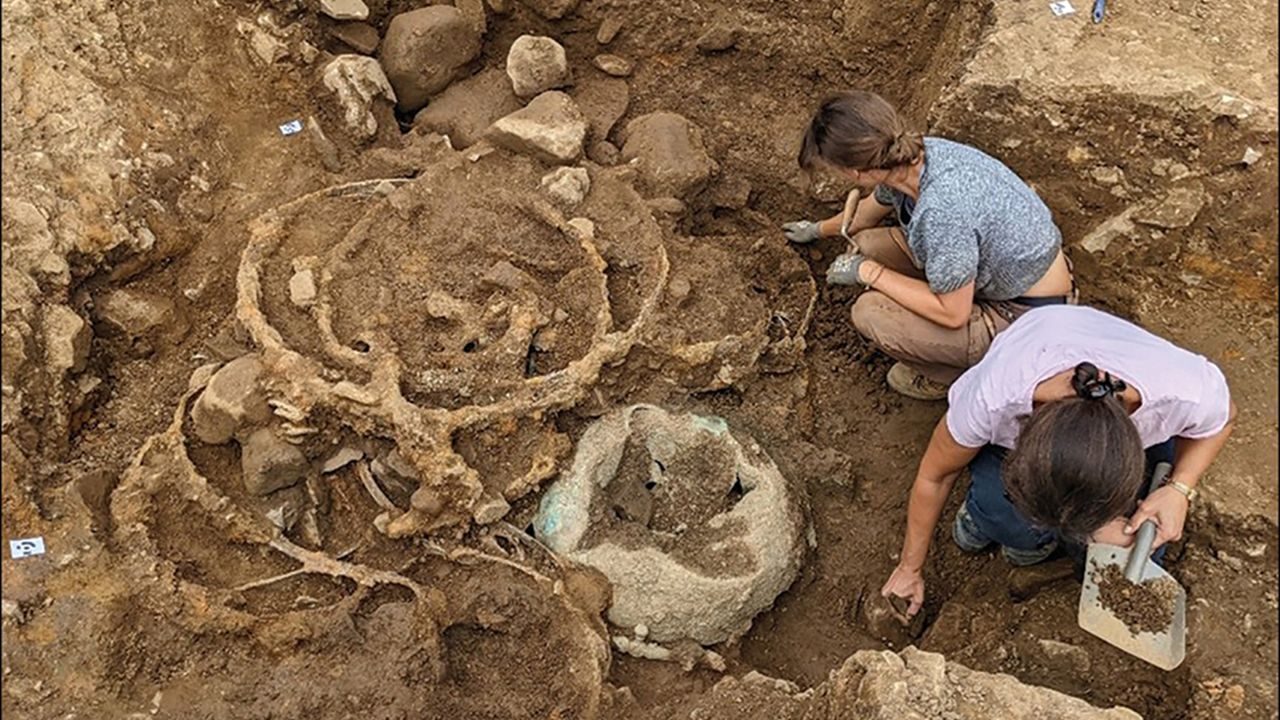
Two enormous collections of burned Iron Age artifacts — weapons, metal vessels, and the remains of chariots or carts — have been unearthed in northern England, and archaeologists believe they may be the remnants of a royal funeral, possibly held for a powerful Celtic queen.
The discovery, known as the Melsonby hoards, ranks among the largest collections of Iron Age artifacts ever found in Britain. It began not with a professional dig, but with a metal detectorist who spotted something unusual near the village of Melsonby in Yorkshire in 2021 — and had the presence of mind to alert archaeologists rather than disturb the site.
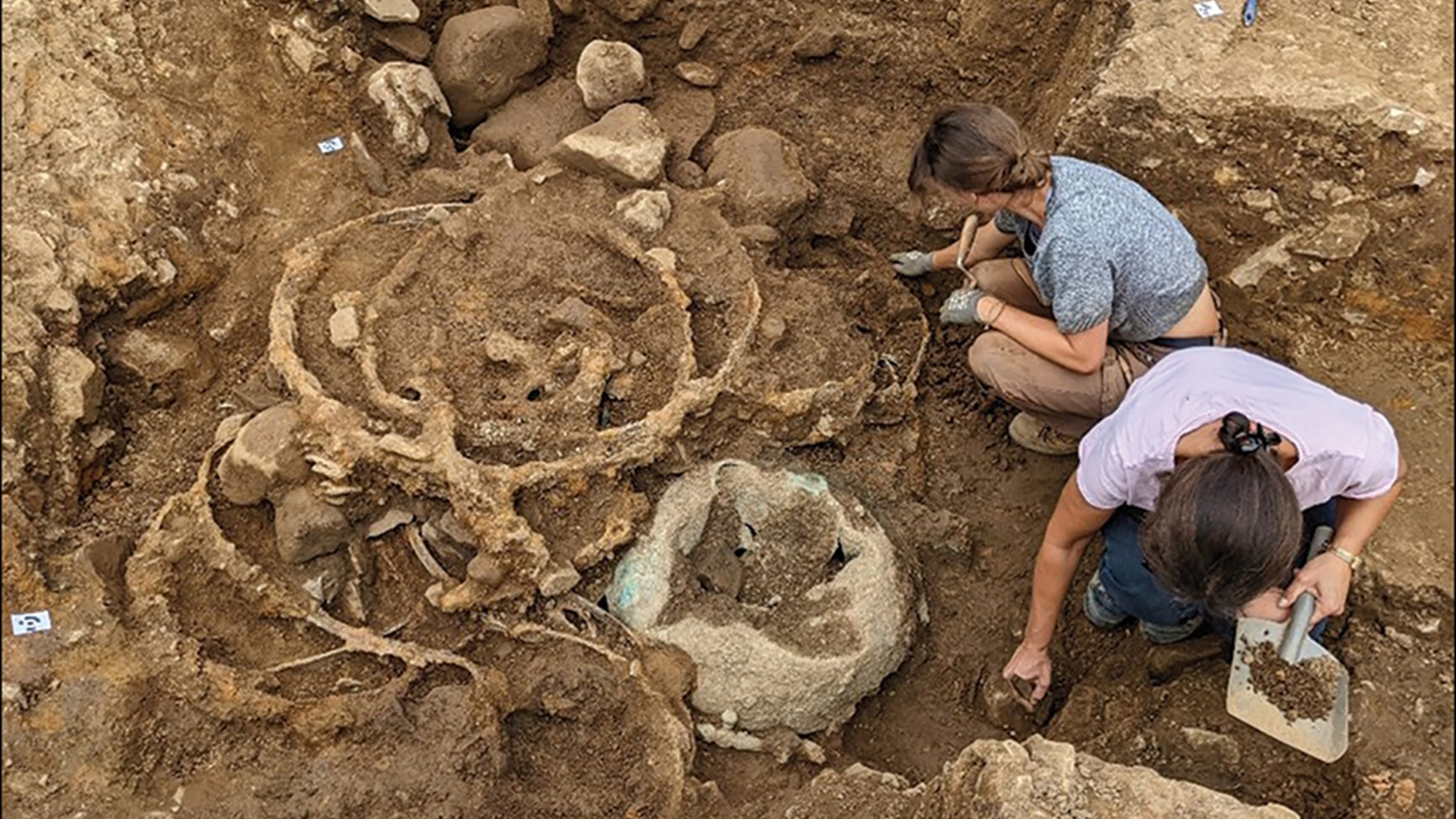
What followed was one of the most significant archaeological finds in recent British history, raising profound questions about power, ritual, and the role of women in ancient Celtic society.
What Was Actually Found at Melsonby
Excavators working the site uncovered two separate deposits containing a remarkable range of burned metal objects. The artifacts include weapons, metal vessels, and what appear to be the remains of chariots or carts — all showing clear signs of having been burned, suggesting deliberate destruction as part of a ceremonial process.
The hoards were found near Melsonby in Yorkshire, in the north of England — a region with deep roots in Iron Age Celtic culture. Durham University has been associated with the find, lending academic weight to the ongoing analysis of what these deposits mean and who they may have belonged to.
The burning of grave goods is not unique to this site, but the sheer scale and variety of what was deposited here sets the Melsonby hoards apart. Archaeologists working on the find have suggested the assemblage is consistent with a high-status funeral — the kind of send-off reserved for someone of exceptional rank and authority.
Why Archaeologists Think This Could Be a Royal Celtic Funeral
The composition of the hoards is what points researchers toward a royal interpretation. Chariots or carts, in the Iron Age world, were not everyday objects. They were symbols of prestige and power, closely associated with elite warriors and rulers. Finding their burned remains alongside weapons and ceremonial vessels strongly implies the deceased held a position of significant authority.
The possibility that this funeral belonged to a Celtic queen reflects a broader understanding of Iron Age society in Britain, where women could and did hold positions of real political and military power. The most famous example — Boudicca, the Iceni queen who led a major uprising against Roman rule — is a reminder that female leadership in Celtic Britain was not exceptional, but part of the social fabric.
Archaeologists have stopped short of naming the individual, and rightly so. But the evidence, they argue, points toward someone of the highest social tier — possibly a queen or a figure of equivalent standing in the tribal hierarchy of Iron Age northern England.
Key Facts About the Melsonby Iron Age Hoards
| Detail | Information |
|---|---|
| Discovery year | 2021 |
| Location | Near Melsonby village, Yorkshire, northern England |
| Number of deposits | Two separate hoards |
| Artifact types | Burned metal weapons, vessels, chariots or carts |
| Significance | One of the largest Iron Age artifact collections ever found in Britain |
| Academic institution involved | Durham University |
| Current interpretation | Possible royal funeral, potentially for a Celtic queen |
- The find was initially made by a metal detectorist, who alerted professional archaeologists before any damage was done to the site
- All artifacts show evidence of deliberate burning, consistent with Iron Age funerary ritual
- The two deposits were found close together, suggesting a single ceremonial event rather than unrelated burials
- The scale of the collection places it among the most important Iron Age discoveries in British archaeological history
What This Tells Us About Iron Age Britain
Finds like the Melsonby hoards are rare windows into a world that left no written records of its own. Everything we know about Iron Age Celtic culture in Britain comes from archaeology, from the accounts of Roman writers — who were hardly neutral observers — and from traditions preserved in later medieval texts.
A funeral of this magnitude would have been a major public event. The deliberate burning and burial of valuable objects — weapons, vessels, vehicles — signals not just grief, but a statement of power. It says: we are wealthy enough to destroy this. It says: this person mattered enough to warrant it.
The presence of chariot or cart remains is particularly striking. Chariot burials are associated with a specific Iron Age culture found in Yorkshire known as the Arras culture, named after a site in the East Riding. These burials are among the most distinctive in British prehistory, and finding burned chariot remains in a hoard context adds a compelling new dimension to what we understand about ritual practice in the region.
If the royal funeral interpretation holds, it would also add weight to the argument that Iron Age northern England had a sophisticated political structure — one capable of producing rulers whose deaths demanded ceremonies of this scale.
What Happens Next With the Investigation
The Melsonby hoards are still being studied. Finds of this complexity take years to fully analyze — metals must be conserved, objects identified, and the site itself carefully mapped and interpreted. Durham University’s involvement suggests the research will be thorough and peer-reviewed before final conclusions are drawn.
Archaeologists will be working to date the deposits more precisely, identify the specific types of weapons and vessels present, and determine whether any organic material survived the burning that might yield further clues about the identity or status of the individual being honored.
The metal detectorist’s decision to report the find rather than remove it quietly was, in this case, the difference between a lost piece of history and one of the most discussed archaeological discoveries in Britain in years.
Frequently Asked Questions
Where were the Melsonby hoards discovered?
They were found near the village of Melsonby in Yorkshire, in northern England, in 2021.
Who found the Iron Age hoards?
A metal detectorist made the initial discovery and alerted archaeologists, who then conducted a professional excavation of the site.
What types of artifacts were found in the hoards?
The deposits contained burned metal weapons, vessels, and the remains of chariots or carts, spread across two separate deposits.
Why do archaeologists think this could be a royal funeral?
The scale, variety, and deliberate burning of high-status objects — including chariot remains — are consistent with elite Iron Age funerary practices associated with powerful rulers.
Has the identity of the person been confirmed?
No. Archaeologists have suggested the funeral may have been for a Celtic queen or similarly high-ranking individual, but no identity has been confirmed.
How significant is this find in the context of British archaeology?
The Melsonby hoards are considered one of the largest collections of Iron Age artifacts ever found in Britain, making them an exceptionally important discovery.




Leave a Reply