
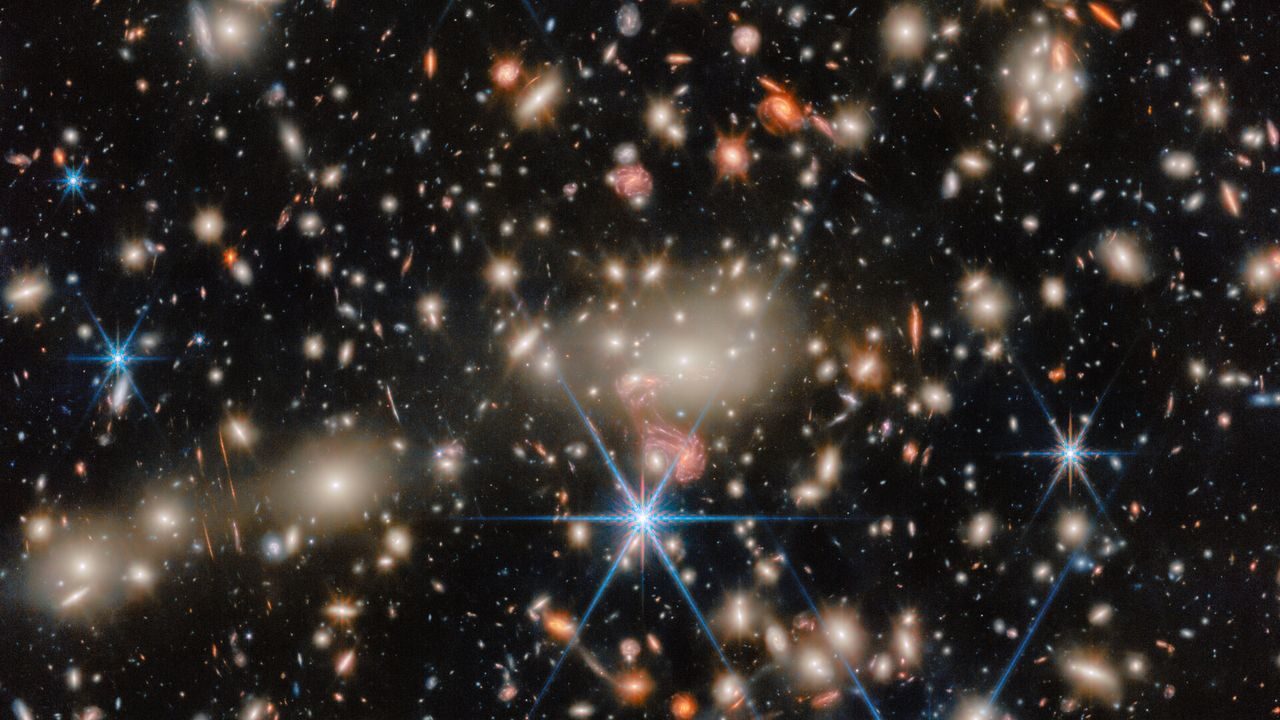
Deep in the early universe, when the cosmos was barely 1.1 billion years old, the James Webb Space Telescope has spotted something remarkable — a triple-galaxy system so unusual in its shape that astronomers have nicknamed it “The Stingray.” And buried within that celestial formation may be the key to solving one of modern astronomy’s most puzzling mysteries.
The discovery, made through observations of a gravitational lens cluster known as MACS J1149, has drawn significant attention from the astronomical community. The reason? The Stingray system appears to contain an object that could help explain the nature of so-called “little red dots” — faint, compact, reddish objects that have been appearing in Webb telescope images with a frequency that no one expected and no current theory fully explains.
It’s the kind of find that makes astronomers sit up straight. Not because it answers everything, but because it might finally point in the right direction.
What the James Webb Telescope Actually Found
The Stingray isn’t just one galaxy — it’s a triple-galaxy system, meaning three galaxies caught in a complex gravitational relationship, observed as they existed when the universe was just over a billion years old. That places this system in what astronomers call the epoch of early cosmic assembly, a period when galaxies were forming and colliding at a furious pace.
The system was detected within the lensed galaxy cluster MACS J1149. Gravitational lensing occurs when the massive gravity of a foreground object — in this case, a galaxy cluster — bends and magnifies the light from objects behind it. This natural magnification effect is essentially a free upgrade for telescopes like Webb, allowing astronomers to see things they otherwise couldn’t resolve at such extreme distances.
The image credit for this discovery goes to ESA/Webb, NASA and CSA, with contributions from C. Willott of the National Research Council Canada and R. Tripodi of INAF’s Astronomical Observatory of Rome — a genuinely international effort.
The Mystery of the Little Red Dots
To understand why The Stingray matters, you need to know about the little red dots problem. Since Webb began returning data, astronomers have noticed an unexpected number of small, compact, reddish objects scattered throughout deep-field images. These objects — informally called little red dots — appear far more frequently than existing models of galaxy and black hole formation predicted.
No one is entirely sure what they are. Some researchers believe they could be extremely compact galaxies undergoing rapid star formation. Others suspect they might be actively feeding supermassive black holes, known as active galactic nuclei, wrapped in dense clouds of dust and gas that shift their light toward the red end of the spectrum. A third possibility is that some combination of both processes is occurring simultaneously.
The problem is that no confirmed, well-studied example has emerged to anchor the theories. That’s where The Stingray comes in.
Why This Triple-Galaxy System Could Change the Picture
The Stingray system contains an object that researchers believe may be directly related to the little red dots phenomenon. Because the system is being gravitationally lensed by MACS J1149, Webb can study it in far greater detail than would normally be possible at that distance and epoch. That enhanced resolution could allow scientists to determine, with more confidence than before, what physical processes are actually driving the unusual appearance of these red objects.
Is it star formation? A growing black hole? Something else entirely? The Stingray system may offer enough observational clarity to start narrowing those options down.
This matters beyond pure academic curiosity. Understanding little red dots means understanding how the earliest massive structures in the universe — galaxies, black holes, and galaxy clusters — actually assembled. Get that wrong, and the standard model of cosmic evolution needs serious revision.
Key Facts at a Glance
| Detail | Information |
|---|---|
| Nickname of the system | The Stingray |
| Type of system | Triple-galaxy system |
| Age of universe at observation | Just over 1.1 billion years old |
| Detection location | Lensed galaxy cluster MACS J1149 |
| Telescope used | James Webb Space Telescope |
| Potential significance | May provide clues about “little red dots” mystery |
| Lead researchers | C. Willott (National Research Council Canada), R. Tripodi (INAF – Astronomical Observatory of Rome) |
- Gravitational lensing by MACS J1149 enhances the detail Webb can extract from the system
- Little red dots have appeared more frequently in Webb images than existing models predicted
- The object within The Stingray may be a rare, well-resolved example of the phenomenon driving these dots
- The discovery is a collaborative effort between ESA, NASA, CSA, and multiple international research institutions
What This Means for Our Understanding of the Early Universe
Every time Webb peers into the distant past, it is testing the limits of what we thought we knew. The little red dots problem is one of the clearest examples of the telescope revealing something genuinely unexpected — objects that weren’t supposed to be as common as they appear, in an era of the universe that was supposed to be better understood.
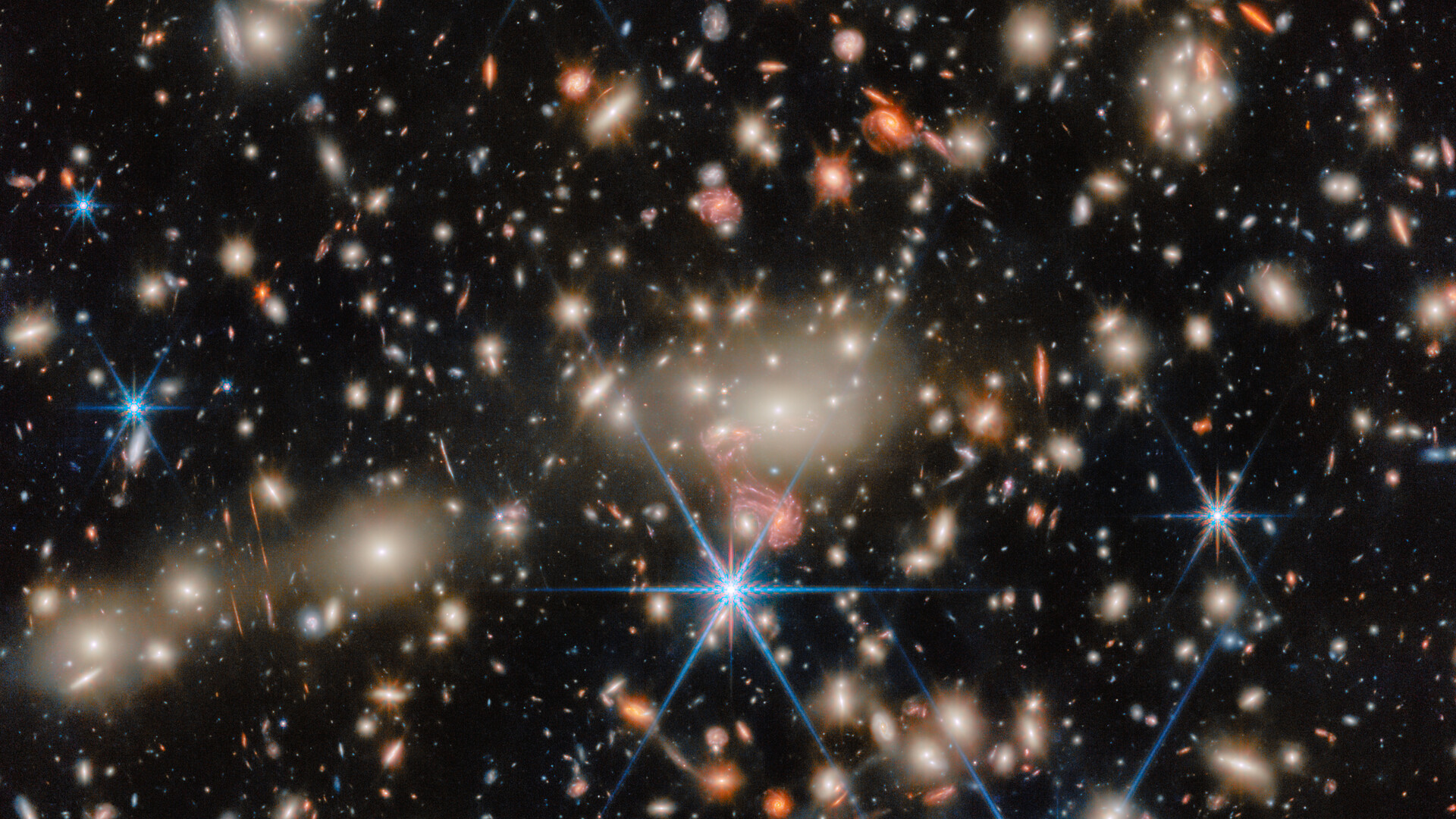
The Stingray system doesn’t solve the mystery on its own. But it provides a rare opportunity: a well-positioned, gravitationally magnified object from the right era, with enough structural detail to study meaningfully. That’s not something astronomers get to work with every day.
If analysis of the Stingray confirms that the embedded object shares properties with little red dots more broadly, it could anchor a new framework for understanding what those objects actually are — and by extension, how the universe’s earliest galaxies and black holes grew so quickly in such a short time.
Frequently Asked Questions
What is “The Stingray” in astronomy?
The Stingray is the nickname given to a triple-galaxy system detected by the James Webb Space Telescope within the lensed galaxy cluster MACS J1149, dating to when the universe was just over 1.1 billion years old.
What are “little red dots” and why do they matter?
Little red dots are small, compact, reddish objects appearing unexpectedly frequently in James Webb Space Telescope deep-field images. Their nature is not yet fully understood, and they have appeared more often than existing models of early galaxy and black hole formation predicted.
How did Webb find The Stingray?
The system was detected through gravitational lensing provided by the galaxy cluster MACS J1149, which magnified the light from the distant triple-galaxy system and allowed Webb to study it in greater detail.
Who led the research on this discovery?
The observation credits include C. Willott of the National Research Council Canada and R. Tripodi of INAF’s Astronomical Observatory of Rome, as part of a collaborative ESA/Webb, NASA, and CSA effort.
Does The Stingray solve the little red dots mystery?
Not yet — but researchers believe the system contains an object that may provide important clues about the nature of little red dots, which remain one of Webb’s most intriguing open questions.
Why is gravitational lensing important to this discovery?
Gravitational lensing by the foreground cluster MACS J1149 acts as a natural magnifier, allowing Webb to resolve detail in The Stingray system that would otherwise be impossible to observe at such an extreme cosmic distance.




Leave a Reply