
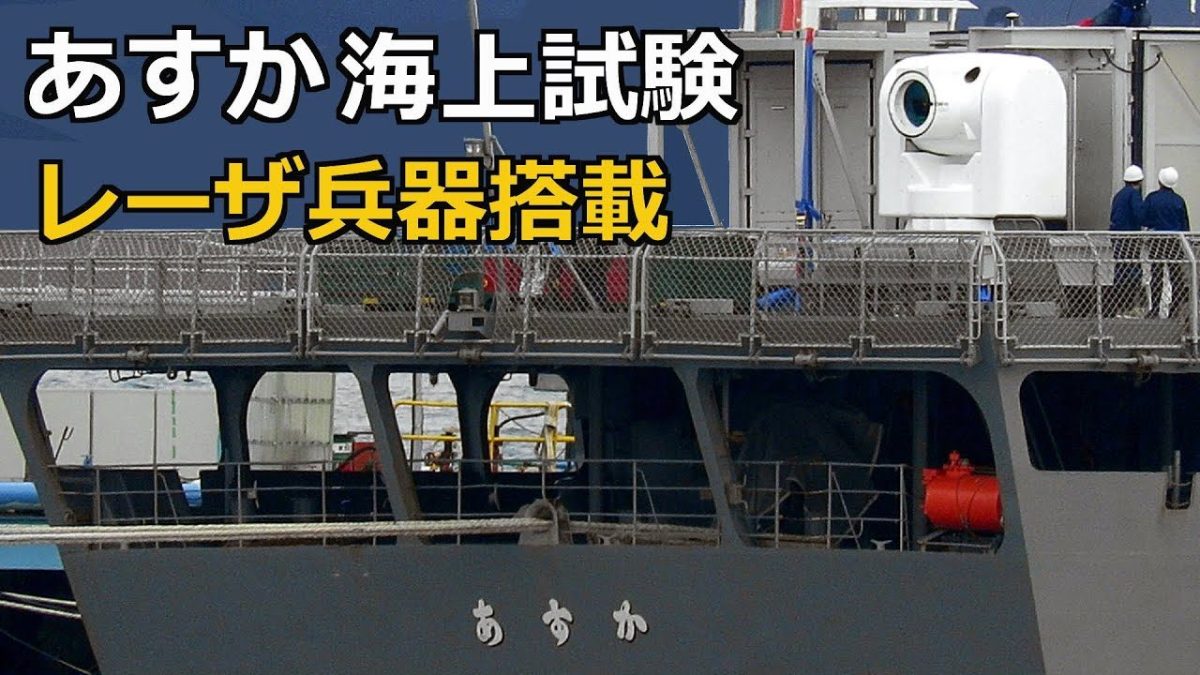
A single laser beam. Ten fiber lasers fused into one. And the promise of ammunition that never runs out — as long as the ship’s generators keep running. Japan has quietly moved directed-energy warfare from the laboratory to the open ocean, and the implications stretch well beyond the Pacific.
The Japanese Maritime Self-Defense Force has mounted a 100 kilowatt laser weapon aboard the JS Asuka, a 6,200-ton test vessel, marking one of the most significant real-world trials of naval laser technology anywhere in the world. The system doesn’t fire bullets or missiles. It fires light — concentrated, sustained, and powerful enough to burn through metal, blind sensors, and destroy drones mid-flight.
For a world watching cheap commercial drones reshape conflicts from Ukraine to the Red Sea, this test matters. Not just for Japan, but for every navy trying to figure out what ship defense looks like in the next decade.
How Japan’s 100 kW Naval Laser Actually Works
The system isn’t a single massive laser cannon pulled from a science fiction film. It’s more elegant — and more practical — than that. The weapon combines ten individual 10 kW fiber lasers into a single, unified 100 kW beam. That beam is then directed at a target with enough energy to burn through metal skin, disable sensors, or knock a slow-moving drone out of the sky before it reaches the ship.
Fiber lasers are well understood in industrial settings — they’re used to cut steel in manufacturing plants around the world. The challenge for a military system is scaling that precision to moving targets at sea, dealing with salt air, humidity, and the constant motion of a ship on open water. Testing aboard JS Asuka is specifically designed to confront those real-world complications.
The key advantage that defense planners keep coming back to is the cost-per-shot equation. Every time this system fires, it consumes electricity — not an expensive guided missile or a limited supply of ammunition. As long as the ship’s generators are running, the weapon can theoretically keep firing. That’s what officials and researchers mean when they describe it as offering “nearly infinite ammunition.”
More Than a Decade in the Making
This test didn’t come out of nowhere. Japan’s Ministry of Defense has been funding high-energy laser research for more than a decade, with a specific focus on tracking and destroying small, fast-moving targets — including mortar rounds and unmanned aerial systems.
The work has been led by Japan’s Acquisition, Technology and Logistics Agency (ATLA), the government body responsible for defense equipment research and procurement. ATLA documents and briefings describe the current sea trial as a direct continuation of that long-term investment, now reaching a stage where the technology can be evaluated in real maritime conditions rather than controlled laboratory environments.
The choice of JS Asuka as the test platform is deliberate. The ship exists specifically to evaluate experimental systems — it’s Japan’s dedicated trial vessel, purpose-built for exactly this kind of operational testing before any technology is considered for fleet-wide adoption.
What This Weapon Is Designed to Stop
The threat picture driving this development is specific, and it’s one that military planners across the world have been grappling with since the early 2020s. Cheap drones and loitering munitions — sometimes costing only a few hundred dollars — have proven capable of threatening vessels and infrastructure worth hundreds of millions.
Traditional defense systems, including missiles and close-in weapon systems, are expensive to operate against low-cost threats. Firing a missile worth tens of thousands of dollars to destroy a $500 drone is not a sustainable equation at scale.
Japan’s laser system is designed to address exactly that imbalance. The targets it’s built to engage include:
- Small commercial and military drones
- Loitering munitions (sometimes called “suicide drones”)
- Mortar rounds in flight
- Slow-moving aerial threats with fragile airframes
The system is not, at this stage, designed to take down fast jets or hypersonic missiles. Its value is in the lower-end threat spectrum — the kind of cheap, mass-produced weapons that have already proven devastating in modern conflicts.
Key Facts About Japan’s Naval Laser System
| Detail | Specification |
|---|---|
| Total laser power output | 100 kilowatts (kW) |
| Laser configuration | Ten combined 10 kW fiber lasers |
| Test vessel | JS Asuka |
| Ship displacement | 6,200 tons |
| Oversight agency | Acquisition, Technology and Logistics Agency (ATLA) |
| Primary targets | Drones, loitering munitions, mortar rounds |
| Ammunition type | Electricity (no physical rounds) |
| Research timeline | Over a decade of Ministry of Defense funding |
Why This Changes the Calculus for Naval Defense
The broader significance of this test goes beyond Japan’s own defense posture. Every major naval power — the United States, the United Kingdom, China, and others — is racing to deploy workable directed-energy weapons at sea. The fundamental problem has always been the same: getting enough power into a compact, ship-safe system while maintaining precision against moving targets in unpredictable conditions.
Japan’s sea trial represents a meaningful step toward proving that this is operationally feasible, not just theoretically possible. If the JS Asuka tests confirm the system can perform reliably in real maritime environments, it opens the door to fleet-wide integration — and potentially to protecting not just warships, but ports and coastal infrastructure as well.
Defense analysts have long noted that the drone threat isn’t going away. If anything, unmanned systems are becoming cheaper, more numerous, and harder to intercept with conventional weapons. A credible laser defense layer could fundamentally shift how navies think about ship survivability — and how adversaries calculate the cost of an attack.
For Japan specifically, the timing matters. The country has been steadily expanding its defense capabilities in response to a more volatile regional security environment, and this laser system fits directly into that broader strategic shift toward layered, cost-effective defense.
Frequently Asked Questions
What ship is Japan testing its laser weapon on?
Japan is testing the 100 kW laser weapon aboard the JS Asuka, a 6,200-ton dedicated test vessel operated by the Japanese Maritime Self-Defense Force.
How does the 100 kW laser weapon work?
The system combines ten individual 10 kW fiber lasers into a single 100 kW beam, which is directed at targets to burn through metal, blind sensors, or destroy drones in flight.
Why is it described as having “nearly infinite ammunition”?
Because each shot consumes electricity rather than a physical round or explosive warhead, the weapon can theoretically keep firing as long as the ship’s generators are operational.
What threats is the laser designed to counter?
The system is primarily designed to engage small drones, loitering munitions, and mortar rounds — low-cost threats that are expensive to counter with traditional missiles.
Which Japanese agency is leading this research?
Japan’s Acquisition, Technology and Logistics Agency (ATLA), the government body responsible for defense equipment research and procurement, is overseeing the program.
How long has Japan been developing this technology?
Japan’s Ministry of Defense has been funding high-energy laser research for more than a decade, with the current sea trial representing the latest stage of that long-term investment.



Leave a Reply