
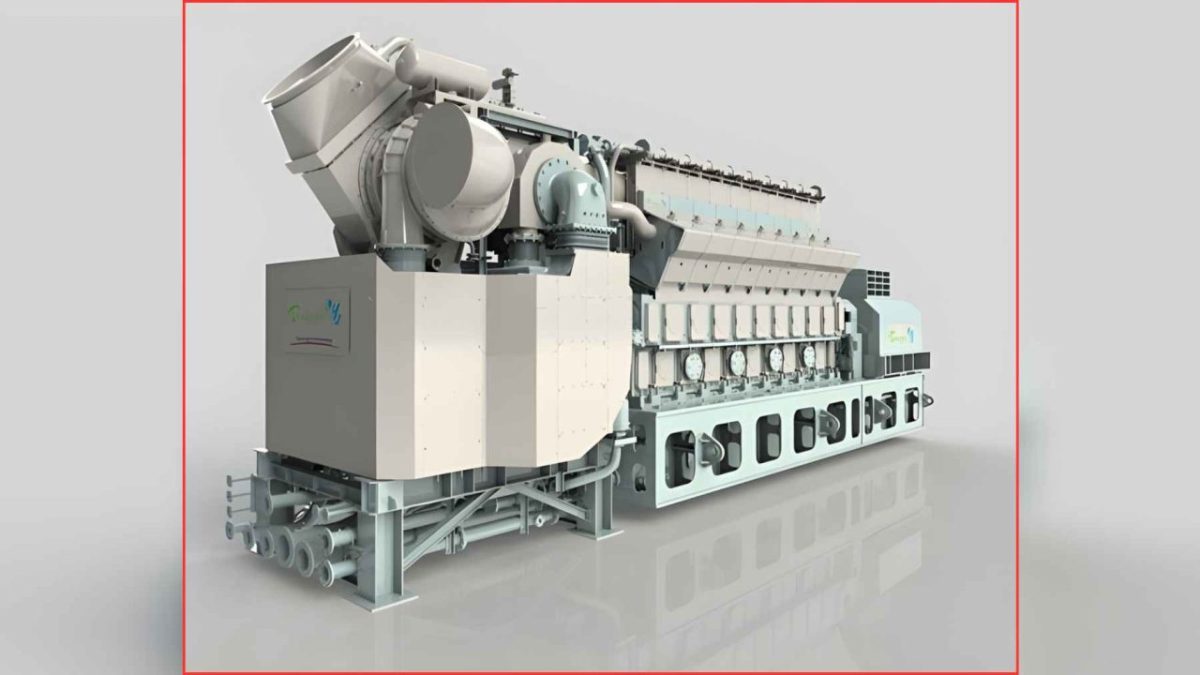
What if you could cut carbon emissions from your power plant without replacing a single pipe, tank, or major piece of equipment? That is exactly the promise behind a new commercial engine Kawasaki Heavy Industries is bringing to market — and it may be the most practical decarbonization tool the energy industry has seen in years.
Japan is set to commercially launch the world’s first large gas engine capable of generating electricity using a fuel mixture containing up to 30% hydrogen by volume blended with natural gas. The engine targets distributed power plants in the eight megawatt class, and orders were quietly opened in late 2025 following nearly a year of real-world operational testing.
This is not a concept or a lab prototype. It has been running. And the fact that it works on existing infrastructure is what makes it worth paying attention to.
What Kawasaki Is Actually Launching — and Why It Took This Long
Kawasaki Heavy Industries built this hydrogen-ready model on its established KG series platform. The decision to use an existing engine family was deliberate — it signals that the technology is meant to slot into current energy infrastructure rather than demand a complete overhaul.
Before opening the order book, the company ran an eleven-month operational trial at its Kobe works facility, beginning in October 2024. The point of that trial was not to prove the concept in controlled lab conditions. It was to see how the system actually behaved under real-world operating conditions — temperature swings, load changes, the kind of stress a working power plant faces every day.
That distinction matters. Many clean energy announcements arrive with impressive lab numbers that quietly fade once they meet reality. Kawasaki’s approach of running the engine in a live industrial environment for nearly a year before accepting commercial orders reflects a more cautious, credibility-first strategy.
The commercial launch is targeted for 2026, and the product comes with both a warranty and an upgrade option — meaning buyers are not locked into a fixed configuration if hydrogen availability or regulations change.
How a 30% Hydrogen Blend Works Without Changing the Pipes
The core appeal of this engine is its compatibility with existing natural gas infrastructure. Operators do not need to replace pipelines, storage tanks, or fuel delivery systems. The engine accepts a blend of natural gas and hydrogen — with hydrogen making up as much as 30% of the mixture by volume — and generates electricity from that combined fuel.
The logic is straightforward: hydrogen produces no carbon dioxide when it burns. So replacing 30% of the natural gas in your fuel mix with hydrogen means a meaningful reduction in CO₂ emissions per kilowatt hour generated, without scrapping equipment that still has years of useful life left.
Supporters of this approach argue that it offers a realistic bridge for industrial operators who cannot afford to shut down functioning plants and rebuild from scratch. Rather than forcing an all-or-nothing transition, it allows incremental decarbonization as hydrogen supply chains develop and costs come down.
Critics of blending strategies have raised questions in the broader energy debate about whether partial hydrogen adoption moves fast enough to meet climate targets — but for plant operators facing real budget constraints, a working, warrantied engine that reduces emissions without a total system replacement is a concrete option that full-replacement strategies often are not.
Key Facts at a Glance
| Detail | Specification |
|---|---|
| Manufacturer | Kawasaki Heavy Industries |
| Engine Platform | KG series |
| Power Class | Eight megawatt (distributed power plants) |
| Maximum Hydrogen Content | 30% by volume (blended with natural gas) |
| Trial Location | Kobe works facility, Japan |
| Trial Duration | Eleven months (starting October 2024) |
| Orders Opened | Late 2025 |
| Commercial Launch Target | 2026 |
| Warranty | Yes, included |
| Upgrade Option | Yes, available |
- The engine is designed for distributed power generation, not centralized grid-scale plants
- Existing natural gas pipelines and storage infrastructure can remain in place
- The blend ratio reduces CO₂ emissions per kilowatt hour compared to pure natural gas combustion
- The upgrade option gives buyers flexibility as hydrogen supply and regulations evolve
Who This Actually Affects — Factories, Plants, and the Grid
The eight megawatt class targets distributed power generation — think industrial facilities, manufacturing campuses, hospitals, data centers, and municipal utilities that generate their own electricity on-site rather than relying entirely on the central grid.
For those operators, the energy transition has often felt like a choice between expensive full replacement or doing nothing. This engine offers a third path: keep your existing gas infrastructure, blend in hydrogen at whatever percentage your local supply allows, and reduce your carbon footprint in a measurable, documented way.
The warranty and upgrade option are particularly significant for industrial buyers who operate on long asset lifecycles. A piece of power generation equipment is not replaced every few years — it runs for decades. Offering an upgrade path means a facility investing in this engine today is not necessarily locked out of higher hydrogen blends or improved efficiency as the technology matures.
For Japan specifically, which imports the vast majority of its energy and has set ambitious decarbonization targets, distributed hydrogen-blended generation represents a way to reduce fossil fuel dependence without waiting for a complete hydrogen economy to materialize.
What Comes Next for Hydrogen-Blended Power
With orders already open and a 2026 commercial launch on the horizon, the immediate next step is market adoption. How quickly industrial buyers commit will depend heavily on the local availability and cost of hydrogen, as well as regulatory frameworks that may offer incentives — or impose requirements — around emissions reduction.
The eleven-month Kobe trial has already answered the fundamental question of whether the engine works in real conditions. The commercial phase will answer a different question: whether the economics make sense at scale for operators outside Japan.
The upgrade option built into the product suggests Kawasaki is anticipating a future where hydrogen blends go higher than 30% as supply chains mature. Whether that future arrives in five years or fifteen remains an open question — but the engine is apparently designed to meet it either way.
Frequently Asked Questions
What is the maximum hydrogen content this engine can use?
The engine can operate on a fuel mixture containing up to 30% hydrogen by volume, blended with natural gas.
Who makes this engine and what platform is it based on?
Kawasaki Heavy Industries produces the engine, which is built on the company’s KG series platform.
Does this engine require new pipelines or fuel storage systems?
According to
How long was the engine tested before commercial orders opened?
Kawasaki ran an eleven-month operational trial at its Kobe works facility, beginning in October 2024, before opening the order book in late 2025.
Does the engine come with a warranty?
Yes, the commercial product includes both a warranty and an upgrade option for buyers.
When will the engine be commercially available?
The commercial launch is targeted for 2026, with orders already accepted as of late 2025.


Leave a Reply