
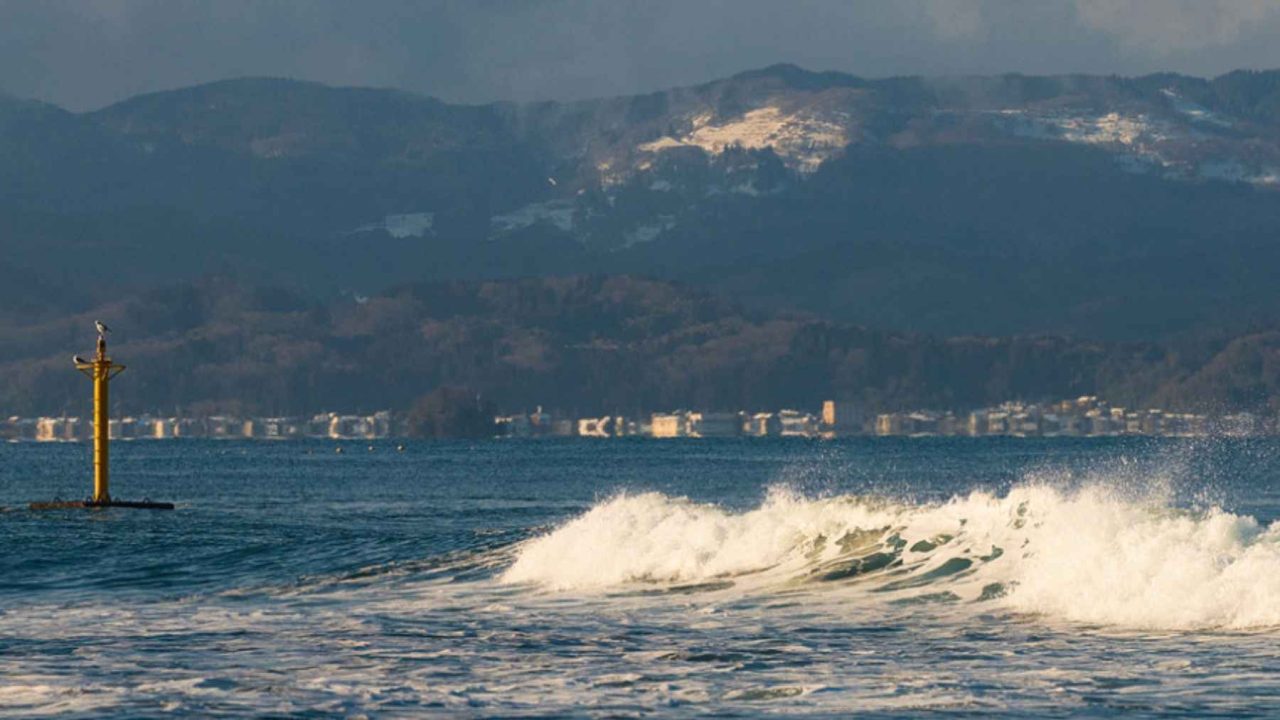
Sea surface temperatures off Japan’s Sanriku coast have been running about 6 degrees Celsius above normal since spring 2023 — and scientists say they are struggling to find the right words to describe what they are watching unfold.
That kind of temperature anomaly is not a rounding error. In one of the world’s most productive fishing regions, it is the kind of shift that rewrites ecosystems, disrupts fishing communities, and ultimately reaches every person who eats seafood. The ocean, researchers say, is not behaving the way it is supposed to.
What is causing this? A powerful ocean current has moved somewhere it does not normally go — and it has been staying there long enough to alarm the scientific community.
Why the Kuroshio Current Suddenly Matters to Everyone
The Kuroshio Current is one of the most powerful ocean currents on Earth, running along Japan’s eastern coastline and carrying warm, salty water northward from the tropics. One of its major branches — the Kuroshio Extension — typically follows a relatively predictable path.
Since spring 2023, that branch has swung unusually far north. The result is that warm, salty subtropical water has been flooding into an area that normally receives colder, fresher water from the north. For the Sanriku coast, that is a fundamental shift in the ocean’s basic chemistry and temperature.
Sanriku is special precisely because it sits at the meeting point of warm southern currents and cold northern ones. That collision of water masses creates a nutrient-rich environment — the kind of productive mixing zone that supports enormous populations of fish and marine life. Disrupt that balance, and you disrupt everything built on top of it.
Researchers have described what is happening there as a marine heatwave — a sustained period of abnormally high ocean temperatures with consequences that ripple through the entire food web.
What the Data Actually Shows
The numbers coming out of the Sanriku region are striking. Here is what But in ocean science, it is enormous. Marine species are highly sensitive to temperature. A shift of even one or two degrees can push fish populations to migrate, disrupt spawning cycles, or cause mass die-offs of species that cannot adapt quickly enough.
- Warm subtropical water is replacing the cold, nutrient-rich water that normally dominates the Sanriku region
- The Kuroshio Extension — a branch of the larger Kuroshio Current — is the direct driver of this shift
- The anomaly has persisted continuously since spring 2023, making it more than a seasonal fluctuation
- Researchers have linked the change to a marine heatwave affecting one of Japan’s most important fishing grounds
The Fishing Communities Feeling It First
For the people who fish the Sanriku coast, the change is not theoretical. Fishers in the region are already reporting unfamiliar catches — species that do not belong in those waters showing up, while the fish they have always relied on become harder to find.
This is how ocean disruption tends to work. Scientists see the temperature data first. Then the fishing communities notice that something is wrong. And eventually, the effects reach markets and dinner tables far from the coast.
Sanriku has historically been one of Japan’s most important fishing regions — not just economically, but culturally. The seafood pulled from those waters is woven into local identity and food traditions built over generations. A sustained marine heatwave threatens all of that.
When warm subtropical species move in and cold-water species move out, fishing fleets built around specific target species face a difficult choice: chase the fish to new locations, or adapt to catching things they have never caught before. Neither option is easy or cheap.
Why Scientists Are Struggling to Find the Right Words
The headline quote attached to this story — “I don’t even know if ‘surprised’ is the right word” — captures something important about where ocean science finds itself right now. Researchers who have spent careers studying these systems are watching events unfold that fall outside the boundaries of what their models and experience prepared them for.
The Kuroshio Current system has always had natural variability. It shifts. It oscillates. That is normal. What is not normal is a branch of that current parking itself in an unusual position for years at a stretch, driving sustained temperature anomalies in a region that the entire ecosystem — and the human communities around it — depends on remaining stable.
Scientists note that the mixing zone off Sanriku, where warm and cold waters meet, is precisely the kind of environment that marine biodiversity depends on. Collapse that mixing zone by flooding it with warm subtropical water, and the ecological consequences can be severe and long-lasting.
What Comes Next — and What Nobody Can Predict Yet
The honest answer is that no one knows exactly how long this anomaly will persist or whether the Kuroshio Extension will return to a more typical path. Ocean current behavior at this scale is influenced by large atmospheric and climate patterns that are themselves shifting.
What researchers are watching for is whether this represents a temporary excursion or something more permanent — a new baseline for the region. If the warm water continues to dominate, the cold-water ecosystem that has supported Sanriku’s fishing industry for centuries may not recover on any human timescale.
For now, scientists are tracking the data, fishing communities are adapting as best they can, and the ocean is doing something nobody fully expected.
Frequently Asked Questions
What is causing the unusually high ocean temperatures off Japan’s Sanriku coast?
Researchers say the Kuroshio Extension — a branch of the powerful Kuroshio Current — has swung unusually far north since spring 2023, pushing warm, salty subtropical water into a region that normally receives colder, fresher water.
How far above normal are the sea surface temperatures in the Sanriku region?
According to
Why is the Sanriku coast considered such an important fishing region?
Sanriku sits at the meeting point of warm southern and cold northern ocean currents, creating a nutrient-rich mixing zone that has historically supported one of the world’s most productive fishing grounds.
Are fishers already seeing the effects of this marine heatwave?
Yes — reports indicate that fishing communities are encountering unfamiliar species in their catches, while traditional target species are becoming harder to find in the affected waters.
Is this ocean temperature anomaly expected to be permanent?
This has not yet been confirmed. Scientists are still determining whether this represents a temporary shift or a longer-term change to the region’s baseline conditions.
What is a marine heatwave, and how does it differ from normal temperature variation?
A marine heatwave refers to a sustained period of abnormally high ocean temperatures — unlike typical seasonal shifts, it persists long enough to fundamentally disrupt marine ecosystems and the species that depend on specific temperature ranges.



Leave a Reply