
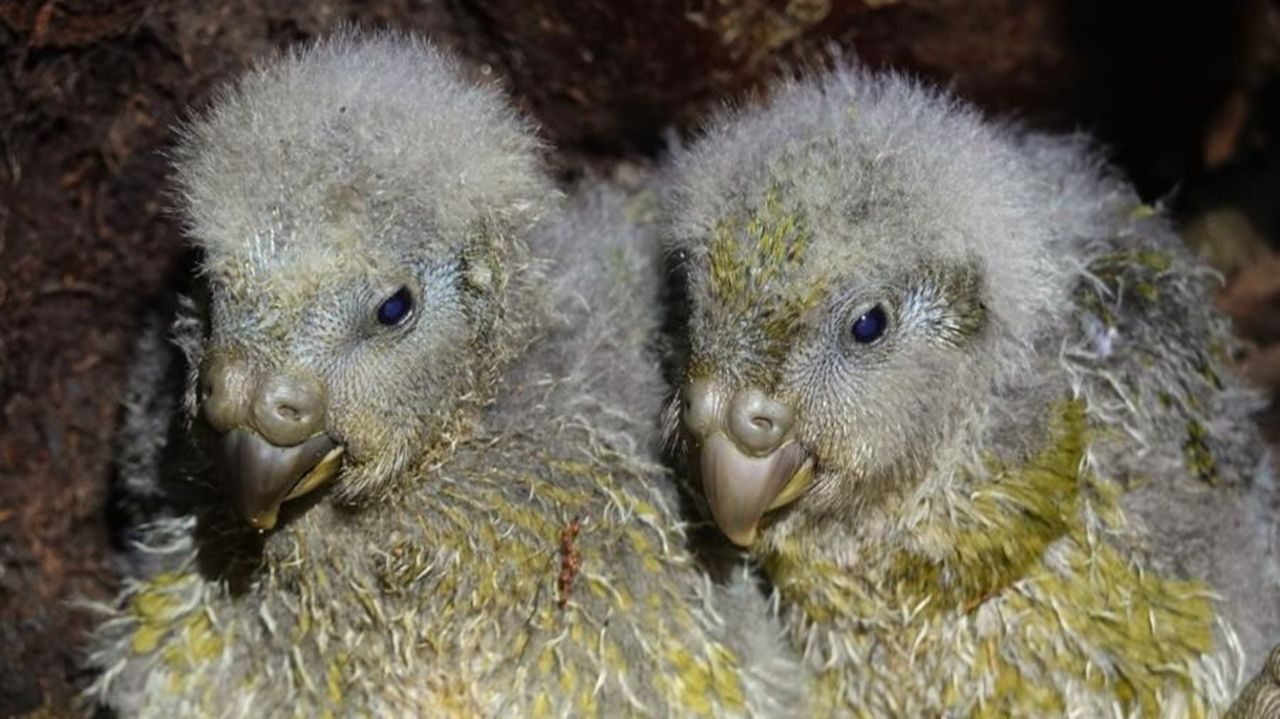
One hundred and five kākāpō chicks have hatched in New Zealand this breeding season — the highest number ever recorded since monitoring began three decades ago. For a bird that once teetered on the very edge of extinction, that number is nothing short of extraordinary.
The milestone was confirmed in an updated chick count released on April 3 by the New Zealand Department of Conservation. Out of 256 eggs laid this season, 105 have successfully hatched, marking a record-breaking moment for one of the world’s most unusual and beloved endangered birds.
It’s the kind of conservation news that doesn’t come around often — and for anyone who has followed the kākāpō’s long, difficult road back from near-oblivion, it feels genuinely significant.
Why the Kākāpō Is Unlike Any Other Bird on Earth
The kākāpō is a parrot unlike anything else in the animal kingdom. It is the world’s heaviest parrot, flightless, and almost entirely nocturnal. Native to New Zealand, it evolved over millions of years in an environment with no land predators, which meant it never needed to fly to escape danger. That worked perfectly — until humans arrived and brought rats, stoats, and cats with them.
By the time serious conservation efforts began roughly 30 years ago, the kākāpō population had collapsed to critically low numbers. The species was on the edge of disappearing forever. What followed was one of the most intensive species recovery programs ever attempted, involving the relocation of every remaining bird to predator-free offshore islands, careful management of breeding, and meticulous egg monitoring.
The kākāpō also breeds in an unusual way — it only reproduces in years when certain native trees produce an abundance of fruit, meaning breeding seasons can be years apart. That makes every successful hatch count even more.
What Made This Breeding Season a Record-Breaker
The numbers from this season tell a compelling story on their own.
| Metric | This Season’s Figure |
|---|---|
| Total eggs laid | 256 |
| Chicks successfully hatched | 105 |
| Record status | Highest hatch count since records began (approx. 30 years ago) |
| Data released | April 3 (updated chick count) |
| Source | New Zealand Department of Conservation |
The 105th chick hatching crossed a threshold that conservationists have never seen before in the recorded history of the program. New Zealand broadcaster RNZ reported the milestone, drawing attention to just how far this species has come since the darkest days of its decline.
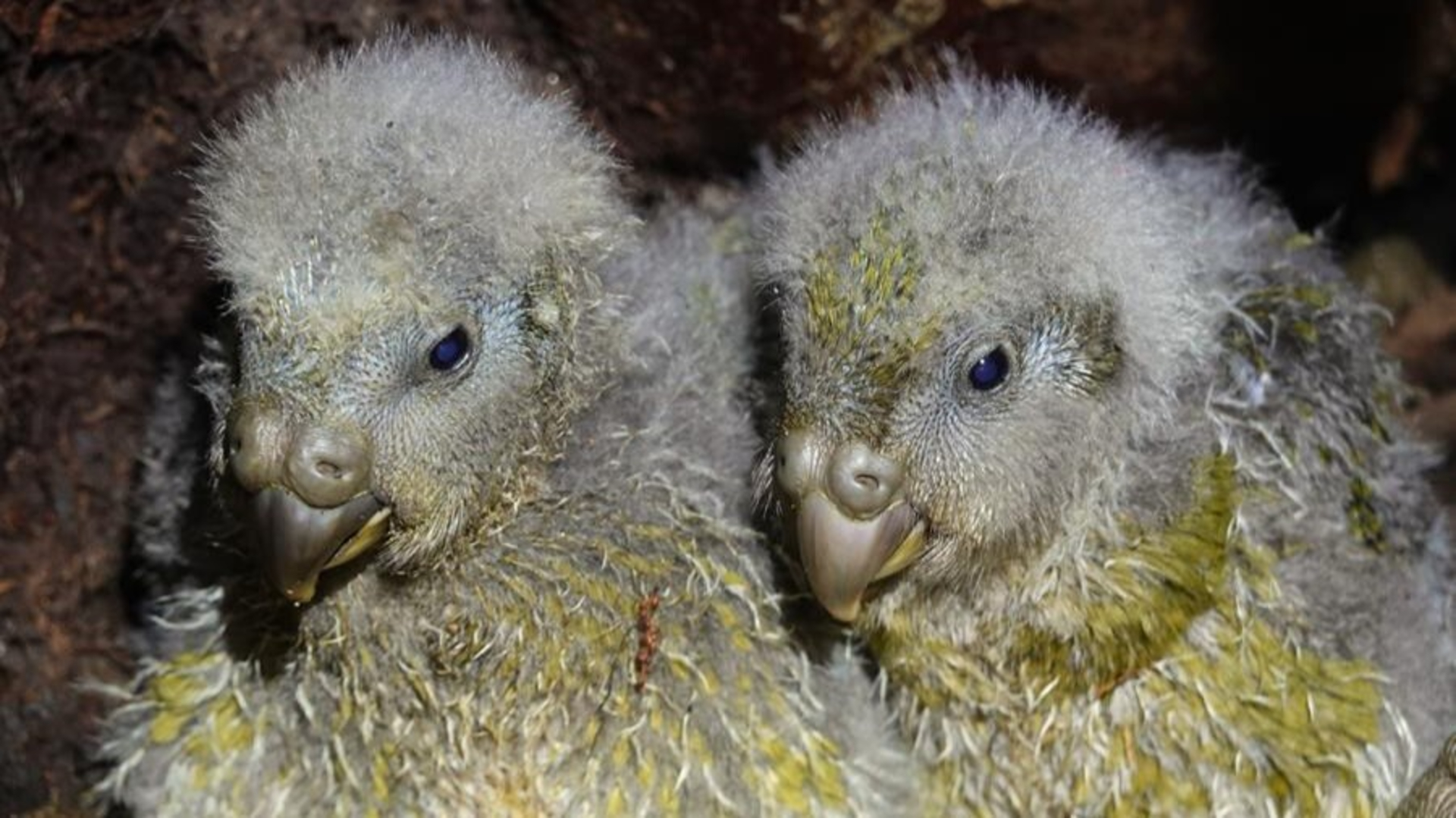
Images released alongside the announcement showed sibling chicks that hatched during the season — small, fluffy, and alive in a way that would have seemed almost impossible to imagine 30 years ago.
The Recovery Program Behind the Numbers
None of this happened by accident. The kākāpō recovery program is one of conservation’s most hands-on efforts anywhere in the world. Every bird is individually named and monitored. Eggs are carefully tracked. Nests on predator-free islands are checked regularly, and human intervention — including supplemental feeding of breeding females and the fostering of eggs between birds — is part of the standard approach.
The program is run by the New Zealand Department of Conservation and has operated for approximately three decades. During that time, it has slowly rebuilt a population that was once so small it could fit inside a single room.
- Kākāpō are housed exclusively on predator-free offshore islands in New Zealand
- Every individual bird in the population is known to conservationists by name
- Breeding seasons are irregular and tied to natural food abundance cycles
- The program uses active management including egg monitoring and supplemental feeding
- The species is classified as critically endangered
The combination of careful island management, intensive monitoring, and decades of sustained commitment has produced this season’s record result. It’s a model that other conservation programs around the world point to when arguing that critically endangered species can be brought back — but only with serious, long-term investment.
Why This Matters Beyond New Zealand
For most people reading this from outside New Zealand, the kākāpō might seem like a distant story about a strange, waddling parrot on a remote island. But what’s happening here has implications that reach well beyond one species or one country.
The kākāpō recovery program is proof that extinction is not always inevitable — that with enough resources, knowledge, and political will, species that appear doomed can be pulled back. At a time when global biodiversity loss is accelerating and conservation budgets are frequently under pressure, that proof matters enormously.
It also matters because the kākāpō is a genuinely irreplaceable creature. There is nothing else like it. Flightless, ancient, and built for a world that largely no longer exists, it carries millions of years of evolutionary history. Losing it would mean losing something that cannot be recreated.
This breeding season’s record hatch count doesn’t mean the kākāpō is safe — the species remains critically endangered, and its population is still very small by any standard. But 105 new chicks is a sign that the trajectory, for now, is pointing in the right direction.
What Comes Next for the Kākāpō
With 105 chicks now hatched, the focus for conservation teams will shift to raising those birds successfully through their vulnerable early months. Young kākāpō require monitoring and care before they can be considered fully independent, and each one represents a meaningful addition to a population that has been rebuilt chick by chick over 30 years.
Officials from the New Zealand Department of Conservation have not yet confirmed full details about next steps for the season, but the record hatch total sets a new benchmark for what the program is capable of achieving.
The next breeding season will again depend on natural food cycles — meaning it could be several years before another opportunity like this one arrives. That makes protecting every one of these 105 chicks all the more critical.
Frequently Asked Questions
How many kākāpō chicks hatched this breeding season?
105 kākāpō chicks hatched this season, according to an updated count released on April 3 by the New Zealand Department of Conservation.
How many eggs were laid this season?
A total of 256 eggs were laid during this breeding season, from which 105 chicks successfully hatched.
Is this a record for the kākāpō recovery program?
Yes. The 105 hatched chicks represent the largest number since records began approximately 30 years ago, according to New Zealand broadcaster RNZ.
Who runs the kākāpō recovery program?
The program is run by the New Zealand Department of Conservation and has been operating for roughly three decades.
Is the kākāpō still endangered?
Yes. Despite this record-breaking season, the kākāpō remains classified as a critically endangered species.
Why doesn’t the kākāpō breed every year?
The kākāpō’s breeding cycle is tied to the availability of certain native fruit, meaning breeding seasons are irregular and can be separated by multiple years.

Leave a Reply