
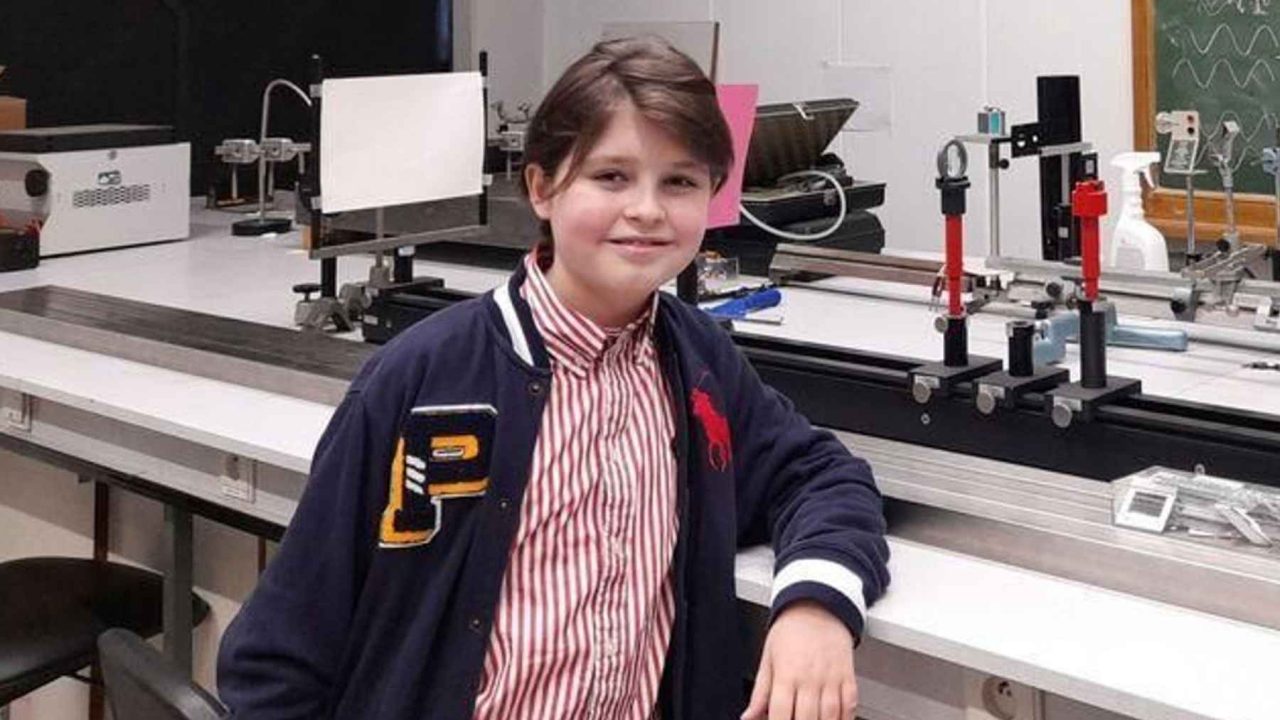
A 15-year-old has just defended a doctoral thesis in quantum physics at the University of Antwerp — and has already moved on to preparing a second doctorate, this one focused on medicine and artificial intelligence, in Munich. That is not a typo. Laurent Simons is, by almost any measure, one of the most extraordinary academic cases in modern history.
What makes this story worth paying attention to is not just the age. It is the deliberate, forward-looking path Simons appears to be building — one that connects cutting-edge physics with two of the fastest-moving fields of our time: AI and medicine. At an age when most teenagers are navigating high school, he is navigating the frontier of human knowledge.
His doctoral defense at Antwerp marks a milestone, but by the time most people read about it, Simons had already relocated to Germany and begun the next chapter.
What Laurent Simons Actually Studied at Antwerp
The title of Simons’ doctoral thesis at the University of Antwerp is listed as “Bose polarons in superfluids and supersolids.” That phrase will mean very little to most readers, so here is what it actually involves.
A Bose polaron is a physics concept that describes how a single impurity — a foreign particle — behaves when it is placed inside a quantum fluid made up of ultracold atoms. These ultracold systems, cooled to temperatures near absolute zero, display strange quantum behaviors that cannot be observed under ordinary conditions. They include superfluids, where matter flows with zero resistance, and supersolids, which combine the rigid structure of a solid with the frictionless flow of a superfluid.
Studying how impurities interact with these exotic states of matter helps physicists understand the deepest rules governing how particles behave at a fundamental level. It is specialized, abstract, and demanding work — the kind that typically takes researchers well into their late twenties or thirties to reach, let alone contribute to.
Simons completed this research and defended it as a doctoral thesis at 15.
The Academic Path That Got Him Here
According to the source reporting, Simons moved through his education at a pace that most school systems are simply not designed to accommodate. He completed high school on an accelerated timeline and entered university-level study far earlier than any standard academic calendar would allow.
The University of Antwerp, in Belgium, is where he pursued and completed his PhD in quantum physics. His research falls within a highly technical subfield of condensed matter and quantum physics — not an area typically associated with introductory or simplified academic work. This was a full doctoral program, with the thesis defense that comes with it.
| Detail | Information |
|---|---|
| Name | Laurent Simons |
| Age at doctoral defense | 15 years old |
| Institution (first doctorate) | University of Antwerp, Belgium |
| Thesis title | Bose polarons in superfluids and supersolids |
| Field | Quantum physics |
| Current location | Munich, Germany |
| Second doctorate focus | Medicine and artificial intelligence |
Why the Move to Munich Changes the Story
If Simons had simply completed a physics doctorate at 15 and stopped there, that alone would be extraordinary. But the more revealing detail in this story is what he chose to do next — and where.
By the time his Antwerp thesis was being finalized, Simons had already relocated to Munich, Germany, where he is now preparing a second doctoral program. This one is focused on medicine and artificial intelligence — two fields that are rapidly converging and producing some of the most consequential research happening anywhere in science right now.
The combination is not accidental. AI is already being applied to medical imaging, drug discovery, early disease detection, and patient outcome modeling. A researcher who brings deep physics training — particularly in quantum systems — into that space could approach problems from angles that most medically trained researchers would not.
Whether that is Simons’ intention is not confirmed in the available reporting. But the trajectory is clear: this is not someone coasting on a single achievement. He is building something deliberately across disciplines.
What This Means Beyond One Exceptional Case
Stories like this one tend to generate two reactions. The first is simple amazement — and that reaction is entirely reasonable. A 15-year-old quantum physics PhD is not something that happens with any regularity in the history of academia.
The second reaction, often from educators and researchers, is more complicated. Cases like Simons raise real questions about how academic institutions identify and support exceptionally gifted young people — and whether the current structure of education is built to help them or simply to slow them down.
Most school systems are designed around age-based cohorts and fixed timelines. A student like Simons does not fit that model. The fact that he reached doctoral-level research in quantum physics before most students have finished secondary school suggests that, at least in some cases, the traditional academic ladder can be climbed far faster than institutions typically allow.
His shift toward medicine and AI also reflects a broader trend in cutting-edge research: the most interesting problems increasingly sit at the intersection of fields, not within any single discipline. Physics, computing, biology, and medicine are bleeding into each other in ways that reward researchers who can move across boundaries.
What Comes Next for Laurent Simons
The immediate next step, according to That process was described as imminent at the time of reporting.
Simultaneously, his second doctoral program in Munich — focused on medicine and artificial intelligence — is already underway. The source does not specify a projected completion date or the name of the institution in Munich where he is enrolled.
What is clear is that Simons is not treating his first doctorate as a destination. For him, it appears to be the starting point of a much longer and more ambitious research career — one that, if it continues at this pace, will be worth watching closely for years to come.
Frequently Asked Questions
How old is Laurent Simons?
Laurent Simons is 15 years old and has just defended his doctoral thesis in quantum physics at the University of Antwerp.
What was his doctoral thesis about?
His thesis was titled “Bose polarons in superfluids and supersolids,” studying how a single impurity behaves inside exotic ultracold quantum matter such as superfluids and supersolids.
Where is Laurent Simons now?
He has relocated to Munich, Germany, where he is preparing a second doctorate focused on medicine and artificial intelligence.
Has he officially received his doctorate from Antwerp yet?
According to the source reporting, the formal conferral of his quantum physics doctorate was imminent at the time the story was published, with his thesis defense already completed.
What institution in Munich is he attending for his second doctorate?
The specific institution in Munich has not been confirmed in the available source material.
Is Laurent Simons the youngest person ever to earn a physics doctorate?



Leave a Reply