
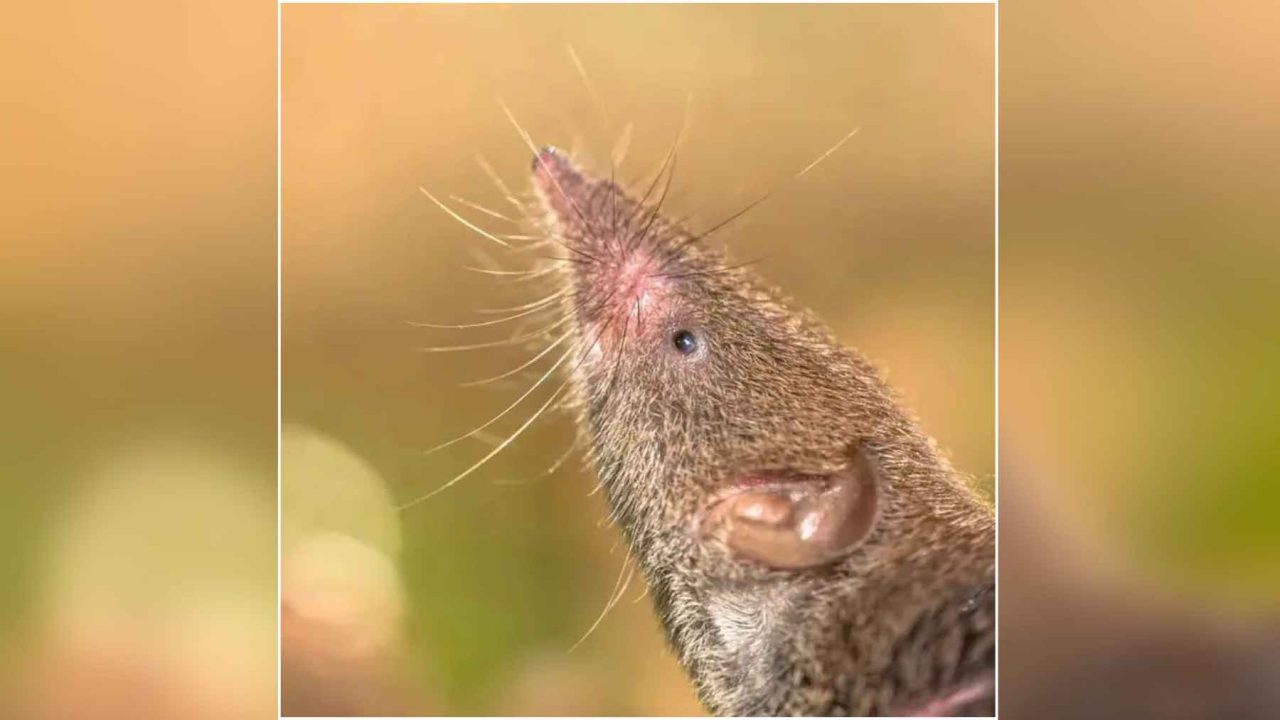
“`html
A new mammal species has been discovered in Ethiopia — and it weighs about as much as a single sugar cube. That’s roughly 3 grams, making it one of the smallest mammals ever documented on Earth.
The animal is a dwarf shrew called Crocidura stanleyi, found in the high plateaus of the Ethiopian Highlands. Its body stretches just 5 centimeters long, it has a short, furry tail, and its flat head makes it look almost too strange to be real. For biologists, the find is both thrilling and humbling — a reminder that even in an age of satellite imaging and genetic sequencing, the planet still hides creatures we’ve never seen before.
The discovery was confirmed by researchers connected to the Swedish University of Agricultural Sciences (SLU), and the story of how it was found is almost as remarkable as the animal itself.
How a Single Bucket Trap Changed Everything
Researcher Yonas Meheretu was working in the field when he made a call that would turn out to be critical. He persuaded the rest of the team to add special pitfall traps — essentially bucket traps set into the ground — designed to catch extremely small animals that standard wildlife survey methods tend to miss entirely.
It was a smart move. Most conventional traps are built with larger targets in mind. Creatures at the very low end of the size spectrum can walk right past them, or through them, undetected. Meheretu suspected there were animals out there that science hadn’t caught yet, quite literally.
In 2023, working at an elevation of more than 2.5 kilometers above sea level on Mount Damota in southern Ethiopia, he looked into one of those buckets and found something no one had formally described before. According to a news release from SLU, Meheretu later said he would never forget that moment.
It’s easy to understand why. Holding a living creature that science has never named — something that fits in the palm of your hand and barely registers on a scale — is the kind of experience that defines a career in field biology.
What We Know About Crocidura stanleyi
The species belongs to the genus Crocidura, a large and diverse group of white-toothed shrews found across Africa, Asia, and Europe. Many members of this genus are already known for being exceptionally small, but Crocidura stanleyi sits at the extreme end of that range.
| Feature | Detail |
|---|---|
| Species name | Crocidura stanleyi |
| Weight | Approximately 3 grams |
| Body length | About 5 centimeters |
| Tail | Short and furry |
| Head shape | Flat |
| Discovery location | Mount Damota, southern Ethiopia |
| Elevation of discovery | More than 2.5 km above sea level |
| Year of discovery | 2023 |
| Confirming institution | Swedish University of Agricultural Sciences (SLU) |
The combination of physical traits — that distinctively flat head, the hairy tail, and the near-weightless body — set it apart from other known shrews in the region. These aren’t just cosmetic differences. In taxonomy, physical characteristics like these are key markers that separate one species from another.
Why Finding a New Mammal Still Matters in 2025
There’s a common assumption that we’ve already catalogued most of the larger life forms on Earth. Birds, mammals, reptiles — surely those are done, right? Not quite.
Mammals are generally better studied than insects or deep-sea organisms, but small, secretive species living in remote highland environments can go undetected for a very long time. The Ethiopian Highlands are ecologically rich and geographically isolated, conditions that tend to produce high levels of endemism — meaning species found nowhere else on Earth.
Shrews in particular are notoriously difficult to survey. They’re fast, they burrow, they prefer dense ground cover, and their tiny size makes them invisible to many standard trapping approaches. Without the kind of targeted effort Meheretu pushed for, Crocidura stanleyi might have remained unknown for years, or decades, longer.
The discovery also raises an important practical question: if this species exists, what else is out there in those highlands that we haven’t found yet? Biologists working in biodiversity-rich regions often describe the sensation of knowing that the full picture is still incomplete — and finds like this one confirm that instinct.
The Broader Significance for Conservation
When a new species is formally described and named, it becomes possible to protect it. Before that, it doesn’t officially exist in the eyes of conservation policy or environmental law. Species like Crocidura stanleyi, living in restricted highland habitats at high elevation, can be especially vulnerable to habitat change, climate shifts, and land use pressure.
The Ethiopian Highlands face ongoing pressures from agriculture and human settlement. A newly identified endemic species living in that ecosystem is, almost by definition, a species that warrants immediate attention from conservationists — not because it’s in confirmed danger, but because its range is likely limited and its population size unknown.
Discoveries like this one serve as a scientific baseline. Before you can monitor a species, track its population, or assess whether it’s declining, you first have to know it exists. That’s what makes the moment Meheretu looked into that bucket trap so significant — it was the first time a human being had knowingly laid eyes on this particular form of life.
What Comes Next for This Tiny Shrew
Now that Crocidura stanleyi has been formally described and confirmed by researchers at SLU, the next steps typically involve broader surveys to understand its distribution, population status, and ecological role. Scientists will want to know whether the Mount Damota population is isolated or whether the species ranges more widely across the Ethiopian Highlands.
Additional specimens and genetic sampling will help clarify how Crocidura stanleyi relates to other shrew species in the region and how long it may have been evolving in isolation. That kind of work takes time, but the formal naming of the species is the essential first step — without it, none of the follow-up research has a foundation to build on.
For now, the world’s newest named mammal weighs 3 grams, lives above the clouds in southern Ethiopia, and was found because one researcher trusted his instincts and asked for better buckets.
Frequently Asked Questions
What is the name of the newly discovered shrew species?
The species is called Crocidura stanleyi, a dwarf shrew found in the Ethiopian Highlands.
How much does Crocidura stanleyi weigh?
It weighs approximately 3 grams — roughly the same as a sugar cube — making it one of the tiniest known mammals on Earth.
Where exactly was the shrew discovered?
It was found on Mount Damota in southern Ethiopia, at an elevation of more than 2.5 kilometers above sea level.
Who discovered the new species?
Researcher Yonas Meheretu first spotted the shrew in a pitfall trap in 2023. The discovery was confirmed with involvement from the Swedish University of Agricultural Sciences (SLU).
What makes this shrew physically distinctive?
It has a flat head, a short hairy tail, and a body length of about 5 centimeters — a combination of traits that sets it apart from other known shrew species in the region.
Why was a special trap needed to find it?
Standard wildlife trapping methods tend to miss extremely small animals. Meheretu pushed for special bucket pitfall traps specifically designed to catch tiny species that ordinary surveys overlook.</p




Leave a Reply