
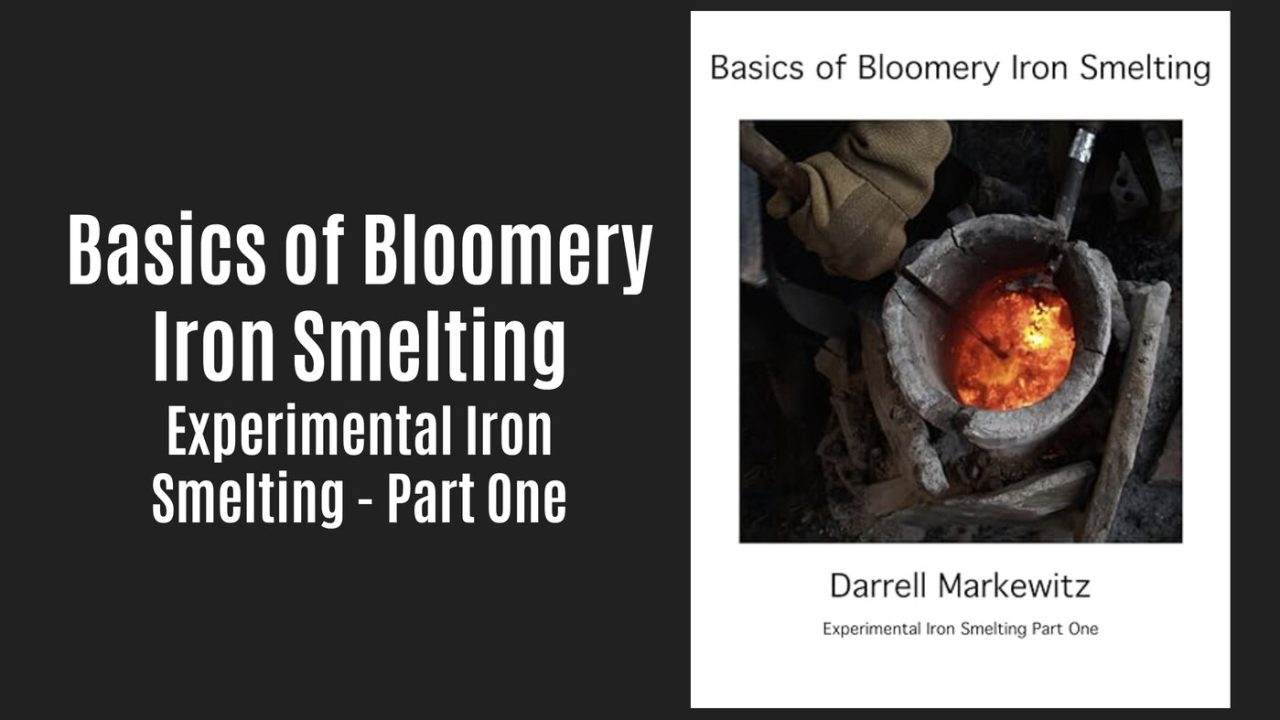
Long before steel mills and industrial furnaces, the iron that built medieval civilization — the swords, plows, nails, and tools that shaped daily life — came from a deceptively simple device: a bloomery. Understanding how that process actually worked has been the life’s work of a small community of experimental archaeologists, and now one of them has put decades of hands-on knowledge into a single book.
Basics of Bloomery Iron Smelting: Experimental Iron Smelting – Part One by Darrell Markewitz, published by The Wareham Forge (ISBN: 978-1-0691597-2-4), is a practical, illustrated guide to one of the most important — and least understood — industrial processes of the ancient and medieval worlds. It is not a history book in the traditional sense. It is something rarer: a working manual grounded in real experimentation, written by someone who has actually built the furnaces and run the smelt.
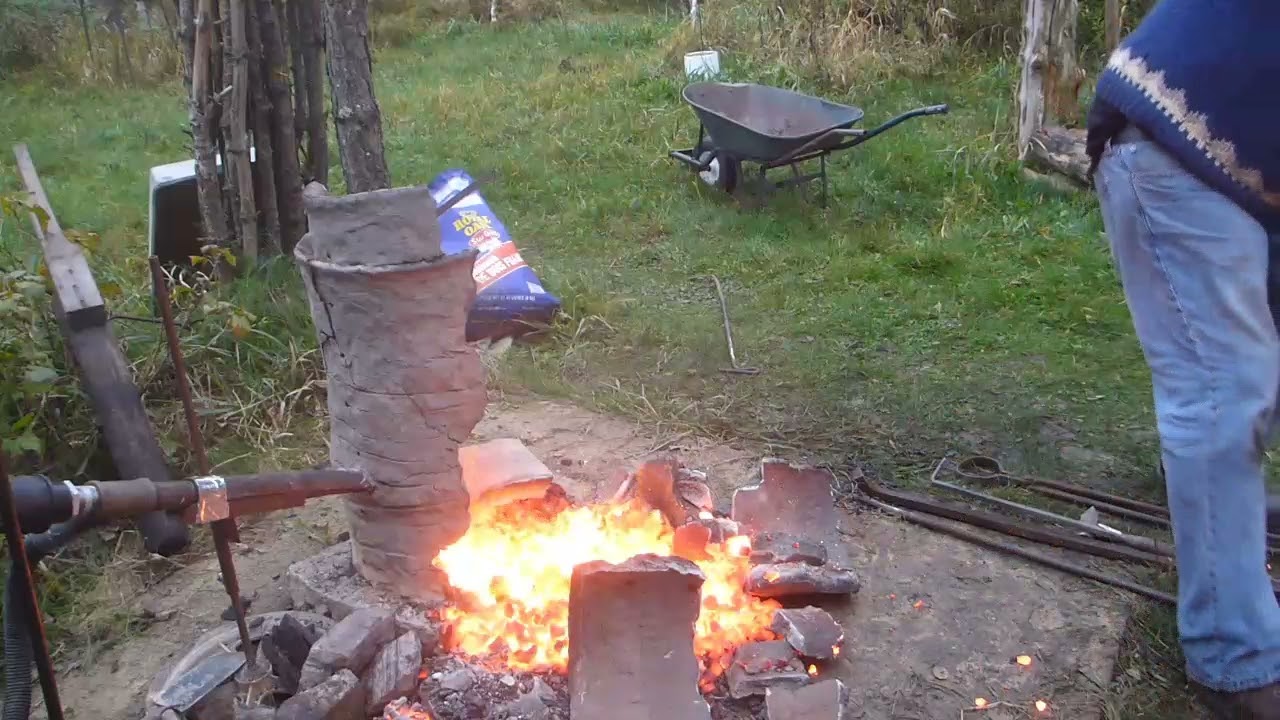
For historians, craftspeople, and anyone curious about how medieval technology actually functioned at ground level, this book arrives as a genuinely useful resource.
What Bloomery Iron Smelting Actually Is — and Why It Mattered
The bloomery is a type of furnace used for thousands of years to convert raw iron ore into workable metal. It predates the blast furnace and was the primary method of iron production throughout much of the ancient and medieval periods. The process is not simple — it requires specific ores, carefully constructed furnaces, controlled heat, and considerable skill to produce usable iron.
Despite its historical importance, bloomery smelting is not widely understood outside specialist circles. Most people’s mental image of medieval ironworking skips directly to the blacksmith hammering at an anvil — the earlier, equally demanding step of actually creating the metal from ore tends to get overlooked.
As Markewitz notes in the book, the process is considerably more involved than popular culture suggests — a point he makes with dry humor by noting it is “more complicated than it appears in Minecraft.”
That gap between popular understanding and technical reality is precisely what the book is designed to close.
What the Book Actually Covers
Markewitz describes the manuscript as intended to fill the gap between “the doer and the thinker” — bridging practical, hands-on experimentation with the kind of reflective, documented knowledge that can outlast the informal channels through which craft knowledge typically travels.
The book’s stated purpose is to preserve what the author calls “a lifetime of independent research, experimentation and observations” in a format that can endure beyond what he describes as “the ethereal nature of the internet” — an honest acknowledgment that much specialist knowledge shared online is fragile and easily lost.
The chapters cover a broad range of practical ground:
- How to build a bloomery furnace
- The types of ores required for smelting
- The tools needed throughout the process
- The various methods used to heat ore and convert it into usable metal
- Illustrated guidance with images and drawings throughout
The book is grounded in experimental archaeology — a discipline that reconstructs historical processes through direct, physical replication rather than purely textual or archival research. That approach gives it a credibility and specificity that purely academic treatments of the subject often lack.
Who Should Read This — and Who It’s Really For
This is not a light read for casual history fans. The book is, by its own description, technical. Medieval historians who focus on politics, culture, or social history may find it more detailed than they strictly need. But for anyone who wants to genuinely understand how medieval blacksmiths worked — not just in broad strokes, but in the actual physical reality of the craft — it offers something hard to find elsewhere.
| Reader Type | How Useful Is This Book? |
|---|---|
| Medieval technology enthusiasts | Highly valuable — directly relevant to the subject |
| Experimental archaeologists | Core reference material from a practitioner |
| Blacksmiths and craftspeople | Practical hands-on guidance with illustrated support |
| General medieval historians | More technical than most will need, but still valuable |
| Casual history readers | Accessible in places, but primarily a specialist text |
The rich illustrations — described as including both photographs and drawings — make the technical content significantly more accessible than a text-only treatment would be. Visual guides to furnace construction and ore preparation are the kind of thing that words alone struggle to convey.
Why This Kind of Knowledge Is Worth Preserving
There is something quietly urgent about a book like this. Experimental archaeology — the practice of reconstructing ancient and medieval processes through direct replication — depends on practitioners who are willing to invest years, sometimes decades, in mastering techniques that have no modern commercial application.
Markewitz has done exactly that. The knowledge documented in this book did not come from libraries alone. It came from building furnaces, sourcing ores, running smelt after smelt, and recording what worked and what did not. That kind of embodied, practical knowledge is genuinely difficult to pass on, and all too easy to lose when a practitioner is no longer active.
By committing that knowledge to a printed, documented format — rather than leaving it scattered across websites and forum posts — the book performs a real preservation function, independent of its value as a how-to guide.
For the field of medieval studies more broadly, books like this serve as a reminder that understanding the Middle Ages is not only a matter of reading chronicles and charters. The physical world that medieval people inhabited — the tools they used, the metals they worked, the furnaces they built — deserves the same careful attention.
Frequently Asked Questions
What is a bloomery, and how was it used in medieval ironworking?
A bloomery is a type of furnace used to convert raw iron ore into workable metal. It was the primary iron-production method used throughout much of the ancient and medieval periods.
Who wrote Basics of Bloomery Iron Smelting?
The book was written by Darrell Markewitz and published by The Wareham Forge, with ISBN 978-1-0691597-2-4.
Is this book suitable for readers without a technical background?
The book is described as more technical than many medieval historians may need, though it is noted as valuable for anyone seeking a fuller understanding of how blacksmiths worked.
What topics does the book cover?
Chapters cover how to build a bloomery furnace, the ores and tools required, and the various methods used to heat ore and convert it into usable metal, supported by illustrations and drawings throughout.
What approach does the book take to its subject matter?
The book is grounded in experimental archaeology, drawing on what the author describes as a lifetime of independent research, experimentation, and observation.
Is this the only volume in the series?
The subtitle identifies this as “Experimental Iron Smelting – Part One,” suggesting additional volumes are planned, though further details have not been confirmed in the available source material.

Leave a Reply