
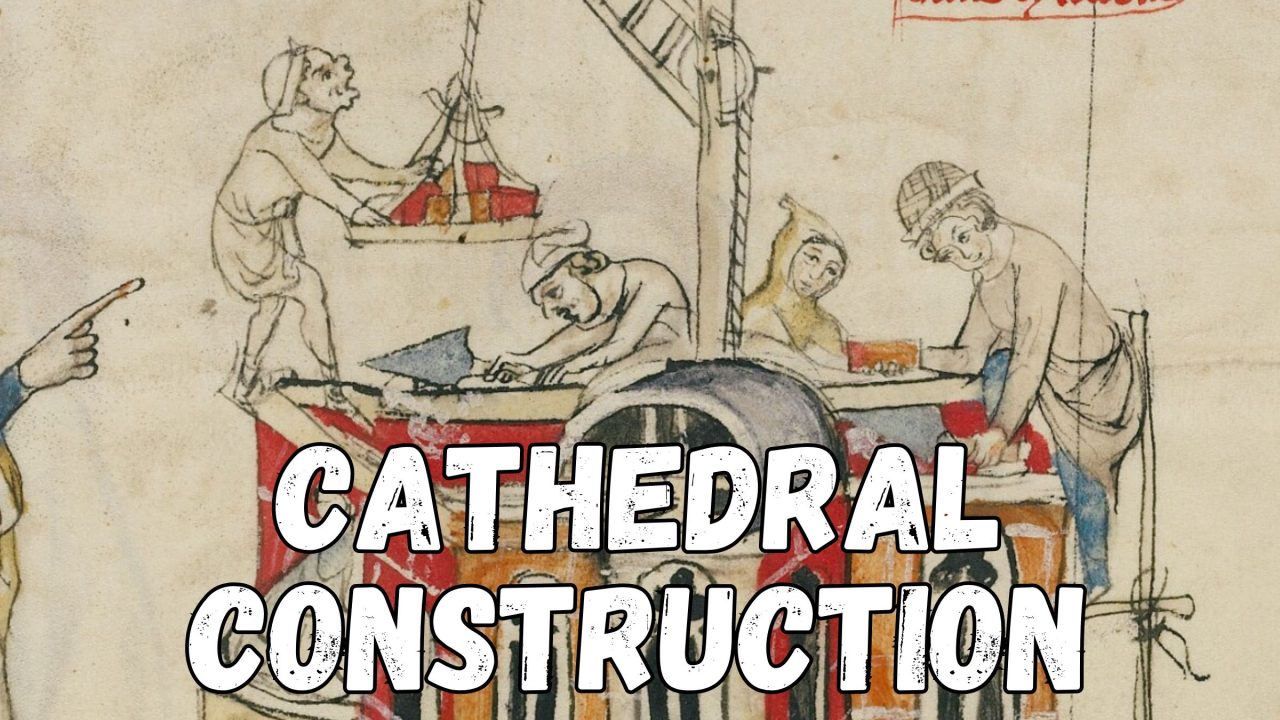
The towering stone walls, soaring vaults, and intricate facades of medieval cathedrals have long inspired a particular image: vast, chaotic worksites swarming with hundreds of labourers, all toiling together across generations to raise these monuments to the sky. That image, it turns out, is almost certainly wrong.
Historical evidence from Girona Cathedral in Spain suggests that the reality of medieval cathedral construction was far more modest — and in many ways more remarkable — than the popular myth. The workforce that built these enduring structures was, by most modern estimates, surprisingly small.
The question of how many workers actually built a medieval cathedral is more than a historical curiosity. It reshapes how we understand medieval labour, organisation, and the extraordinary skill concentrated in relatively few hands.
Where the Myth of the Massive Workforce Came From
Much of the popular imagination around cathedral building was shaped by nineteenth-century historians. Jules Michelet, among others, helped construct a romantic vision of the medieval worksite as a place of collective, almost spiritual mass labour — hundreds of devoted workers united in faith and purpose, raising stone toward heaven.
It is a compelling image. And for monuments that have stood for six, seven, or eight centuries, it feels intuitively right. Surely something this large, this complex, this permanent must have required an army to build.
But historians who have gone back to the primary sources — the actual financial records kept during construction — tell a very different story.
What the Records of Girona Cathedral Actually Show
The cathedral in Girona, located in northeastern Spain, provides one of the most detailed windows into medieval construction practices available to researchers. The key sources are the accounts kept by the fabrique — the administrative body responsible for managing the building works.
These records are exceptionally detailed. They include weekly lists of workers employed on the site throughout the fifteenth century, giving historians a granular, near-complete picture of the workforce across decades of construction.
From these accounts, researchers can calculate several distinct types of workforce figures:
- The total number of individual workers recorded over time
- Extrapolated annual totals for periods where only partial accounts survive
- The average number of workers employed per year, standardised across a fifty-two week calendar
That last figure — the average annual workforce — is arguably the most revealing. It strips away the noise of peak periods and slow seasons to show what the typical, day-to-day worksite actually looked like. And according to the Girona evidence, that number was far smaller than most people would guess.
Written by researcher Lorris Chevalier and published by Medievalists.net, the analysis of Girona’s construction records makes clear that the cathedral’s workforce was not the teeming multitude of popular imagination but something considerably more contained.
Why Smaller Workforces Make Historical Sense
Once you step away from the romantic myth, a smaller workforce actually makes a great deal of practical sense for several reasons.
Medieval construction was not a matter of brute manpower alone. The work demanded highly skilled craftsmen — master masons, stonecutters, carpenters, and glaziers — whose expertise could not simply be multiplied by adding more bodies. Quality work in stone required precision, and precision required experience.
The financial realities of cathedral building also imposed limits. The fabrique had to manage income from donations, rents, and bequests against the ongoing cost of wages, materials, and equipment. Payroll was a constant constraint. Weekly wage records like those from Girona reflect not just who worked, but what the building fund could actually sustain.
Construction also moved in phases. Foundations, walls, vaulting, and finishing work each required different skills and different numbers of workers. The site might be relatively busy during one phase and nearly quiet during another.
What This Tells Us About Medieval Building Practices
The Girona records offer a model for understanding medieval cathedral construction more broadly. Rather than a single enormous push of mass labour, these projects unfolded over long periods — sometimes more than a century — sustained by a relatively small, skilled core workforce that expanded and contracted as the work demanded.
| Data Type | What It Measures | Source |
|---|---|---|
| Total workers recorded | All individuals named in accounts over time | Girona fabrique records |
| Extrapolated annual totals | Estimated figures where partial records survive | Girona fabrique records |
| Average annual workforce | Mean workers per year, standardised over 52 weeks | Girona fabrique records |
The administrative sophistication behind these records is itself notable. The fabrique maintained detailed weekly accounts across decades of the fifteenth century — a level of bureaucratic organisation that challenges older assumptions about medieval institutional capacity.
These were not chaotic worksites managed by instinct. They were carefully administered projects, tracking labour costs with a precision that modern researchers can still read and analyse centuries later.
Why This Research Still Matters Today
Understanding the true scale of medieval cathedral workforces matters beyond historical accuracy. It changes how we think about the people who actually built these structures — not as an anonymous, interchangeable mass, but as a relatively small group of skilled specialists whose individual contributions were tracked, paid, and recorded.
It also raises questions about other great medieval building projects. If Girona Cathedral was constructed by a workforce smaller than most people imagine, what does that imply about other cathedrals across Europe? Were they similarly lean operations, sustained by skill and continuity rather than sheer numbers?
The Girona records are unusually complete, which is precisely why they offer such a valuable case study. Most medieval building accounts are fragmentary at best. Where detailed records do survive, they consistently push back against the myth of the teeming worksite.
The cathedrals still stand. The workforce that built them was smaller, more skilled, and more carefully organised than the nineteenth-century romantics imagined — and that, in its own way, makes the achievement even more impressive.
Frequently Asked Questions
How do historians know how many workers built medieval cathedrals?
The most reliable evidence comes from financial accounts kept by the fabrique, the administrative body that managed construction. In Girona’s case, these records include detailed weekly lists of workers employed on the site.
What is the fabrique?
The fabrique was the administrative body responsible for managing the building works of a medieval cathedral, including keeping financial accounts and paying workers.
Why did the myth of huge cathedral workforces develop?
Much of it was shaped by nineteenth-century historians such as Jules Michelet, who depicted cathedral building sites as vast spaces filled with hundreds of devoted labourers — a romantic image that proved enduring but historically inaccurate.
Which cathedral is used as the main case study in this research?
Girona Cathedral in Spain is the primary example, chosen because its fifteenth-century fabrique records are exceptionally detailed and provide weekly workforce data across many years of construction.
Does a smaller workforce mean cathedral construction was less impressive?
Most historians would argue the opposite — a smaller, highly skilled workforce achieving these results over sustained periods makes the accomplishment arguably more remarkable, not less.
Can the Girona findings be applied to other medieval cathedrals?
The Girona records are unusually complete, making direct comparisons difficult. However, researchers note that detailed records from other sites tend to similarly challenge the assumption of large workforces.


Leave a Reply