
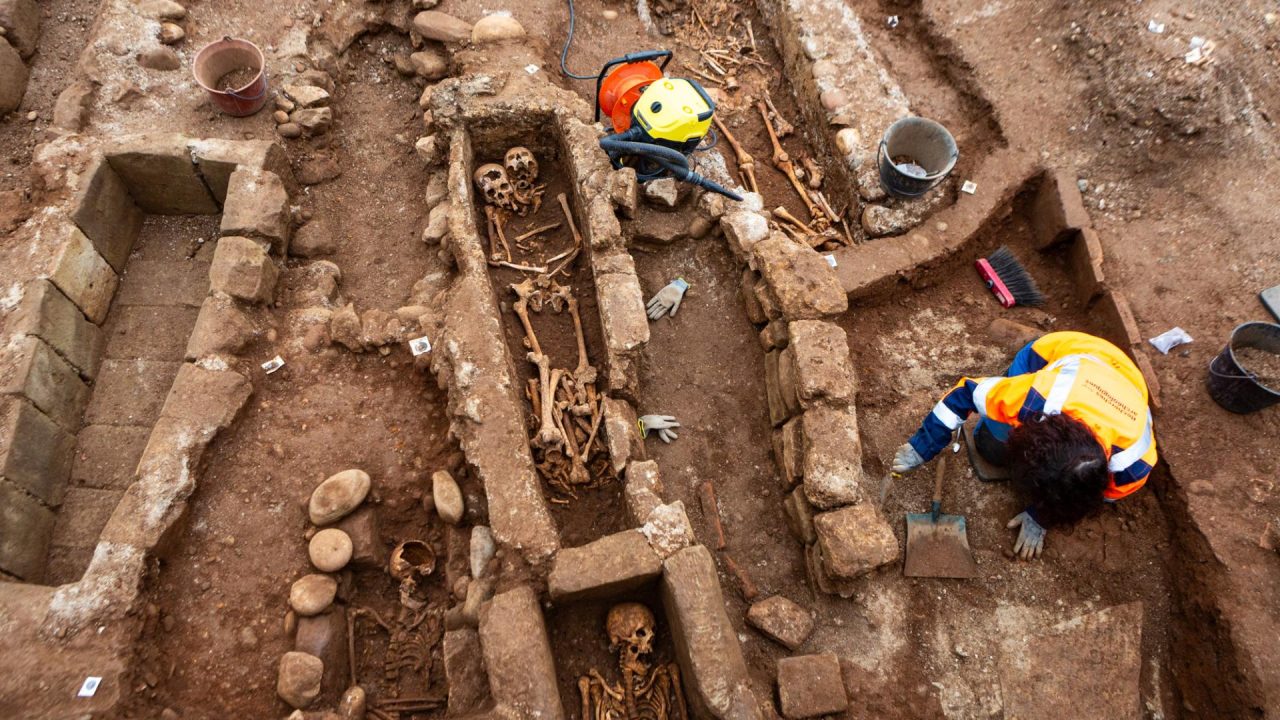
More than 200 graves and the remains of a forgotten religious building have been pulled from the earth beneath a street in southern France — a discovery that is quietly rewriting what historians thought they knew about early Christian life in the region.
The site, on Rue Peloux in the city of Valence, came to light after a chance find reported at the end of 2024. What began as an initial assessment quickly grew into a full-scale excavation, and what archaeologists found beneath the surface was far more significant than anyone had anticipated.
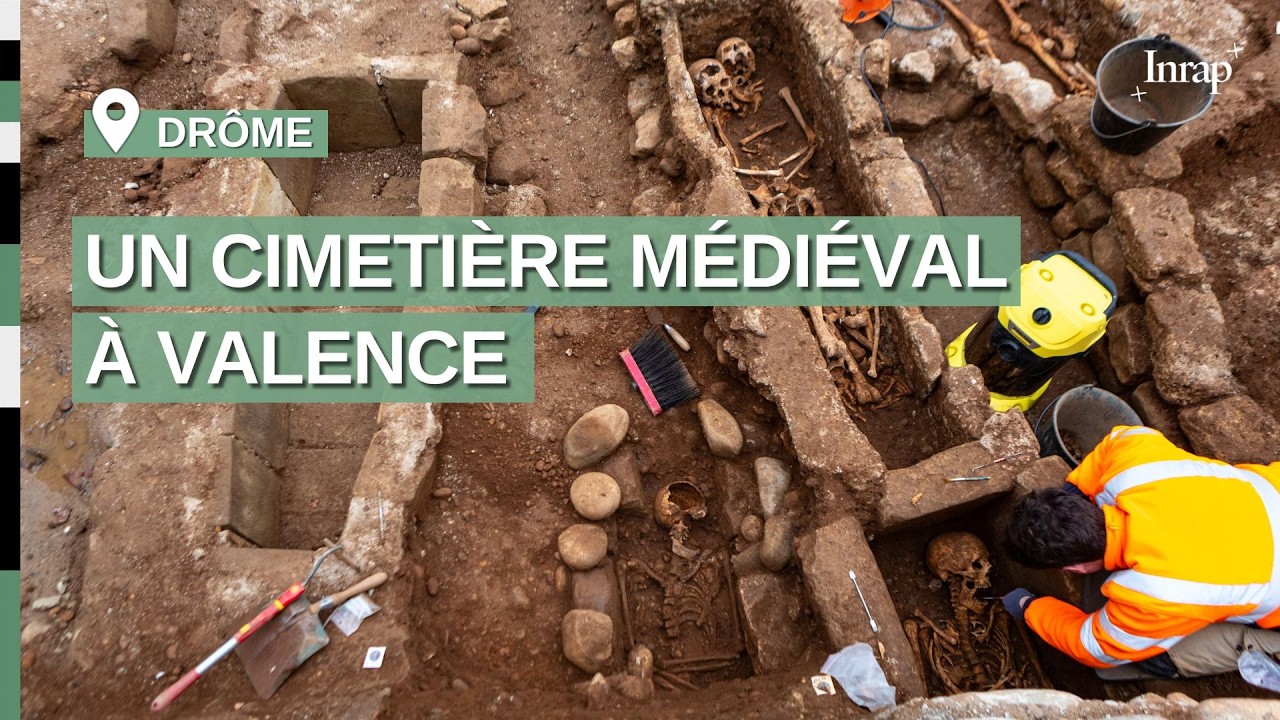
This is one of those rare moments when a single dig opens a window onto an entire era — and the early medieval world that’s emerging from the ground in southeastern France is proving to be richer and more complex than the historical record had suggested.
How a Chance Discovery Became a Major Medieval Excavation
When the regional archaeology service — known as DRAC Auvergne-Rhône-Alpes — first assessed the Rue Peloux site, they recognized immediately that something significant lay beneath it. That initial review led to a full excavation carried out by INRAP, France’s national institute for preventive archaeological research, beginning last October.
What the team uncovered exceeded expectations on nearly every front. Over 200 graves were identified across the site, representing a large early Christian burial ground that had remained hidden for centuries beneath the streets of modern Valence. Alongside the cemetery, archaeologists also found the structural traces of a substantial building — one that had been almost entirely dismantled in later centuries, its stones stripped away and reused elsewhere.
The loss of those materials made reconstruction difficult, but not impossible. Working from the surviving traces left in the ground, the team was able to piece together the building’s original layout with considerable detail.
What the Medieval Basilica Actually Looked Like
Despite the extensive spoliation — the deliberate removal of stone for reuse, a common practice throughout the medieval period — archaeologists were able to reconstruct much of the structure’s original form. The building faced east, as was typical of early Christian religious architecture, and featured a nave and transept measuring approximately 4 metres in width.
Its estimated total length was around 22 metres, making it a substantial structure for its era. Most striking of all was its apse design: a triple semicircular arrangement that is relatively unusual and architecturally significant.
- The central apse measured approximately 4.5 metres in diameter
- A smaller northern apse measured around 3 metres in diameter
- Two of the three apses were identified through spoliation trenches — the negative impressions left behind after stone was removed
- The building was oriented east-facing, consistent with early Christian worship traditions
- The nave and transept were approximately 4 metres wide, with a total estimated length of 22 metres
The triple-apse design in particular has drawn attention from researchers. While the exact function of the building has not yet been definitively confirmed, its architectural features are strongly associated with early Christian worship or burial practices — and possibly both.
Key Measurements at a Glance
| Feature | Measurement |
|---|---|
| Total estimated building length | ~22 metres |
| Nave and transept width | ~4 metres |
| Central apse diameter | ~4.5 metres |
| Northern apse diameter | ~3 metres |
| Number of graves uncovered | Over 200 |
| Excavation start date | October (following 2024 discovery) |
Why This Discovery Matters Beyond Valence
Finds like this one matter for reasons that go well beyond local history. Early medieval religious buildings in France were frequently dismantled, built over, or simply forgotten as cities evolved across the centuries. Written records from the period are sparse, and physical evidence is often fragmentary at best.
A site that preserves both a large burial ground and the architectural footprint of a previously unknown religious structure gives researchers a rare opportunity to study how early Christian communities organized themselves — how they buried their dead, how they constructed their places of worship, and how those spaces related to one another.
The triple-apse design of the Valence building, if confirmed as a basilica, would place it within a specific and relatively rare tradition of early Christian architecture. Researchers note that the combination of an extensive cemetery alongside such a structure is consistent with patterns seen at other significant early medieval religious sites across Europe.
For the city of Valence itself, the discovery fills a genuine gap. The early medieval history of this part of southeastern France has been difficult to trace through the archaeological record, and the Rue Peloux site now offers a concrete, physical connection to that era.
What Researchers Are Still Working to Confirm
The excavation is ongoing, and several key questions remain open. The exact function of the building — whether it served primarily as a place of worship, a funerary basilica, or some combination of the two — has not yet been definitively established. Dating of the graves and structural remains will be critical to building a fuller picture.
Archaeologists from INRAP continue to analyze the site, and further findings are expected as the work progresses. The scale of what has already been uncovered suggests that Rue Peloux will remain a focus of serious scholarly attention for some time to come.
Frequently Asked Questions
Where exactly was this medieval cemetery and basilica discovered?
The site was found on Rue Peloux in the city of Valence, in southeastern France.
How many graves were uncovered at the site?
Archaeologists have uncovered over 200 graves at the Rue Peloux excavation site.
Who is carrying out the excavation?
The full excavation is being carried out by INRAP, following an initial assessment by the regional archaeology service DRAC Auvergne-Rhône-Alpes.
What makes the building’s architecture significant?
The structure features a triple semicircular apse design — including a central apse of approximately 4.5 metres and a smaller northern apse of around 3 metres — which is considered relatively unusual for early medieval religious buildings.
Has the building been definitively identified as a basilica?
Not yet. While its architectural features are consistent with early Christian worship or burial practices, the exact function of the building has not been officially confirmed by researchers.
When was the discovery first made?
The chance discovery was reported at the end of 2024, with the full INRAP excavation beginning the following October.


Leave a Reply