
“`html
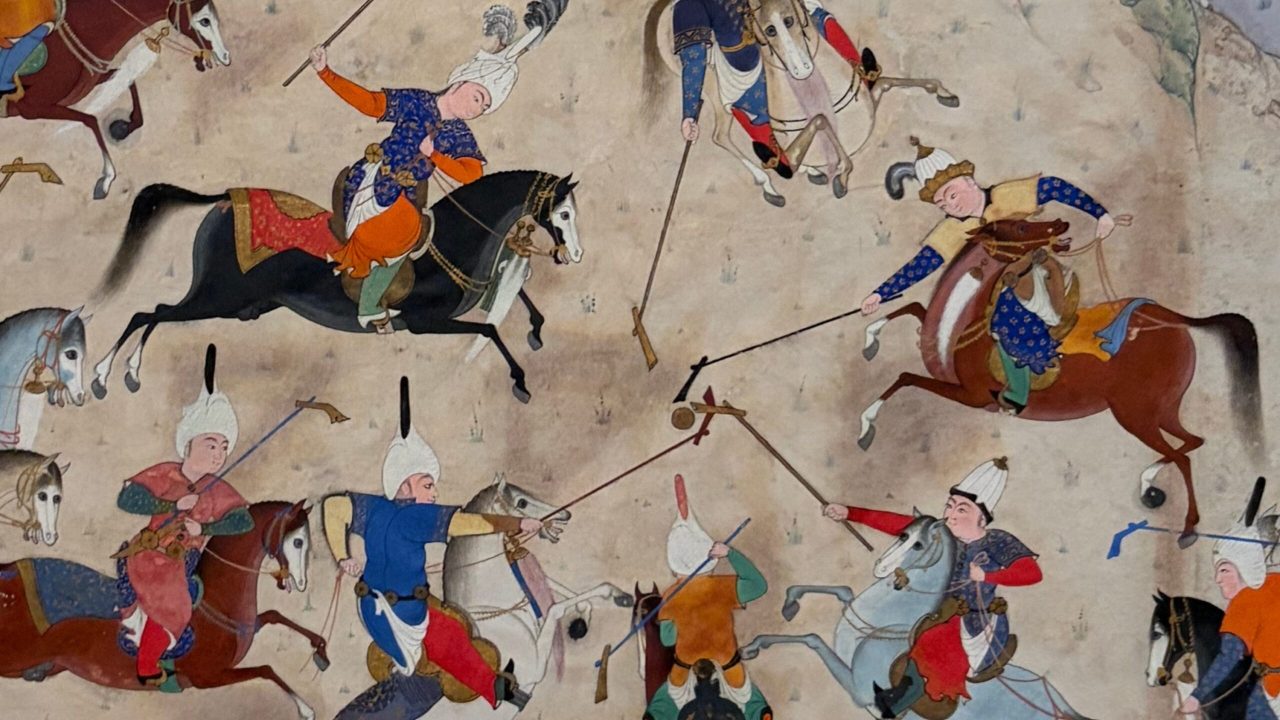
More than 100 objects — including rare medieval artefacts spanning centuries and continents — are now on display at a new exhibition in Toronto that asks a surprisingly profound question: what can the games people played a thousand years ago tell us about who they were, how they connected, and what they valued?
Game On! at the Aga Khan Museum opened its doors to the public, bringing together medieval board games, physical contests, and storytelling traditions to trace how play moved across cultures, borders, and languages long before the modern world existed. The exhibition is rooted in the Islamic world and its neighbours, but its reach extends far wider than any single civilization.
https://www.instagram.com/reel/DWsAGUGDSzJ/
https://www.instagram.com/reel/DWr_DISjY9M/
For anyone who assumed games were a modern obsession, this exhibition makes a compelling case that humanity’s love of play is ancient, universal, and deeply meaningful.
What the Exhibition Actually Shows
At its core, Game On! is about cultural exchange. The Aga Khan Museum has assembled more than 100 objects that together map the journey of games across regions and centuries — showing how a board game invented in one part of the world could travel thousands of miles and take root in an entirely different society.
The medieval material is particularly striking. Among the standout pieces is a 12th-century chess set from Iran, one of the earliest surviving examples of the game. Chess itself tells one of history’s great stories of cultural transmission — originating in India, spreading through Persia and the Islamic world, and eventually reaching medieval Europe, where it became a fixture of courtly life.
That single object encapsulates what the entire exhibition is trying to say: games are not trivial. They carry ideas, values, and social structures with them as they travel. When a new culture adopts a game, it often adapts it too — reshaping the rules, the pieces, and the meaning to fit its own world.
“Games have long brought people together across cultures and centuries, creating shared experiences that connect us beyond borders, languages, and differences. Whether played on boards, performed through physical skill, explored via the spoken or written word, or navigated in digital worlds, games carry educational, symbolic, and social roles that shape how we learn, connect, and make meaning through play.” — Bita Pourvash, Curator, Aga Khan Museum
Medieval Pastimes at the Heart of the Display
The exhibition’s medieval section is where the historical depth really comes through. Games in the medieval Islamic world were far more than entertainment — they were embedded in daily life, used to teach strategy and ethics, and treated as legitimate expressions of culture and intellect.
Strategy and skill were central to the games that survived. Chess was prized precisely because it rewarded careful thinking and planning. Physical competitions tested strength and coordination. Word games and storytelling traditions carried moral lessons alongside their entertainment value.
What the exhibition reveals is that these weren’t isolated pastimes. They were the connective tissue of social life — the way people across different classes, regions, and backgrounds found common ground.
Key Facts About the Game On! Exhibition
| Detail | Information |
|---|---|
| Exhibition title | Game On! |
| Venue | Aga Khan Museum, Toronto |
| Number of objects on display | More than 100 |
| Notable medieval artefact | 12th-century chess set from Iran |
| Curator | Bita Pourvash |
| Focus regions | Islamic world and neighbouring societies |
| Themes covered | Board games, physical skill, storytelling, digital play |
- The exhibition spans a wide chronological range, from medieval artefacts to digital-era games
- Objects were selected to highlight games as tools of cultural exchange, not just entertainment
- The 12th-century Iranian chess set is among the earliest surviving examples of the game in existence
- The display explores games across multiple formats: board games, physical competitions, spoken and written word games
- The curatorial focus emphasises educational, symbolic, and social dimensions of play
Why This Story Reaches Beyond the Museum Walls
It would be easy to see an exhibition about medieval games as a niche academic exercise. But the argument Game On! is making has real resonance today, especially at a moment when cultural division feels like a defining feature of public life.
The exhibition’s central claim — that games create shared experiences that cross borders, languages, and differences — is backed by a thousand years of evidence. The chess set from 12th-century Iran didn’t stay in Iran. It travelled. People who had never met, who spoke different languages and followed different faiths, sat across from each other and played the same game.
That’s not a small thing. And the Aga Khan Museum, which is itself dedicated to exploring the arts and cultures of Muslim civilizations and their connections to other traditions, is a fitting home for an exhibition making exactly this point.
For visitors in Toronto, the exhibition offers something rare: a chance to hold history at arm’s length and see it clearly. Medieval people weren’t so different from us. They competed. They played. They used games to build relationships and pass down knowledge. The objects on display are the proof.
What Comes Next for Visitors and the Exhibition
The exhibition is now open to the public at the Aga Khan Museum in Toronto. Given the breadth of the collection — more than 100 objects covering centuries of human play — it offers multiple visits’ worth of material for anyone with a serious interest in medieval history, Islamic art, or the cultural history of games.
The museum has framed Game On! as a broad exploration that doesn’t stop at the medieval period. The display extends into the present, connecting ancient pastimes to digital gaming and contemporary play culture. That arc — from a 12th-century Iranian chess set to the modern screen — is the exhibition’s most ambitious move, and one that gives even casual visitors a reason to engage.
Specific dates for the exhibition’s run have not been confirmed in available reporting, so prospective visitors are advised to check directly with the Aga Khan Museum for scheduling details.
Frequently Asked Questions
Where is the Game On! exhibition being held?
The exhibition is at the Aga Khan Museum in Toronto, Canada.
How many objects are featured in the exhibition?
More than 100 objects are on display, including rare medieval artefacts.
What is the most notable medieval artefact in the exhibition?
A 12th-century chess set from Iran is highlighted as one of the earliest surviving examples of the game.
Who curated the Game On! exhibition?
The exhibition was curated by Bita Pourvash of the Aga Khan Museum.
Does the exhibition only cover medieval games?
No — while medieval material is a highlight, the exhibition spans a wide chronological range and includes connections to digital and contemporary gaming culture.
How long will the exhibition run?
Specific closing dates have not been confirmed in available reporting; visitors should check directly with the Aga Khan Museum for current scheduling information.</p


Leave a Reply