
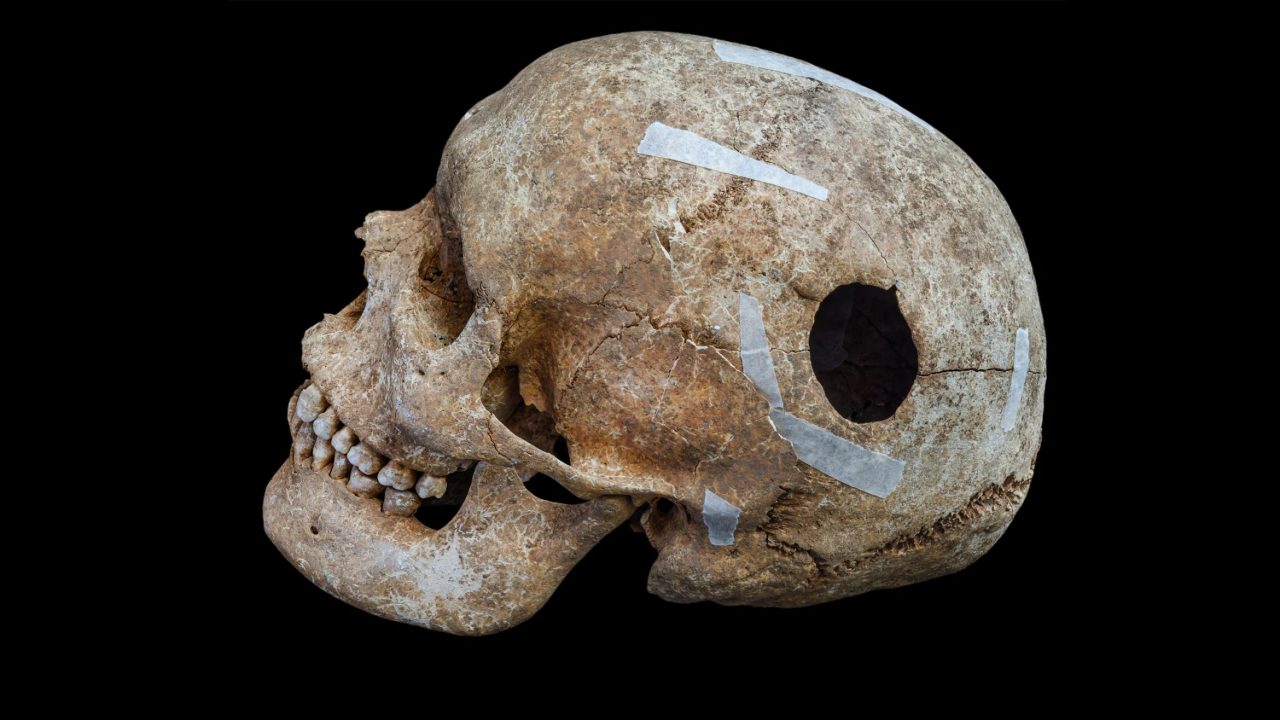
Archaeology students on a routine training dig in England made a discovery that stopped everyone in their tracks — a 1,200-year-old mass grave containing the remains of at least ten young men, including one individual of extraordinary height who had undergone ancient brain surgery before his death.
The burial pit was found at Wandlebury Country Park, just south of Cambridge, during what was supposed to be a standard educational excavation run by the University of Cambridge’s Department of Archaeology and the Cambridge Archaeological Unit. What the students uncovered instead was a window into one of the most violent chapters of early medieval English history.
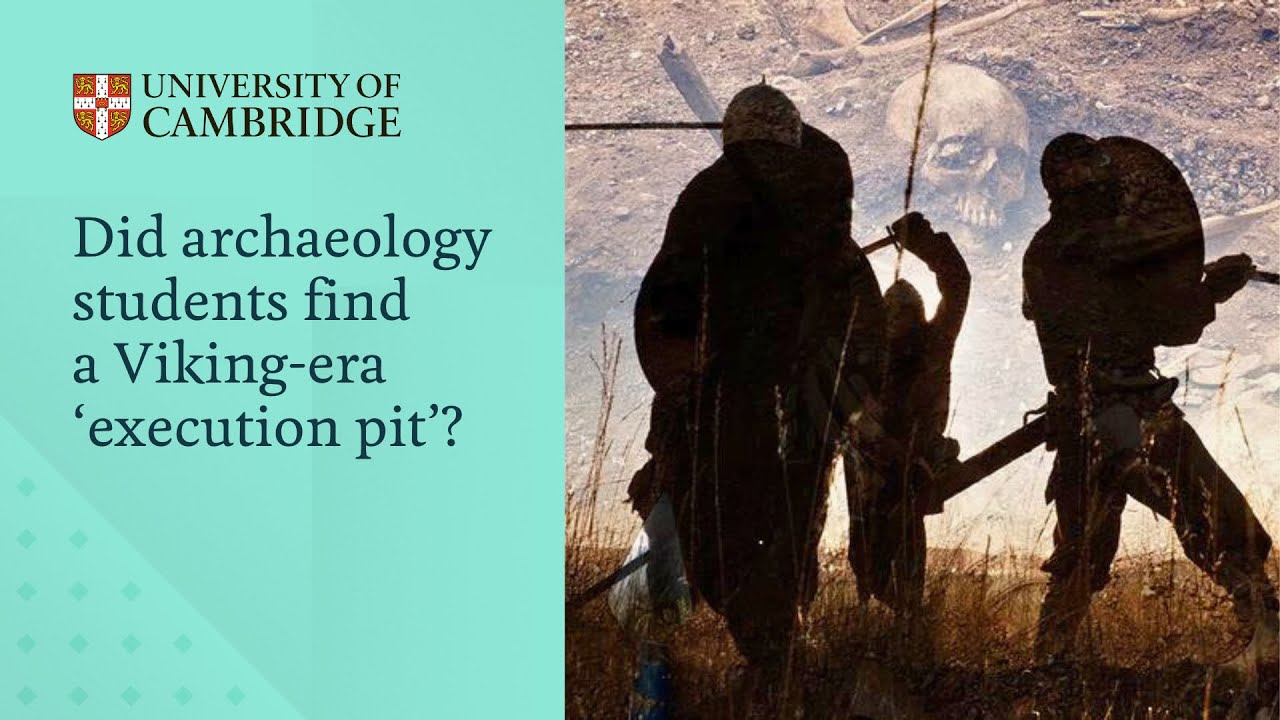
Radiocarbon dating places the remains in the 9th century — a period of brutal, sustained conflict between Saxon and Viking forces that reshaped the map of England. The find is already being described as one of the most unusual mass grave discoveries in recent memory.
A Burial Pit That Raises More Questions Than It Answers
The grave held a minimum of ten individuals, a count established through the number of skulls recovered. But the burial itself is far from straightforward. Alongside four complete skeletons, researchers found dismembered remains — a chaotic scene that suggests these men did not receive a careful or ceremonial burial.
The location matters enormously for understanding who these men were and how they died. Cambridgeshire in the 9th century was not peaceful territory. It sat on the contested frontier between the kingdoms of Mercia and East Anglia, a region that became a flashpoint after Viking forces conquered East Anglia around 870 AD and established the Danelaw across large parts of eastern England.
“Cambridgeshire was a frontier zone between Mercia and East Anglia, and the continual wars between Saxons and Vikings as they clashed over territory across many decades,” said Dr. Oscar Aldred of the Cambridge Archaeological Unit. “We suspect the pit may relate to these conflicts.”
The researchers have stopped short of definitive conclusions, but the combination of the mass grave format, the dismembered remains, and the dating to this specific period of Viking conquest makes a conflict-related explanation the leading theory.
The Medieval “Giant” and the Evidence of Ancient Skull Surgery
Among all the individuals in the grave, one stands out in every sense. The burial included an exceptionally tall man — described by researchers in terms that earned him the informal label of a medieval “giant” — whose skull bore the unmistakable marks of trepanation.
Trepanation is one of the oldest known surgical procedures in human history. It involves drilling, cutting, or scraping a hole into the skull, and it has been practiced across cultures for thousands of years. In medieval contexts, it was performed for reasons that likely ranged from treating head injuries and relieving pressure on the brain to addressing conditions that had spiritual or psychological dimensions.
The fact that this individual underwent the procedure at all tells us something striking: he received specialized medical attention at some point in his life. Whether that surgery was successful, how long he survived afterward, and whether his death was connected to the procedure or to the apparent violence suggested by the grave’s nature — these are questions researchers are still working to answer.
His unusual height would have made him a notable figure in his own time. Average stature in early medieval England was considerably shorter than modern standards, meaning this individual would have stood out physically in any gathering — in life, and now, centuries later, in death.
What the Evidence Actually Tells Us
| Detail | What Is Known |
|---|---|
| Location | Wandlebury Country Park, south of Cambridge, England |
| Estimated date | 9th century (confirmed by initial radiocarbon analysis) |
| Minimum number of individuals | Ten, identified by skull count |
| Complete skeletons found | Four |
| Notable individual | Exceptionally tall person with trepanned skull |
| Historical context | Viking conquest of East Anglia circa 870 AD; formation of the Danelaw |
| Excavating institutions | University of Cambridge Department of Archaeology; Cambridge Archaeological Unit |
| Who made the discovery | Archaeology students on a training excavation |
Why This Discovery Matters Beyond the Headlines
Mass graves from this period of English history are rare, and finds like this one carry real weight for historians trying to piece together what life — and death — actually looked like during the Viking Age in Britain.
Written records from 9th-century England are sparse and often one-sided. Physical evidence from excavations like this one can fill gaps that manuscripts cannot. The presence of dismembered remains alongside complete skeletons suggests a burial that was hurried, disorganized, or carried out under difficult circumstances — consistent with an aftermath-of-battle scenario, though researchers have not confirmed that interpretation definitively.
The trepanned skull adds another layer entirely. It is a reminder that medieval people were not simply passive victims of their violent era. They practiced medicine, they attempted to heal one another, and at least one man buried in this pit had survived something serious enough to require surgery on his skull before whatever ultimately ended his life.
For the students who made the find during what was meant to be a routine training exercise, the experience is the kind that reshapes a career. Finding a mass grave of this age and complexity during an educational dig is, by any measure, extraordinary.
What Researchers Are Working to Establish Next
The investigation is ongoing. Researchers will continue analyzing the remains to build a clearer picture of who these individuals were — their ages, their health histories, signs of trauma, and any clues about their geographic origins. Isotope analysis of teeth and bones can sometimes reveal where a person grew up, which could help determine whether those buried were local Saxon inhabitants, Viking fighters, or a mixture of both.
The trepanned individual in particular is likely to attract focused study. The size and characteristics of the surgical mark on his skull could reveal details about the technique used, the skill of whoever performed it, and whether the bone shows signs of healing — indicating he survived the procedure for some time.
Further radiocarbon dating may also help narrow the timeframe of the burial and potentially connect it to specific documented events in the conflict between Saxon and Viking forces during the decades following the 870 AD conquest of East Anglia.
Frequently Asked Questions
Where exactly was the medieval mass grave discovered?
The burial pit was found at Wandlebury Country Park, located just south of Cambridge in England, during a training excavation led by the University of Cambridge.
How many people were buried in the mass grave?
Researchers identified a minimum of ten individuals based on the number of skulls recovered, though only four complete skeletons were found alongside dismembered remains.
What is trepanation, and why is it significant here?
Trepanation is one of history’s oldest known surgical procedures, involving the deliberate cutting or drilling of a hole in the skull. Its presence on one individual in this grave indicates he received medical treatment at some point before his death.
Is the mass grave definitely connected to Viking-Saxon conflicts?
Researchers believe it may be related to the conflicts following the Viking conquest of East Anglia around 870 AD, but have not confirmed this definitively — the investigation is still ongoing.
Who discovered the grave?
The burial pit was uncovered by archaeology students conducting a practice excavation as part of their university training, under the supervision of the University of Cambridge’s Department of Archaeology and the Cambridge Archaeological Unit.
How tall was the “giant” individual found in the grave?




Leave a Reply