
Archaeologist Ingrid Holzer carefully brushed centuries of dirt away from what looked like a rusty metal tube buried beneath the old castle grounds. Her heart raced as she realized what she was looking at—this wasn’t just another piece of medieval scrap metal.
“Mein Gott,” she whispered to her colleague, “I think we’ve found something extraordinary here.”
What Holzer discovered that day in Germany would rewrite our understanding of medieval warfare and the early evolution of firearms. Hidden beneath layers of earth for over 600 years lay one of Europe’s oldest hand cannons—a weapon that tells an incredible story about how warfare changed forever during the Middle Ages.
A Revolutionary Discovery Changes Medieval History
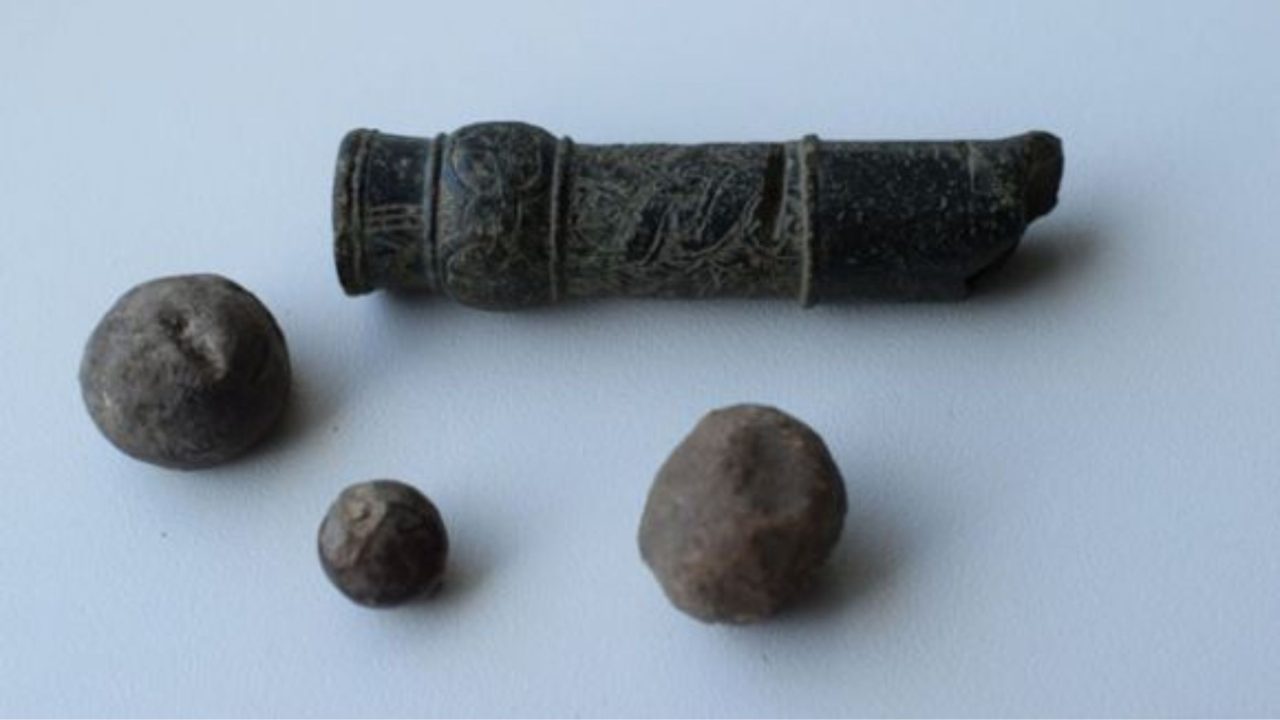
The medieval hand cannon unearthed in Germany represents one of the most significant archaeological finds in recent years. Dating back to the 14th century, this bronze weapon provides unprecedented insight into the early development of gunpowder warfare in Europe.
Unlike the massive cannons we typically associate with medieval sieges, this hand cannon was designed for individual soldiers. Measuring approximately 30 centimeters in length, it would have been held and fired by a single person—making it one of the earliest personal firearms ever discovered on German soil.
This discovery fundamentally changes how we understand the timeline of firearm adoption in medieval Germany. We’re looking at technology that was revolutionary for its time.
— Dr. Klaus Weber, Medieval Weapons Specialist
The weapon’s design reveals sophisticated metallurgy and engineering knowledge that historians previously thought didn’t exist in this region during the 1300s. The bronze construction shows careful craftsmanship, with reinforced areas around the firing chamber that demonstrate the makers understood the explosive forces they were working with.
What makes this find even more remarkable is its excellent state of preservation. The dry conditions beneath the castle foundations protected the metal from corrosion, allowing researchers to examine construction details that are usually lost to time.
Inside the Medieval Arsenal: What This Weapon Reveals
The hand cannon discovery provides a treasure trove of information about medieval military technology. Here’s what archaeologists have learned so far:
- Advanced metallurgy: The bronze alloy composition shows sophisticated knowledge of metal working
- Tactical innovation: Size and weight indicate it was designed for mobile warfare
- Cultural exchange: Design elements suggest influence from both Eastern and Western gunpowder traditions
- Economic implications: High-quality materials indicate significant investment in new military technology
| Feature | Measurement | Historical Significance |
|---|---|---|
| Length | 30 cm | Optimal for single-person operation |
| Bore diameter | 25 mm | Designed for small projectiles |
| Weight | 1.8 kg | Light enough for battlefield mobility |
| Material | Bronze alloy | Shows advanced metallurgical knowledge |
The weapon’s firing mechanism reveals ingenious engineering solutions. Unlike modern firearms, this hand cannon required the operator to manually ignite gunpowder through a small touch hole. Burn marks around this opening tell the story of a weapon that saw real battlefield use.
The wear patterns we see suggest this wasn’t just a ceremonial piece—this was a working weapon that someone carried into battle.
— Dr. Maria Hoffmann, Archaeological Conservator
Chemical analysis of residue found inside the barrel confirms the use of early gunpowder compositions. These findings help researchers understand how explosive technology spread across medieval Europe and evolved from the original Chinese formulations.
How This Changes Our Understanding of Medieval Warfare
This discovery forces historians to reconsider the timeline and impact of gunpowder weapons in medieval Germany. Previously, scholars believed firearms didn’t become common in this region until the late 14th or early 15th centuries.
The hand cannon’s sophisticated design suggests that gunpowder technology was more advanced and widespread than previously thought. This has significant implications for understanding how medieval armies adapted to new technologies and changed their tactics accordingly.
For military historians, this find provides crucial evidence about the transition period when traditional medieval warfare began incorporating gunpowder weapons. The coexistence of swords, crossbows, and early firearms created a complex battlefield environment that required new strategies and training.
We’re seeing evidence that medieval armies were much more innovative and adaptable than we previously believed. They weren’t stuck in the past—they were actively embracing new technologies.
— Professor Heinrich Müller, Military History Institute
The discovery also sheds light on the economic and social changes that accompanied military innovation. Producing these weapons required specialized craftsmen, new supply chains for materials, and significant financial investment from rulers and military commanders.
For archaeologists, this find demonstrates the importance of continuing excavations at medieval sites. Many locations that seem thoroughly explored may still hold secrets that can revolutionize our understanding of the past.
The research team plans to conduct additional excavations in the surrounding area, hoping to find more weapons, ammunition, or other military artifacts that could provide even more context about medieval warfare in this region.
This is just the beginning. Every artifact we uncover adds another piece to the puzzle of how our ancestors lived, fought, and adapted to changing times.
— Dr. Ingrid Holzer, Lead Archaeologist
The hand cannon will undergo further analysis using advanced imaging techniques and materials science methods. These studies will reveal even more details about its construction, use, and the people who made and wielded it centuries ago.
FAQs
How old is the medieval hand cannon discovered in Germany?
The weapon dates back to the 14th century, making it over 600 years old and one of the earliest personal firearms found in Germany.
What was the hand cannon made from?
The weapon was constructed from bronze alloy, which shows sophisticated metallurgical knowledge for the medieval period.
How big was this medieval firearm?
The hand cannon measures approximately 30 centimeters in length and weighs 1.8 kilograms, making it portable for individual soldiers.
Was this weapon actually used in battle?
Yes, wear patterns and burn marks around the firing mechanism indicate this was a working weapon that saw real battlefield use, not just a ceremonial piece.
Why is this discovery so significant?
It changes our understanding of when and how gunpowder weapons were adopted in medieval Germany, showing the technology was more advanced and widespread than previously thought.
Will there be more excavations at the site?
Yes, archaeologists plan to continue digging in the surrounding area to search for additional weapons and artifacts that could provide more context about medieval military technology.

Leave a Reply