
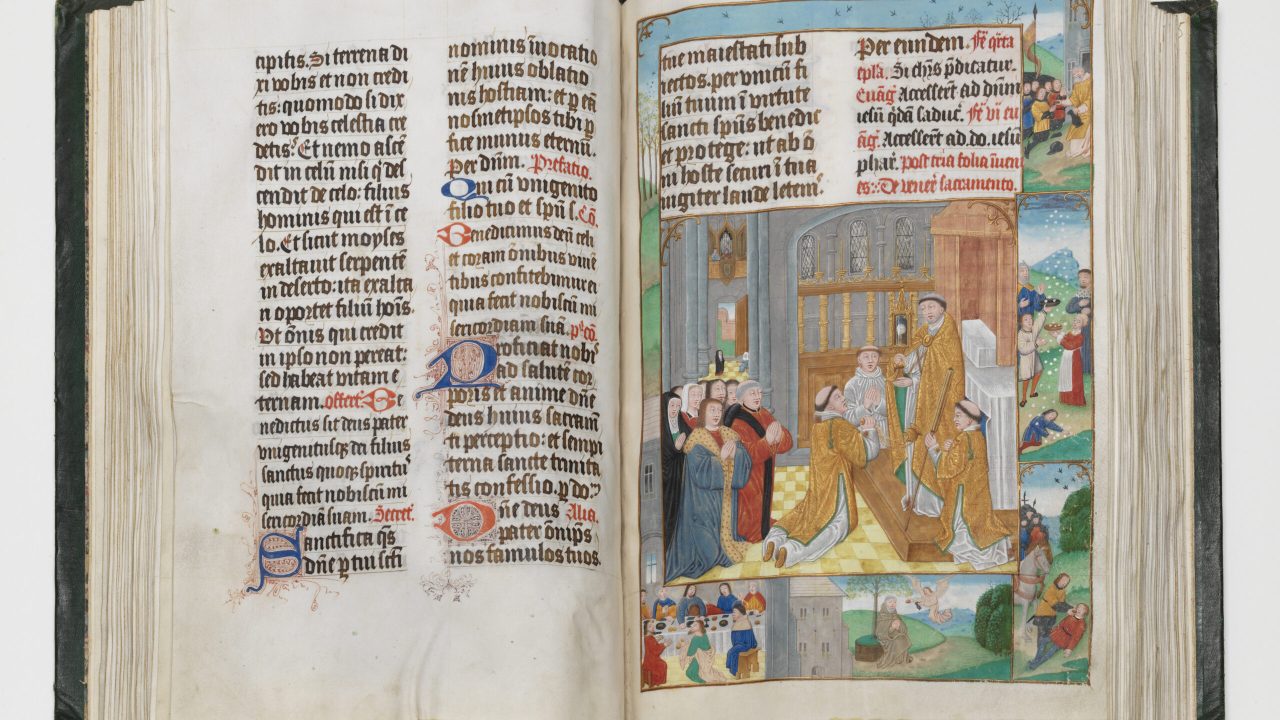
Evelyn Hartwell pressed her nose against the glass display case at the British Museum, her eight-year-old eyes wide with wonder as she stared at the illuminated pages of a 14th-century psalter. The gold leaf seemed to shimmer under the museum lights, and the intricate dragons dancing around the margins looked like they might leap off the ancient parchment at any moment.
“Grandma, how did they make it so beautiful without computers?” she whispered, tugging at her grandmother’s sleeve.
That same sense of wonder is about to captivate thousands of visitors when an extraordinary collection of medieval manuscripts makes its way to EXPO Chicago 2026, bringing centuries-old treasures directly to the American Midwest for what promises to be one of the most significant cultural exhibitions in recent memory.
A Rare Glimpse Into Medieval Artistry
The upcoming exhibition represents a groundbreaking collaboration between international museums, private collectors, and cultural institutions. For the first time in decades, some of the world’s most precious medieval manuscripts will travel together to a single American venue, offering visitors an unprecedented opportunity to witness the artistic mastery of medieval scribes and illuminators.
These aren’t just old books gathering dust in university libraries. We’re talking about hand-crafted masterpieces that took months or even years to complete, created by artists whose names we may never know but whose work has survived wars, natural disasters, and the passage of nearly a millennium.
These manuscripts represent the pinnacle of medieval artistic achievement. Each page is a window into a world where art, spirituality, and knowledge converged in the most extraordinary ways.
— Dr. Margaret Chen, Medieval Art Historian at Northwestern University
The collection will span nearly 800 years of manuscript production, from early Carolingian texts to late medieval Books of Hours. Visitors will encounter everything from massive choir books that once graced monastery altars to intimate prayer books small enough to fit in a medieval lady’s palm.
What Makes This Exhibition So Special
The EXPO Chicago 2026 medieval manuscript display stands apart for several compelling reasons. First, the sheer scope of the collection brings together pieces that are rarely seen outside their home institutions. Second, cutting-edge technology will allow visitors to explore these delicate works in ways never before possible.
Here’s what makes this exhibition truly remarkable:
- Interactive Digital Displays: High-resolution screens will let visitors “turn” virtual pages and zoom in on microscopic details
- Multimedia Storytelling: Audio guides will share the human stories behind each manuscript’s creation and survival
- Hands-On Workshops: Visitors can try medieval calligraphy and illumination techniques using period-appropriate materials
- Scholarly Lectures: Daily presentations by leading medievalists will provide deeper context and interpretation
- Conservation Demonstrations: Watch experts work to preserve these ancient treasures for future generations
The exhibition’s curators have worked tirelessly to create an immersive experience that goes far beyond simply looking at old books behind glass. They want visitors to understand the painstaking process of creating these works and the vital role they played in preserving knowledge through some of history’s darkest periods.
| Manuscript Type | Time Period | Origin | Key Features |
|---|---|---|---|
| Book of Kells Replica | 9th Century | Ireland | Celtic knotwork, intricate borders |
| Psalter of St. Louis | 13th Century | France | Gold leaf, royal patronage |
| Lindisfarne Gospels | 8th Century | England | Anglo-Saxon art, carpet pages |
| Hours of Jeanne d’Evreux | 14th Century | France | Grisaille technique, marginal drolleries |
We’re not just displaying artifacts; we’re telling the story of how human creativity and devotion produced some of the most beautiful objects ever made.
— James Rodriguez, Exhibition Curator
Why Medieval Manuscripts Matter Today
In our digital age, it’s easy to forget that before printing presses, every book was a handmade miracle. These manuscripts represent thousands of hours of human labor, incredible artistic skill, and an unbreakable commitment to preserving knowledge for future generations.
The impact extends far beyond art history enthusiasts. Teachers are already planning field trips that will bring medieval history to life for students who’ve only seen these works in textbook reproductions. Local artists are buzzing about the techniques they’ll learn, while historians anticipate new insights from seeing these works up close.
The exhibition also highlights the international nature of medieval culture. These manuscripts traveled trade routes, influenced artistic movements across continents, and demonstrate that our interconnected world has deeper roots than we might imagine.
When students see the actual brushstrokes and understand the years of training required to create just one decorated initial, it completely changes their relationship with art and history.
— Lisa Thompson, High School Art Teacher
The timing couldn’t be better for Chicago’s cultural landscape. The city has been investing heavily in museum infrastructure and educational programming, and this exhibition positions Chicago as a major destination for medieval studies and cultural tourism.
Planning Your Visit
Early ticket sales indicate massive interest from across the Midwest and beyond. The exhibition will run for six months, with special evening hours for working professionals and extended weekend availability for families.
Advance reservations will be strongly recommended, especially for the hands-on workshops and guided tours. The exhibition organizers are also planning virtual reality experiences that will transport visitors inside medieval scriptoriums, allowing them to witness the manuscript creation process firsthand.
This is a once-in-a-lifetime opportunity to see these treasures outside of their usual European homes. We expect visitors from across North America.
— Patricia Williams, EXPO Chicago Director
The ripple effects are already being felt throughout Chicago’s cultural community. Local bookbinders are offering classes in traditional techniques, while university extension programs are adding medieval history courses to meet anticipated demand.
FAQs
When will the medieval manuscript exhibition open at EXPO Chicago 2026?
The exhibition is scheduled to open in spring 2026, with exact dates to be announced in early 2025.
How much will tickets cost for the medieval manuscript display?
Ticket pricing hasn’t been finalized, but organizers are committed to offering student discounts and family packages to ensure broad accessibility.
Will photography be allowed in the manuscript exhibition?
Limited photography will be permitted in designated areas, but flash photography will be strictly prohibited to protect the delicate materials.
Are there age restrictions for the hands-on manuscript workshops?
Workshops will be tailored for different age groups, with special sessions designed for children as young as eight years old.
Will the manuscripts be the actual originals or reproductions?
The exhibition will feature a combination of original manuscripts and high-quality facsimiles, with clear labeling to distinguish between the two.
How long should visitors plan to spend at the exhibition?
Most visitors spend 2-3 hours exploring the full exhibition, though medieval enthusiasts often return multiple times during the six-month run.

Leave a Reply